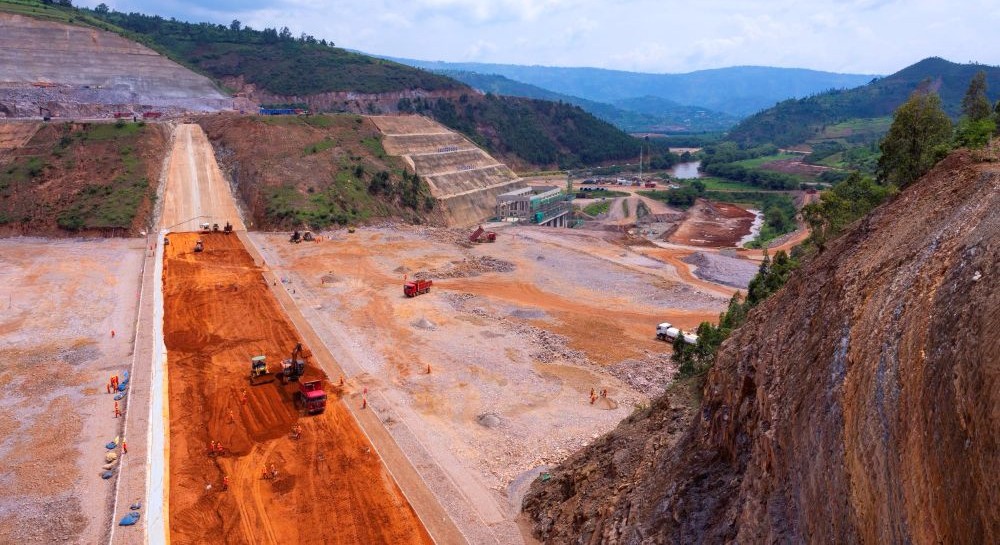
Prime Minister Justin Nsengiyumva on Thursday, November 21, 2025, visited the construction site of the Nyabarongo II hydropower project, Rwanda’s largest ongoing infrastructure developments, to assess progress and receive updates from engineers and government agencies overseeing the works.
The project, located along the Nyabarongo River between Kamonyi District in the Southern Province and Gakenke District in the Northern Province, is designed to deliver both renewable energy and critical water-management benefits once operational.
The multipurpose dam will generate 43.5 megawatts (MW) of electricity for the national grid, produced through three turbines, each with a capacity of 14.5MW. This output will make Nyabarongo II one of the most significant contributors to Rwanda’s hydropower fleet.
According to project engineers, construction works have now crossed major structural milestones, including completion of foundational works, advancement of dam elevation, and substantial progress on the powerhouse facilities.
During the site tour, officials briefed the Prime Minister on the ongoing construction of the 110kV transmission line that will evacuate electricity from the dam to the national grid, as well as the delivery schedule of electromechanical components expected in the coming months.
Much of the specialized equipment is being manufactured abroad and shipped in phases to align with construction timelines.

Beyond electricity generation, Nyabarongo II is designed as a multi-use water infrastructure project. Its reservoir will hold approximately 803 million cubic meters of water, forming a lake that will stretch across several districts.
This storage capacity will enhance water security and enable irrigation of over 20,000 hectares of farmland downstream. Officials say this will support agricultural productivity in areas that have historically been affected by unpredictable water availability.
Another major benefit is flood control. The Nyabarongo River, Rwanda’s longest, has routinely caused flooding in low-lying communities, damaging farms, displacing households, and disrupting transport corridors.
By regulating water flow, the dam is expected to significantly reduce the impact of seasonal floods across the river basin. Authorities have also highlighted additional opportunities linked to the reservoir.
The government plans to introduce floating solar power installations that could generate up to 200MW, complementing the hydropower output and maximizing the utility of the newly created water surface.
This approach is in line with Rwanda’s strategy to diversify clean energy sources while optimizing limited land space.
The reservoir may also support inland water transport, local tourism, and small-scale fisheries once the ecosystem stabilizes. Officials say such secondary benefits will be developed gradually in partnership with local districts and relevant sectors.
The project is financed through a concessional loan worth USD 214 million from the Export–Import Bank of China, with the engineering, procurement, and construction contract executed by Sinohydro, a company with broad experience in regional hydropower development.
Government engineers from the Rwanda Energy Group (REG) and the Energy Development Corporation Limited (EDCL) are supervising implementation.

Speaking during the tour, Prime Minister Nsengiyumva emphasized the project’s role in national development, particularly in strengthening energy security, supporting agriculture, and building long-term climate resilience.
He reiterated the government’s commitment to ensuring the dam is completed on schedule and meets all engineering, environmental, and safety standards.
The Nyabarongo II Hydropower Project is part of Rwanda’s broader target to expand renewable energy production and achieve universal access to electricity. Once commissioned, the plant will increase the share of clean energy in the national grid while reducing reliance on expensive thermal power.
Government officials say the project remains a strategic investment whose benefits will extend far beyond power generation, contributing to economic modernization, rural development, and sustainable resource management.

