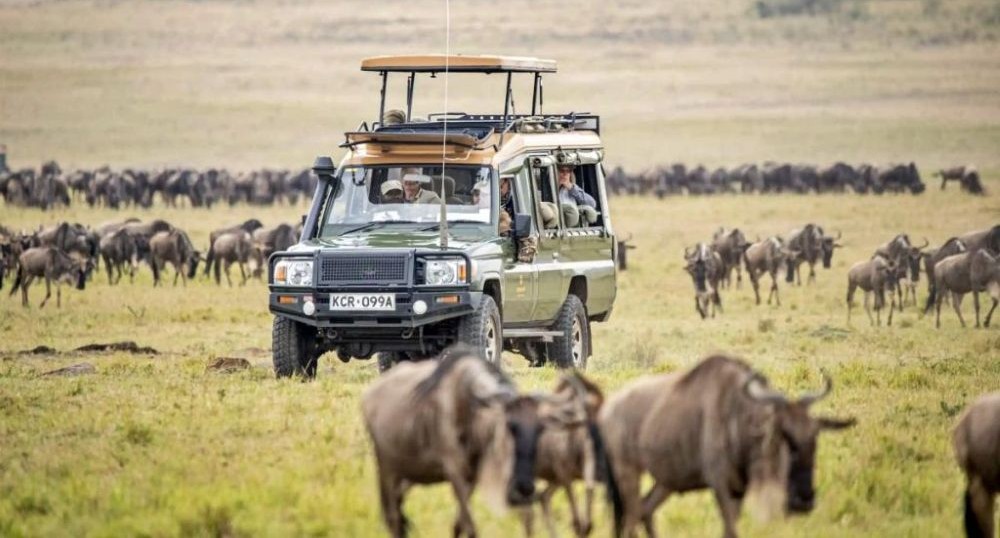
Fifteen years after Akagera National Park was reformed and placed under the joint management of the Rwanda Development Board and African Parks, the once-depleted ecosystem has become one of the continent’s most impressive recovery cases.
After generating $32.1 million in visitor revenue over the years and restoring its wildlife populations, the park is pushing toward financial sustainability by 2028, an outcome that would mark a milestone for Rwanda’s tourism and conservation model.
Since 2010, the park has welcomed 470,622 paying visitors who have generated $32.1 million in revenue, an achievement driven largely by strengthened security, strategic wildlife reintroductions, and Rwanda’s expanding global tourism footprint.
Over time, lions were reintroduced in 2015, followed by black rhinos in 2017, restoring Akagera’s big five status and creating new tourism appeal. These changes slowly reversed the park’s earlier decline.
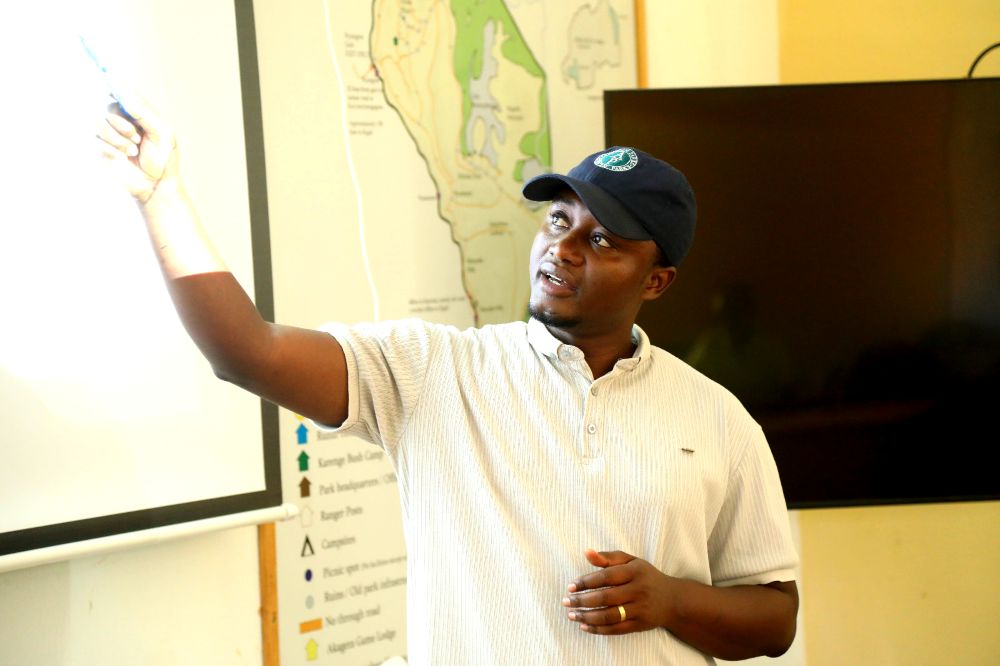
“We started counting from 2010, when we received 15,000 visitors, generating about $203,000,” said Jean Paul Karinganire, the Funding and Reporting Manager at Akagera National Park.
“Over the past 15 years, visitor numbers have continued to grow, except for two years, 2020 and 2021. In 2022, numbers slowly started rising again, and today we receive between 50,000 and 56,000 visitors annually, according to current figures,” he explained.
As visitor numbers expanded, so did revenue. Earnings increased from $203,000 in 2010 to $4.7 million last year, with 2023 recording a peak of $4.8 million. Although revenue declined by 3% in 2024 due to the Marburg outbreak, the park expects a rebound.
“Based on current data and the months remaining, we expect to generate $5.2 million this year. By 2028, we expect to welcome 65,000 paying visitors annually, which could generate $7.6 million Karinganire said.
These figures form the basis of Akagera’s latest ambition which is to become profitable for the first time by 2028. Since 2010, the park has spent $50.1 million on operational and capital investments, creating a funding shortfall covered by philanthropic partners and corporate sponsors.
Management believes that with increased visitor numbers and longer tourist stays, the park could break even within three years.
Rwanda’s global partnerships under the “Visit Rwanda” brand have helped fuel this growth. Sponsorships with Arsenal FC, Paris Saint-Germain, and FC Barcelona have boosted visibility in key tourism markets including the UK, France and parts of Europe.
Today, tourists from Rwanda, the United States, France, the Netherlands, the United Kingdom, Belgium, Germany, Nigeria, Canada, China, and India make up the park’s main base, with Rwandans contributing 45% of visits.
Karinganire encourages more domestic travel, explaining that exploring the park over two days provides a fuller experience of its southern, central, and northern circuits. Discounts also remain in place with 50% off for Rwandans visiting in groups and 70% off for student groups.
Community support and ongoing challenges
The success of Akagera’s tourism is closely tied to its conservation gains. A 2023 wildlife census recorded 11,338 animals roaming the park’s 112,000 hectares, including thriving populations of lions, rhinos, elephants, leopards, and buffaloes.
With its sweeping savanna plains and complex wetlands, Akagera remains Rwanda’s only savanna park and is believed by some researchers to be the furthest source of the River Nile. According to Karinganire, continuous wildlife monitoring guides park decisions.
“We do periodic research processes on the population of the animals because they are strong indicators on the soil, biodiversity, health of the ecosystem and this helps us to make informed decisions in terms of management,” he told journalists during a field visit by the Rwanda Environmental Journalists Association.
Since 2010, Akagera has paid $8.3 million in taxes and security fees and invested $5.7 million into surrounding communities through jobs and procurement. Its revenue-sharing and grant programs have provided an additional $4.7 million for local development.
However, human–wildlife conflict remains a pressing issue in districts bordering the park, particularly Nyagatare, where baboons, buffaloes, rhinos, and hippos frequently damage crops.
Authorities link some of these challenges to the historical reduction of the park’s size from 2,500 square kilometres in 1934 to 1,120 square kilometres in 1997 to accommodate returning refugees.
Poaching, though greatly reduced, has not been eliminated. In 2013, rangers confiscated about 2,000 snares; today fewer than 100 are found annually thanks to improved patrols, community outreach, and a 120-kilometre electric fence.
Inside the park, piles of seized traps, bicycles, and makeshift hunting tools illustrate the ongoing battle, but officials say poaching of the Big Five has dropped dramatically.
Looking ahead, the park’s management agreement with African Parks expires in 2030, giving both parties five years to secure Akagera’s long-term financial independence. If current momentum continues, the park could become the first African Parks, managed site in Africa capable of fully funding its operations.
For Rwanda, Akagera remains a powerful example of how conservation, tourism, and community development can reinforce one another and how a protected area can thrive economically while safeguarding its ecological integrity.
