In a defining moment for both Guinea and Africa, President Paul Kagame yesterday joined Guinea’s President Mamadi Doumbouya in Conakry for the official launch of the Simandou Iron ore project.
This marks the beginning of what is poised to be the largest ongoing mining development in the world. With its vast untapped iron ore reserves, the Simandou project is set to play a transformative role not only in Guinea’s economy but also in the global iron ore market.
The project’s scale, the challenges it has overcome, and its potential to reshape the mining sector globally make it a key focus of both African and international interest.
The Simandou deposit, located in the southeastern part of the country, is the world’s largest known untapped reserve of high-grade iron ore, with an estimated three to four billion tonnes of ore.
This deposit, which is among the purest ever discovered, holds the potential to produce 120 million tonnes annually by 2030. At full capacity, the project will place Guinea among the top iron ore exporters worldwide, sealing its position as a key player in the global mining industry.

The genesis and challenges of Simandou
The Simandou Iron Ore Project, which has been in the works for decades, represents a colossal effort to transform Guinea’s economy and infrastructure. Despite being discovered in the late 1990s, the project faced numerous delays, from political instability to legal disputes and infrastructure hurdles.
For years, Simandou’s immense potential remained unrealized as successive Guinean governments grappled with how to develop the deposit while ensuring that it benefitted the nation’s economy and people.
However, a new era began with the renewed commitment of Guinea’s leadership, culminating in the creation of a public-private partnership with international investors.
This collaboration, which includes major global players such as Rio Tinto, Chinalco, Baowu Resources, and Winning Consortium Simandou (WCS), has transformed Simandou into Africa’s most ambitious mining and infrastructure project to date.
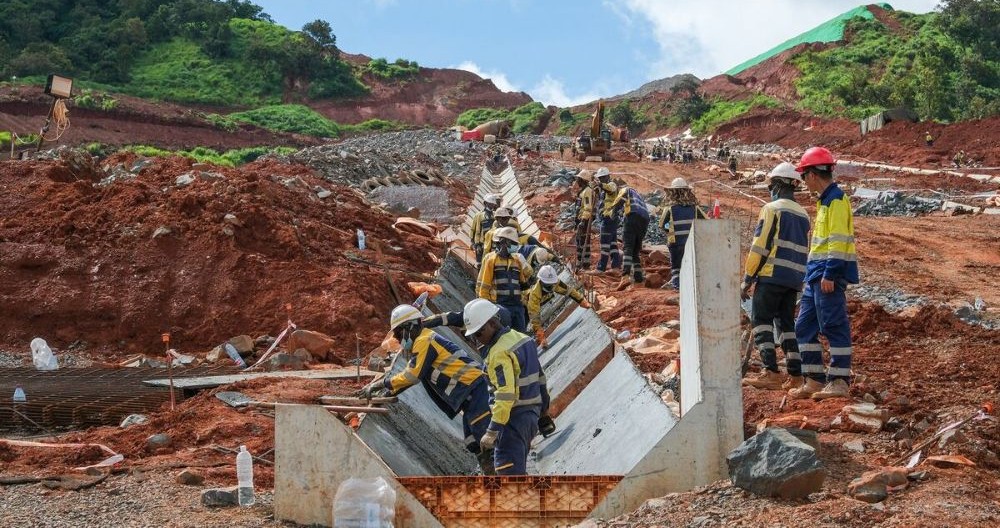
The project encompasses a wide array of infrastructure developments. These include a 622-kilometre multi-use Trans-Guinean railway, a deep-water port, bridges, and tunnels.
The rail line will be instrumental in transporting iron ore from the Simandou mountains to Guinea’s Atlantic coast, facilitating not only the export of ore but also boosting regional trade and logistics.
In addition to its mining and transportation components, the project is expected to generate thousands of jobs, stimulate local industries, and provide much-needed infrastructure for Guinea’s long-term growth.

Simandou’s global significance in mining and steel production
One of the most significant aspects of the Simandou project is its potential to reshape the global iron ore market. The ore’s purity and suitability for low-carbon steel production make it particularly valuable for industries looking to reduce their carbon footprints.
As the demand for low-carbon steel increases globally, Simandou’s high-grade iron ore will become an essential resource for steelmakers, particularly in China, which is the world’s largest consumer of steel.
The project’s completion provides a stable supply of iron ore to meet the growing global demand, particularly as countries focus on decarbonizing their steel industries. For Guinea, the Simandou project is an opportunity to tap into global markets.
It is also a chance to drive economic sovereignty since the country will benefit from the infrastructure development, job creation, and increased government revenues that come with such a monumental project.
The Simandou mine is divided into four blocks, each managed through a joint venture between Guinea’s government and international stakeholders. This approach ensures that the project aligns with national priorities while attracting the expertise and financial resources needed to succeed.
The project is also part of Guinea’s broader strategy for sustainable development, with the involvement of companies like Rio Tinto and Chinalco emphasizing a commitment to environmentally conscious mining practices.

Unlocking potential
The road to Simandou’s launch has been long and fraught with challenges, but it is now entering a new phase of development. Testing and commissioning of the mine, railway, and port infrastructure are already underway, and the first shipments of iron ore are expected to begin in 2025.
The project is expected to gradually ramp up production over the next few years, with full capacity set to be reached by 2030. Djiba Diakité, Minister and Chief of Staff to the President of Guinea, emphasized the national significance of Simandou, calling it “the driving force behind a national transformation.”
He highlighted the transformative impact the project will have on Guinea’s economy and its position within West Africa’s economic landscape. Simandou is seen not just as a mining venture, but as a cornerstone of Guinea’s future industrialization and modernization.
For President Doumbouya, the inauguration of Simandou marks a significant achievement in his administration’s efforts to drive Guinea’s economic development and integration into the global economy.
The presence of President Kagame at the launch underscores the growing pan-African solidarity around transformative industrial projects, symbolizing how such initiatives can foster shared prosperity across the continent.

A symbol of African resilience and opportunity
The Simandou project is a testament to the resilience and determination of Guinea and its partners in overcoming the challenges that have long plagued its development.
By finally unlocking the potential of the Simandou deposit, Guinea is poised to reshape not only its own economic future but also the global steel industry.
With the successful launch of the project, Simandou stands as a symbol of Africa’s potential to lead in the global mining and infrastructure sectors, providing a model for other nations seeking to leverage their natural resources for sustainable development and economic growth.
As the project progresses, all eyes will be on Simandou, not just as a mining operation, but as a beacon of hope and opportunity for the future of Africa’s industrial landscape.
With its vast reserves of high-grade iron ore, transformative infrastructure, and global significance, Simandou is set to play a pivotal role in the economic resurgence of Guinea and Africa as a whole.

