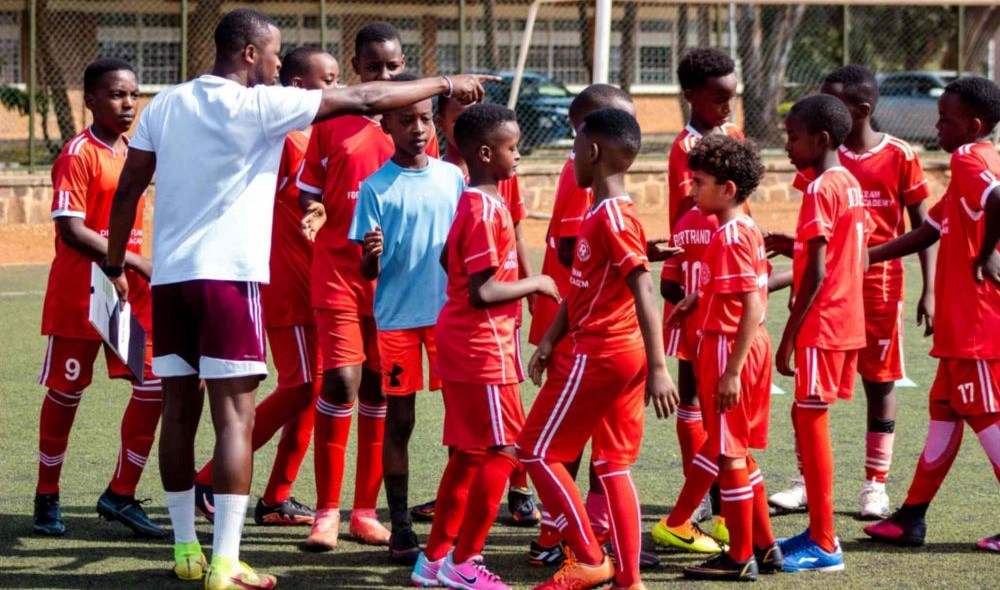
With the election on a new President for Rwanda’s football federation, the game’s journey is entering a defining moment. Once driven purely by passion and raw talent, the nation’s approach to the game is now evolving into one rooted in science, structure, and strategic vision.
Across the country, a growing realization is taking hold, that success in modern football requires more than natural ability; it demands investment in nutrition, education, and professional development from an early age.
The Rwanda Football Federation (FERWAFA) is spearheading this transformation, steering football into a more disciplined and accountable era.
With global football standards rapidly advancing, Rwanda’s leadership is determined to ensure that local players can compete on both the continental and international stage. The focus is on developing a complete footballer, one whose physical fitness, tactical understanding, and mental strength are nurtured in tandem.
FERWAFA President Fabrice Shema believes that change begins with good governance and measurable performance. “Corporate governance and accountability are our priorities. We are restructuring our operations to be more efficient and results-oriented. At FERWAFA, Imihigo will drive our five-year strategic plan, and we will be evaluated accordingly,” he said.
This vision aligns with the broader national agenda of building systems that combine excellence with accountability. As part of this effort, Rwanda is strengthening ties with international clubs and football development partners, learning from the world’s best programs.
Partnerships with Bayern Munich, Paris Saint-Germain, and Arsenal are already helping nurture young talent, providing exposure to advanced training methods, sports science, and professional mentorship.
Football analysts argue that Rwanda’s next big leap will depend on how effectively it integrates sports education into broader youth development. Proper nutrition, strength training, and early technical exposure are seen as essential to bridging the gap between potential and performance.

Building a scientific foundation for the game
Rwanda’s transformation agenda seeks to ensure that players are identified and developed through structured academies rather than by chance. This means focusing on training methodologies, data-driven performance tracking, and professional coaching.
The aim is to nurture players who are not only skilled but also well-educated, disciplined, and resilient, attributes that define world-class athletes.
Historically, many footballers across Africa emerged through informal routes, often without the benefit of proper youth systems. Rwanda’s shift toward academy-based development is correcting that imbalance.
By emphasizing early-age training, sports medicine, and mental conditioning, the country is creating a foundation for sustainable excellence.

Learning from Morocco’s model of success
Morocco offers a compelling case study of what deliberate investment in football development can achieve. In 2009, King Mohammed VI established a €13 million national football academy, designed to merge education with world-class sports training.
The Royal Moroccan Football Federation followed by mandating that all clubs set up youth academies, a move that transformed the nation’s footballing ecosystem.
Since then, the results have been remarkable. The men’s national team reached the semi-finals of the 2022 FIFA World Cup, the women’s team advanced to the round of 16 at the 2023 FIFA Women’s World Cup, and youth teams have consistently performed strongly across international competitions.
Inspired by that success, Rwanda’s football administrators are laying the groundwork for a similar long-term transformation. By adopting a model that values both discipline and innovation, the country hopes to produce players capable of excelling on the world stage.

