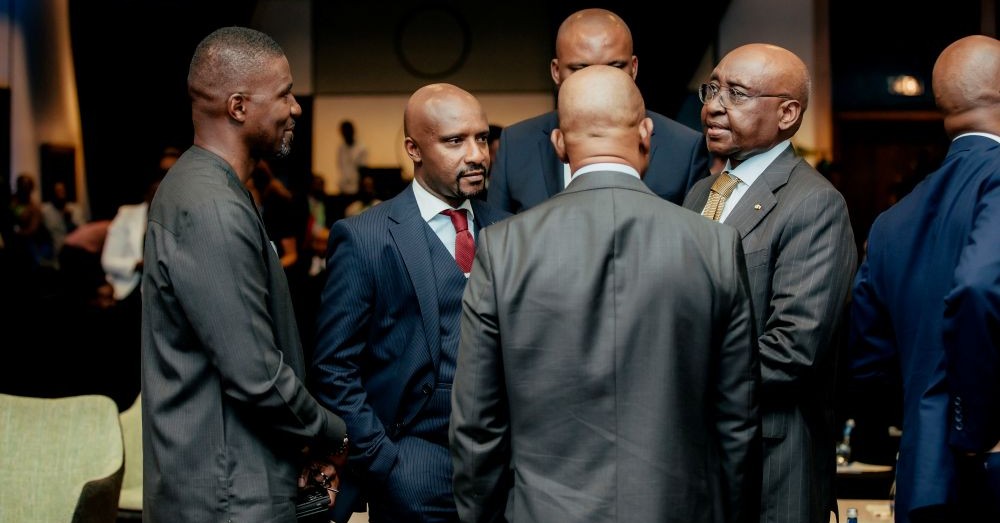
Former African Development Bank President Dr. Donald Kaberuka has urged African markets, policymakers, and investors to prepare for a rapidly changing world defined by demographic upheavals, geopolitical fragmentation, and the decline of traditional development aid.
Speaking at the ASEA Conference in Kigali, Kaberuka delivered a sweeping analysis of global disruptions that he believes will shape Africa’s economic future for decades.
Addressing stock exchange leaders and industry experts from across the globe, Kaberuka praised ASEA’s work in strengthening capital markets, saying public education remains critical in a region where stock exchanges are still widely misunderstood.
Despite progress, he warned that fragmented markets, limited technology, and high listing costs continue to stifle growth. But the bulk of his message focused on global shifts that African leaders cannot afford to ignore.
Africa’s demographic surge vs. an ageing world
Kaberuka highlighted what he called “one of the most consequential shifts of the century”: Africa’s population boom. While Europe ages and its savings shrink under pension pressure, Africa’s young population represents both an opportunity and a risk.
“Ageing societies are desperately searching for returns but Africa still struggles to attract this capital because of perceived risk,” he said.
He pointed to Vietnam as a model for Africa, a young country that became a magnet for investment through deliberate reforms, growing from a $14 billion economy in 1994 to more than $500 billion today.
Data as the new global weapon
On technology, Kaberuka warned that the world is entering an age where geopolitical dominance will be defined by control of data. “In the future, the one who controls the data will be the new hegemon,” he said, calling it the most under-discussed global risk facing emerging economies.
Critical minerals and the new Resource contest
Africa’s mineral endowment, he argued, will place the continent at the center of a new global contest. But he warned that the real risk is not resource scarcity, it is Africa remaining stuck in a raw-material export model while global powers scramble for supplies essential to defence, digital infrastructure, and energy transition.
A fragmented world and the end of the aid era
Kaberuka said the world is sliding back into 1930s-style fragmentation, with countries imposing new tariffs and abandoning collective solutions to global crises such as pandemics and climate shocks.
He declared that the era of large-scale development aid, which underpinned Africa’s finance model for decades, “is effectively over,” as Western economies turn inward, driven by defence spending and domestic priorities.
A central part of his speech focused on mobilizing domestic savings. Africa’s pension funds and banks hold growing resources, yet much of the capital remains locked in low-risk, short-term instruments due to regulation and conservative mandates.
“We cannot end the cycle of aid and debt unless we harness both African and global savings, Capital markets, your markets, will be central to this transformation,” he said. Kaberuka urged African economies to learn from Asia’s response to past crises:
“In a world where uncertainty is the only certainty, resilience is no longer optional, it is the foundation of growth. African stock exchanges to position themselves not merely as trading platforms, but as engines of long-term investment that can help the continent weather the global disruptions ahead,” he said.
