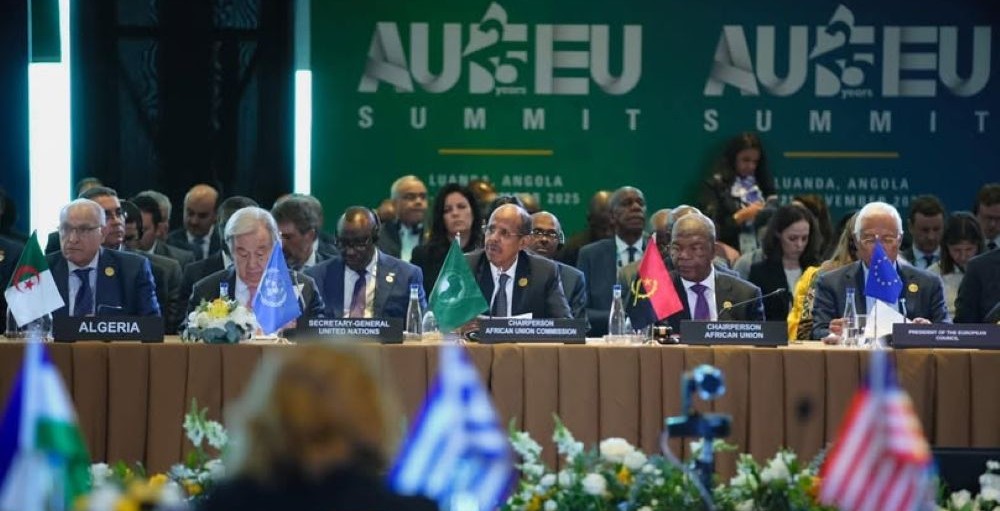
The 7th African Union–European Union Summit in Luanda closed with what many observers are calling the most ambitious joint commitment between the two blocs in a quarter century, as leaders agreed to push for a fundamental reset of global governance, international finance, and peace and security cooperation.
The declaration issued at the end of the two-day meeting signalled a decisive shift, placing Africa and Europe on a common path to demand urgent reforms to global systems that both sides say no longer reflect today’s geopolitical and economic realities.
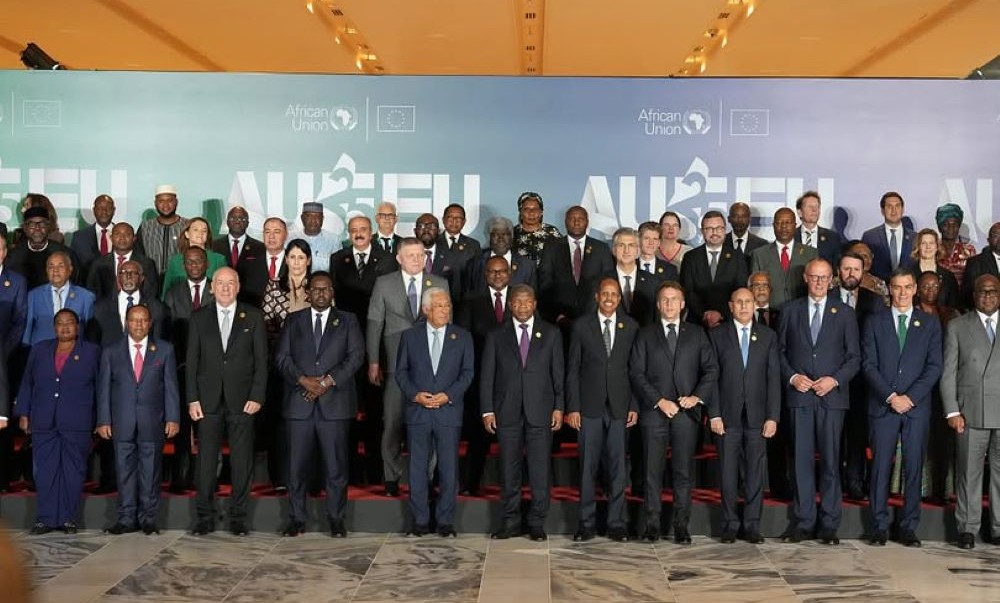
Held on the 25th anniversary of the AU-EU partnership, the summit brought together more than 80 Heads of State and Government, who framed the moment as a turning point for the future of both continents.
The leaders reaffirmed their alignment with the UN Charter and international law, but stressed that institutions built in the aftermath of World War II must evolve to address the cascading challenges facing the world today, from conflict and debt to climate change and global inequality.
They called for a more representative and accountable UN Security Council and committed to advancing the UN’s Pact for the Future under the UN80 initiative.
In one of the strongest signals yet of a shifting global order, both unions declared that global financial architecture must be overhauled to give developing countries, especially in Africa, a fairer chance at growth.
With many African states struggling under high debt costs and limited fiscal space, the leaders pressed for reforms that would allow faster, more transparent and broader debt restructuring, alongside innovative financing mechanisms.
They underscored the need to reduce the cost of capital for African economies and pledged to mobilise unprecedented levels of climate and development financing, aligned with the New Collective Quantified Goal that targets at least USD 300 billion annually by 2035.

The summit also advanced a shared commitment to industrialisation and economic transformation in Africa, with both unions vowing to accelerate the African Continental Free Trade Area and build stronger, more resilient value chains, particularly in critical minerals.
Europe acknowledged Africa’s strategic role in global supply chains and pledged deeper collaboration on trade, digital transformation, and infrastructure development under the Global Gateway framework.
Peace and security featured prominently, with leaders voicing deep concern about persistent conflicts in Sudan, South Sudan, the Democratic Republic of Congo, the Sahel, Somalia, Ukraine and Gaza.
They reaffirmed support for African-led solutions and called for full implementation of UN Security Council Resolution 2719, which enables predictable UN financing for African peace support operations.
The declaration condemned atrocities in Sudan, called for unhindered humanitarian access, and reiterated joint backing for mediation efforts in the DRC under AU leadership.
Climate change remained a central pillar of the renewed partnership. Both sides acknowledged that the world is far off track in meeting the goals of the Paris Agreement and committed to scaling up adaptation, resilience and clean energy cooperation.
The summit amplified Africa’s role in climate action, supporting initiatives such as the Africa Climate Summit outcomes, the Congo Basin Commission and the African Renewable Energy Initiative.
Leaders further committed to expanding access to clean electricity for at least 100 million Africans by 2030, advancing the Africa Single Electricity Market, and accelerating renewable energy investments.
On migration, the AU and EU endorsed a more balanced approach focused on shared responsibility. They pledged to strengthen legal pathways, invest in youth skills development, improve migration governance, and address the root causes of irregular migration.
Both unions recognised the African diaspora as a major force for innovation, investment and cultural exchange, and committed to lowering remittance costs to maximise their impact.
Cultural restitution, education partnerships, digital transformation, food systems resilience and biodiversity protection also stood out as areas where the two blocs will deepen cooperation.
Leaders reaffirmed commitments to protect cultural heritage, expand university exchanges, promote trustworthy artificial intelligence, and fight illegal wildlife trafficking.
While the declaration spans a wide spectrum of priorities, the overarching message from Luanda was that Africa and Europe intend to act together to reshape global systems that determine peace, financing, trade, climate action and development.
