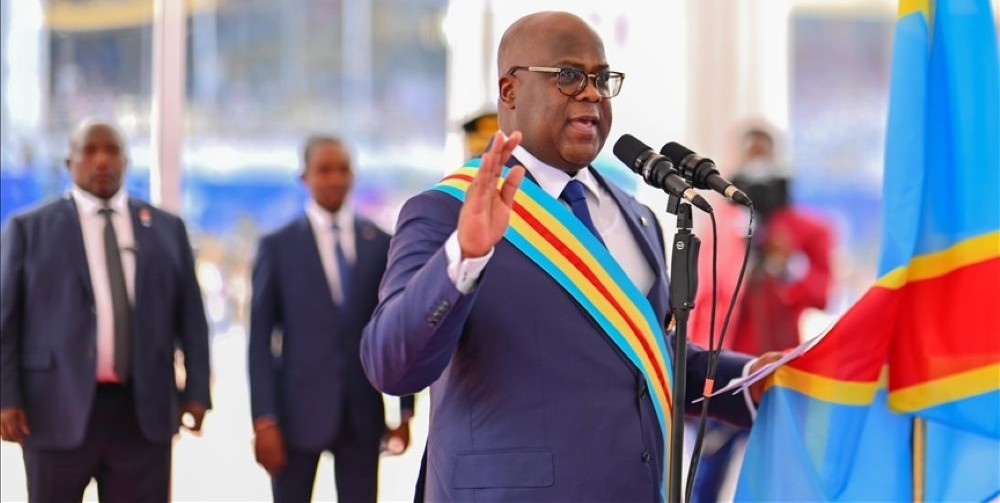
When Félix Tshisekedi assumed the presidency of the Democratic Republic of the Congo (DRC) in 2019, he was hailed as the man who would finally turn the page on decades of corruption and conflict.
For millions of Congolese, his inauguration symbolized hope, the promise of a peaceful transfer of power and the beginning of a new democratic era. However, six years later, that promise lies shattered.
The DRC is once again at a crossroads, torn between foreign manipulation, domestic repression, and regional isolation. President Tshisekedi, once seen as a reformist bridge-builder, has instead become the architect of his country’s renewed descent into crisis.
The rise of a President born of compromise
Tshisekedi’s ascent to power was never straightforward. The 2018 election, which officially gave him victory with 38.6% of the vote, was marred by irregularities and international skepticism.
Independent tallies by the Catholic Church’s observer network suggested that opposition candidate Martin Fayulu had, in fact, won by a wide margin. But a behind-the-scenes deal with outgoing president Joseph Kabila ensured a peaceful transition.
Kabila’s coalition retained control of Parliament, the military, and the courts, while Tshisekedi became the face of a fragile new era. The arrangement was meant to protect Congo’s stability. Instead, it set the stage for the betrayal that would follow.
Once in power, Tshisekedi dismantled Kabila’s alliance, purged his allies, and turned the machinery of the state against his former benefactor. By 2025, Kabila had been sentenced to death in absentia by a military court, a verdict widely condemned as political vengeance disguised as justice.

From hope to hostility
What began as a presidency of reconciliation has devolved into a regime of repression and paranoia. Opposition leaders such as Moïse Katumbi and Martin Fayulu face harassment, exile, or judicial persecution. Journalists are detained, protests banned, and dissent silenced.
The arrests of senior military officers in 2025, including former Chief of Staff Gen. Christian Tshiwewe, revealed a government gripped by fear of its own shadow. Rather than rebuilding trust in the army, Tshisekedi has weaponized it against his rivals.
The once cohesive command structure is fractured, morale is collapsing, and soldiers are losing ground to rebels across North Kivu. Instead of uniting his country, Tshisekedi has chosen division as a governing strategy. And nowhere is that more visible than in the east.
When Tshisekedi took office, eastern Congo was fragile but relatively stable. The 2013 Addis Ababa Framework Agreement, signed by DRC, Rwanda, Uganda, and other regional partners, had reduced cross-border hostilities and provided a foundation for peace.
That framework is now in tatters. Under Tshisekedi, the DRC has reignited old tensions, pitting neighbors against each other and undermining regional mediation efforts. His government has blamed Rwanda for the resurgence of the M23 rebellion while ignoring the role of internal failures and undisciplined local militias like the “Wazalendo.”
The recent Doha peace talks offered a glimmer of hope, a chance to restore dialogue and rebuild trust between Kinshasa and Kigali. But when the time came to formalize the agreement, Tshisekedi’s delegation boycotted the signing ceremony, stunning regional mediators and foreign diplomats.
That single act, Kinshasa’s refusal to sign, effectively derailed months of progress. It signaled not just the DRC’s unwillingness to compromise but also its growing diplomatic isolation.
As Rwandan and Qatari mediators worked to salvage the accord, Kinshasa doubled down on accusations, further alienating its neighbors and losing credibility as a regional peace partner.
A senior East African diplomat described the moment bluntly: “Tshisekedi would rather fight everyone than face his own failures.”

Selling sovereignty to the highest bidder
At home, Tshisekedi’s leadership has deepened the DRC’s economic dependence on external powers. His government has signed a string of resource agreements with Western corporations and governments eager to secure access to Congo’s cobalt, copper, and lithium, minerals vital for electric vehicles and global technology supply chains.
These deals are shrouded in secrecy and serve foreign interests far more than Congolese citizens. In exchange for “security cooperation” and international recognition, Kinshasa has effectively opened its mineral vaults to American and European firms, undermining local control over strategic assets.
Critics argue that Tshisekedi has replaced colonial plunder with corporate imperialism, turning the DRC’s immense natural wealth into a bargaining chip for political survival. The country’s infrastructure remains in decay, public debt has ballooned, and poverty deepens even as mining profits soar abroad.
“It is Mobutuism in modern clothes. The world extracts, the elites enrich, and the people remain poor,” remarked one Congolese economist. Tshisekedi’s domestic failures are mirrored by his crumbling international alliances.
Once welcomed by the African Union as a symbol of democratic progress, he now faces growing skepticism from regional peers. His feud with Rwanda has strained relations within both the East African Community (EAC) and the Southern African Development Community (SADC), leaving Congo more isolated than ever.
The death sentence against Joseph Kabila, the very man who enabled Tshisekedi’s presidency, is the ultimate symbol of this betrayal. It represents not justice, but revenge. Not strength, but fear. And it encapsulates the tragic irony of a leader who inherited peace but chose confrontation.
From Kinshasa’s streets to the hills of North Kivu, the sentiment is that the DRC is adrift. Its president, once a symbol of change, has become a reflection of the failures he once vowed to end.
Tshisekedi’s great betrayal is not only against his predecessor or political opponents, it is against the people of Congo themselves. In seeking favor from foreign powers and silencing his own citizens, he has sold the DRC down the peril of imperialists, mortgaging its sovereignty for fleeting political gains.
For a nation that has endured so much, this is the cruelest betrayal of all.

