
Rwanda has positioned itself at the centre of Africa’s vaccine security agenda as it hosts the 2025 Vaccine Cold-Chain Symposium, a major continental gathering focused on protecting vaccine integrity in an era of rising temperatures and strained health systems.
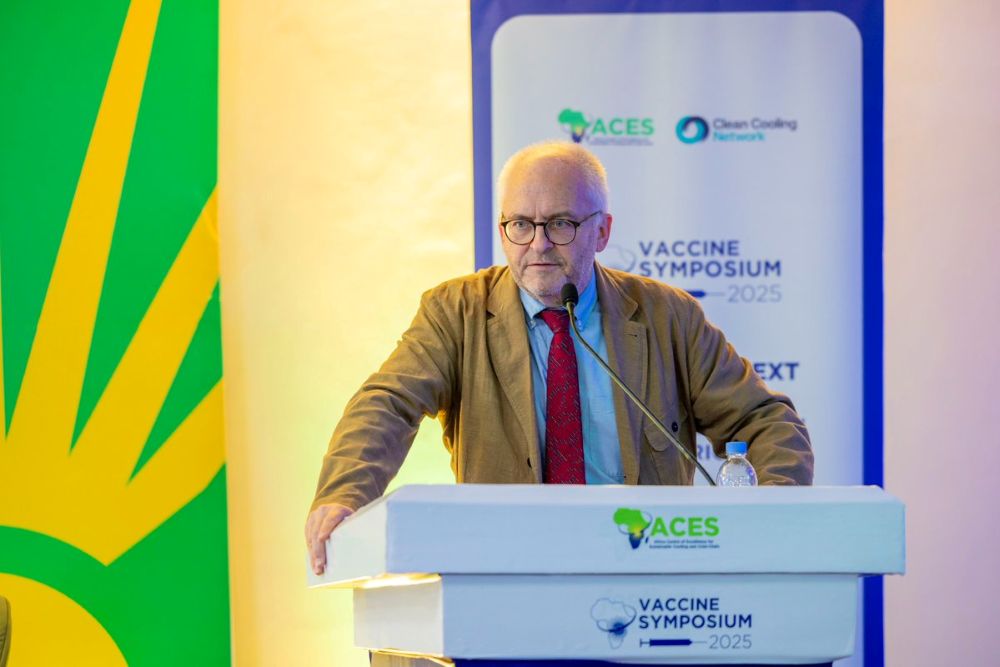
The three-day forum, held at the Africa Centre of Excellence for Sustainable Cooling and Cold-Chain (ACES) Rubirizi Campus, brought together more than 200 leading scientists, policymakers, engineers, and innovators from Rwanda, the United Kingdom, and other partner countries.
Their shared mission is to confront one of Africa’s most urgent challenges of keeping vaccines safe in a warming world.
The event was organized by ACES in partnership with the Rwanda Biomedical Centre (RBC), the Ministry of Agriculture and Animal Resources through the Rwanda Agriculture and Animal Resources Development Board (RAB), and the University of Birmingham.
Under the theme “Building the Next Generation of Vaccine Cold Chain for Africa,” the summit reflected an emerging consensus that vaccine delivery is no longer only a matter of medical science, but of climate resilience, logistics, and cross-sector coordination.
The World Health Organization estimates that up to half of all vaccines produced globally are lost every year because they are exposed to temperatures outside their recommended range. The result is wasted public resources, lower immunisation coverage, and increased exposure to outbreaks of preventable diseases.
In Africa, where power cuts, heat extremes and aging equipment remain persistent obstacles, losses can reach 30 percent, and climate change threatens to magnify these weaknesses.
Africa’s demand for cooling is expected to triple by 2050, stretching already fragile health infrastructures and pushing vaccine systems to a breaking point.
Against this backdrop, the Kigali symposium aimed to fast-track solutions that are not only technologically sound but economically and environmentally sustainable.
ACES, the host institution, has emerged as a continental leader in bridging innovation with real-world application. Its active projects include VACCAIR, a drone-based delivery model that cuts vaccine transport times from days to minutes and reduces the need for extensive peripheral refrigeration.
The centre is also piloting solar-powered cooling systems capable of withstanding energy disruptions, and developing community-level immune diagnostics that help health workers identify targeted vaccination needs while reducing unnecessary vaccine waste.
These technologies are already providing measurable improvements in countries such as Rwanda and Kenya.
“This Symposium marks a new chapter for Africa’s vaccine resilience. We are combining engineering, health science, and clean energy to build systems that are reliable, inclusive, and climate-aligned,” said Professor Toby Peters, the Founding Director of ACES.
“We find it very sustainable to look at the matter through the One Health lens, where we believe that aligning human and veterinary vaccination programs would be more efficient. Our goal is to ensure that no vaccine, and no life of both humans and animals, is lost to heat,” he added.
The One Health framework, which links human, animal, and environmental wellbeing, run through the symposium’s agenda. Experts examined ways to align veterinary and human vaccine programs, expand digital accountability mechanisms, integrate artificial intelligence into system maintenance, and develop regional standards for cold-chain performance.
“Rwanda’s commitment is that health resilience must be built on systems that are smart, renewable, and equitable. By investing in sustainable cold-chains, we are investing in the health and prosperity of generations to come,” said Prof. Claude Mambo Muvunyi, Director General of RBC.
Dr. Solange Uwituze, Acting Director General of RAB, underscored the importance of a joint approach to disease prevention.
“Given that around three quarters of emerging infectious diseases in humans are zoonotic, it is essential to design vaccination strategies within a One Health framework. Sustainable disease control depends on coordinated efforts across human, animal, and environmental health sectors,” she said.
Organizers urged governments and development partners to treat sustainable cooling as core climate infrastructure, on par with water systems, transportation and energy grids.

