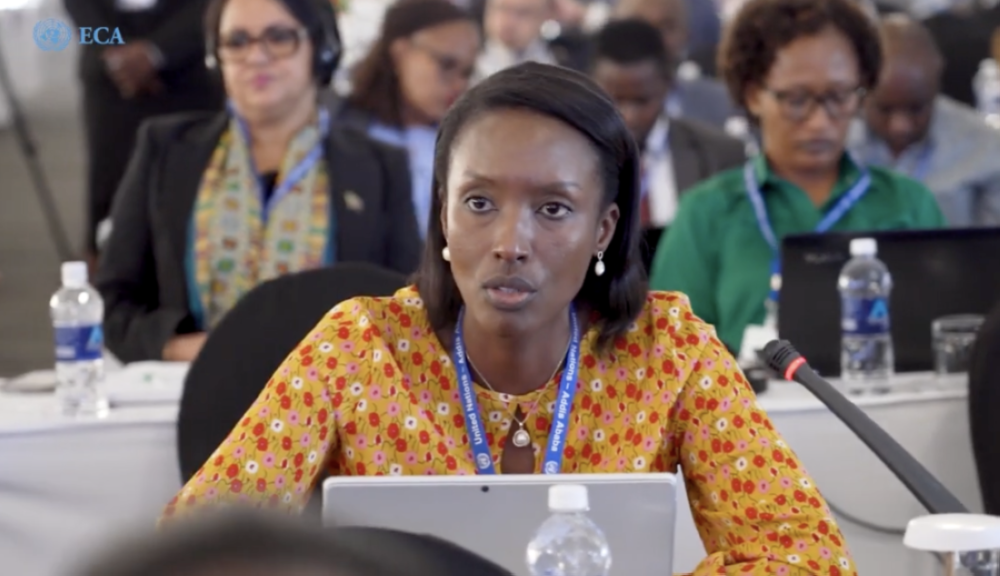
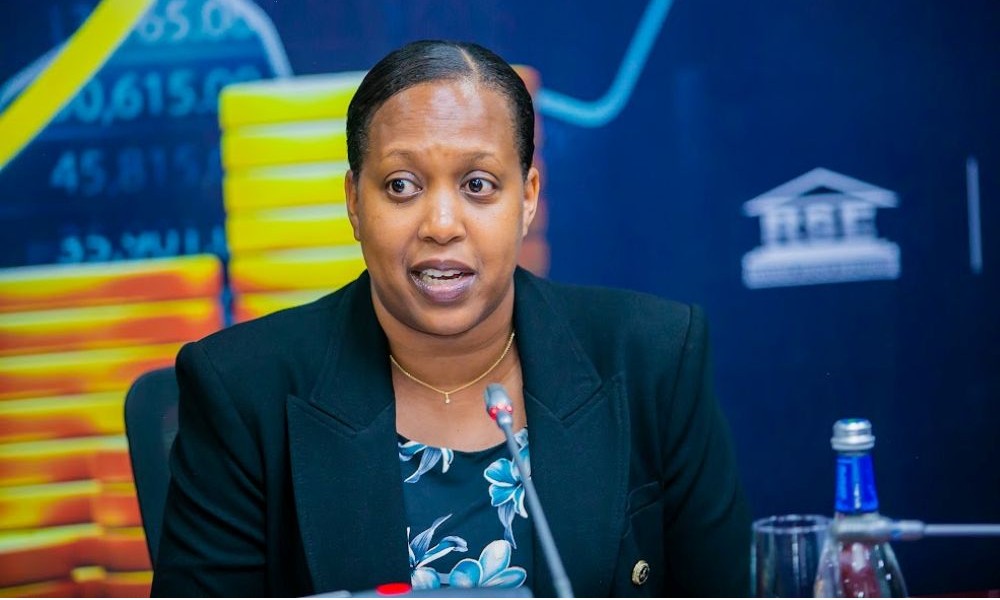
Kigali, Rwanda – The Development Bank of Rwanda (BRD) has appointed economist Stella Rusine Nteziryayo as its new Chief Executive Officer, subject to regulatory approval, marking a significant leadership transition at the state-owned development finance institution.
Her appointment ushers in a new chapter for the bank as it seeks to consolidate recent gains and deepen its role in financing Rwanda’s long-term economic transformation.
Nteziryayo succeeds Kampeta Pitchette Sayinzoga, whose six-year tenure is widely regarded as transformative for BRD.
During this period, the bank underwent substantial institutional and financial growth, strengthening its position as a central pillar of Rwanda’s development financing architecture.
Financial disclosures over the years show that BRD moved from a loss-making institution to sustained profitability, posting a net profit of Rwf22.8 billion, while dramatically expanding its balance sheet and lending capacity.
Between 2019 and 2025, BRD’s total assets grew from Rwf157 billion to more than Rwf1.02 trillion, reflecting stronger capitalization and an enhanced ability to mobilize resources.
Over the same period, the loan book expanded from Rwf167 billion to Rwf710 billion, enabling the bank to scale up long-term financing to priority sectors of the economy.
This growth has been supported by stronger partnerships with international development financiers, allowing BRD to amplify public investment and unlock additional capital for strategic projects.
The bank has expanded its footprint across sectors critical to national development, including energy, manufacturing, exports and education.
Its interventions have supported electricity access for more than 510,000 households under the Cana Uhendukiwe program, facilitated job creation for over 300,000 people in export-oriented industries.
The bank introduced innovative financing instruments such as the world’s first sustainability-linked bond issued by a national development bank. BRD has also digitized government-backed student financing schemes, improving efficiency and access.
Nteziryayo brings extensive experience in macroeconomic policy, fiscal planning, debt management and climate and sustainable finance.
Until recently, she served as Chief Economist at the Ministry of Finance and Economic Planning, where she played a key role in shaping Rwanda’s medium-term economic framework and coordinating sovereign financing strategies.
Her prior service on BRD’s Board of Directors is expected to ensure continuity as the institution transitions into its next leadership phase.
Founded in 1967, BRD is mandated to provide long-term, affordable financing aligned with Rwanda’s Vision 2050 and National Strategy for Transformation.
With a strengthened financial position and new leadership at the helm, the bank is positioning itself to further scale its impact and support sectors seen as vital to the country’s sustained and inclusive economic growth.
