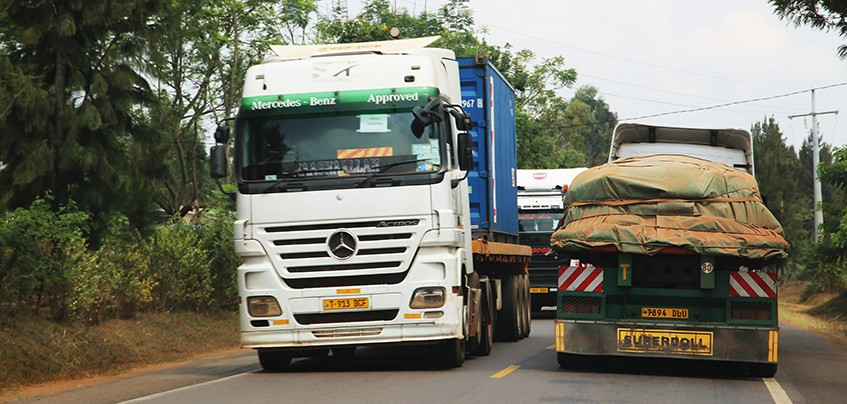
KIGALI – Rwanda’s road network along the Northern Corridor has reached a 98 percent quality compliance rate, but beyond the headline figure lies a more strategic shift of how infrastructure is managed and how trade flows across the region.
The Northern Corridor Transit and Transport Coordination Authority (NCTTCA) says the assessment covers about 960 kilometers of strategic roads linking Rwanda to key border points including Kagitumba, Gatuna, and Kanyaru, as well as major internal routes connecting Kigali to Rubavu and Karongi.
These corridors carry the bulk of Rwanda’s imports and exports, making their reliability critical to the country’s economic performance.
Executive Secretary of NCTTCA, Dr. John Deng Diar Diing, says Rwanda’s performance a result of consistent monitoring and targeted investment. “Ninety-eight percent of the roads under the Northern Corridor framework are in the best condition. The remaining two percent are classified as fair, but none fall under poor condition,” he said.
While many countries in the region continue to struggle with maintenance gaps, Rwanda is increasingly distinguishing itself through a shift toward evidence-based infrastructure management. The difference, according to regional officials and transporters, is visible not just in road quality but in predictability.
Data-Driven Road Management
Rwanda’s performance is increasingly being linked to its adoption of data-driven approaches in infrastructure management. On April 17, 2026, NCTTCA handed over a Roughometer IV device to the Rwanda Transport Development Agency (RTDA) to strengthen road condition monitoring.
The device is mounted on a vehicle and collects real-time data on road surface conditions using the International Roughness Index (IRI). This allows engineers to identify sections that require maintenance and prioritize interventions based on evidence.
Dr. Deng emphasized the importance of the technology in planning and resource allocation. “Without this equipment, you do not have accurate information on the condition of the roads. Decisions become subjective. With data, the government can determine where to allocate resources and ensure that maintenance is timely and effective,” he said.
He noted that the Authority provided the equipment after Rwanda’s existing machine broke down. “We considered it necessary to support a government that is already investing heavily in infrastructure. This ensures continuity in monitoring and avoids gaps in maintenance planning,” he said.
The use of such technology is expected to reduce vehicle operating costs, improve safety, and support efficient use of public funds through targeted repairs.

Addressing Remaining Gaps
Despite the high road quality standards, stakeholders acknowledge operational challenges, particularly for long-distance truck drivers. Theophile Niyonshuti, a long truck driver highlights consistent concerns about road conditions in other countries along the corridor, which often disrupt transport schedules.
“In some sections outside Rwanda, poor roads slow down movement and increase costs. But once you enter Rwanda, the roads are reliable and easier to use,” Niyonshuti said.
He pointed to a shortage of designated parking areas for heavy trucks within Rwanda. “The roads are good, but when it comes to stopping and resting, there are limited options for safe parking,” Niyonshuti noted.
To address this, NCTTCA is supporting a feasibility study for the construction of the Rukomo Truck Holding Yard in Gicumbi district. The facility is expected to provide secure parking and essential services for drivers while improving the efficiency of cargo movement.
According to Dr. Deng, the project will also help reduce congestion and delays along key trade routes. “This is part of our broader effort to strengthen logistics infrastructure and ensure smoother cross-border operations,” he said.

Expanding Regional Connectivity
Beyond road infrastructure, NCTTCA is working with Rwanda to address other gaps in the transport sector. One of the focus areas is inland water transport, where Rwanda has made progress in developing port infrastructure on Lake Kivu, including facilities in Rubavu and Karongi.
However, Deng noted that corresponding infrastructure on the other side of the lake remains underdeveloped. “For water transport to function effectively, both ends must be equally developed. We are engaging partners to support improvements across the region,” he said.
The Authority is also exploring the installation of weighbridges in Rwanda to protect road infrastructure from damage caused by overloaded trucks. Currently, the country relies largely on proactive maintenance rather than load control systems.
At the regional level, efforts are ongoing to streamline logistics and reduce the cost of doing business. NCTTCA continues to address non-tariff barriers and develop logistics hubs, including the Naivasha Inland Container Depot in Kenya, which brings cargo closer to Rwanda before final clearance.
About 70 percent of Rwanda’s international trade passes through the Port of Mombasa, underscoring the importance of an efficient corridor. “Our role is to ensure that goods move without unnecessary delays and that transport costs remain competitive,” he said.
As Rwanda continues to invest in infrastructure and adopt modern monitoring systems, its road network is increasingly seen as a reference point within the Northern Corridor, with ongoing efforts aimed at sustaining quality and addressing remaining logistical gaps.
