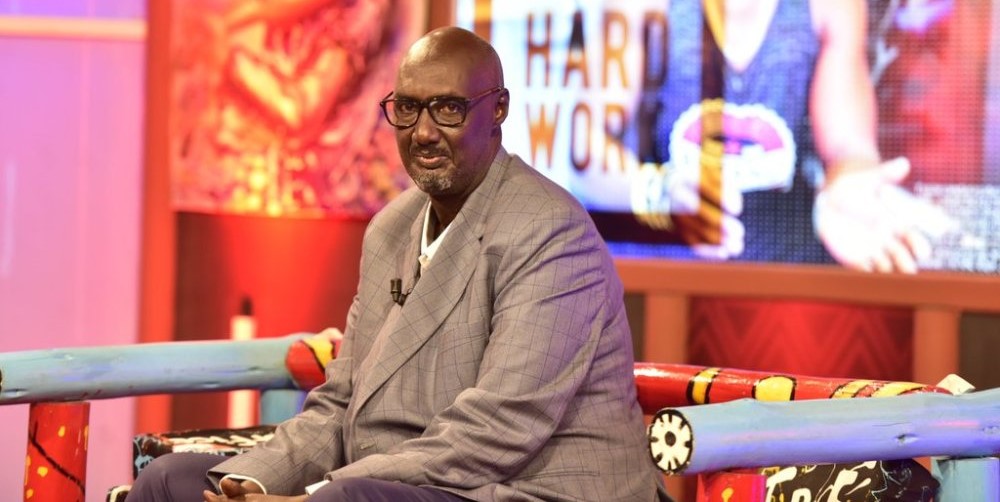
Kigali, Rwanda – Two days after his passing, the silence left by Valens Rwamukwaya feels heavier than words can hold. Yet this is not a moment to dwell in sorrow and grief alone.
It is a moment to pause, reflect, and celebrate a life that quietly shaped how Rwanda saw itself, how it remembered, and how generations of journalists learned to tell stories without speaking.
I met Rwamukwaya more than twenty years ago, at the fragile beginning of my journalism career. Like many others, I found in him not just a cameraman, but a friend, a teacher, and a steady presence in an industry that often moves too fast to notice its anchors.
Long before I understood the weight of a frame or the patience required to wait for the right shot, he embodied those lessons through action rather than instruction.
Born in 1956 in Nyaruguru district, Rwamukwaya’s life journey mirrored the story of many Rwandans of his generation. Forced into exile as a child, he grew up in Burundi, carrying with him a quiet longing for home.
It was there, as a refugee, that he discovered journalism, not as a career chosen for comfort, but as a calling pursued with courage.
When he abandoned university studies in 1982 to join Radio Burundi, he did so against the odds, applying for a job he believed he might never get. That decision would define nearly four decades of storytelling through the lens.
When Burundi Television went on air in 1984, Rwamukwaya stood among its pioneers, one of the first cameramen to translate sound into moving images for a nation.
Years later, history would repeat itself in Rwanda. After the 1994 Genocide against the Tutsi was stopped, he returned home in July of that same year, leaving behind familiarity for a country he barely remembered.
Joining the former ORINFOR, later Rwanda Broadcasting Agency, he became part of the founding generation of Rwanda Television, helping to rebuild a national voice from silence.
For 38 years, including 26 at RBA, Rwamukwaya’s lens bore witness to Rwanda’s pain, resilience, and transformation. He filmed moments of grief that required emotional restraint, and moments of national celebration that demanded technical precision.
He covered burials of leaders lost to Genocide, conflicts beyond Rwanda’s borders, and elections that shaped the country’s democratic journey.
Yet he never allowed the weight of history to harden him. His signature smile, gentle humor, and calm demeanor remained constants, even on the hardest assignments.
To many, his imposing stature and physical strength stood out, particularly in the early years when broadcast equipment was bulky and resources were limited. He would often joked that his height gave him a natural advantage in capturing shots others could not reach.
Yet colleagues who worked alongside him understood that his true power did not come from his build, but from his discipline, patience, and quiet humility, qualities that defined both his craft and his character.
More than the images he captured, Rwamukwaya’s greatest legacy lives in the people he shaped. Generations of cameramen and journalists learned by watching him work, by listening to his quiet advice, and by observing how he treated stories and people with equal respect.
Renowned journalist Richard Kwizera, like many others, has openly acknowledged that Rwamukwaya taught him how to use a camera, a simple statement that carries decades of influence.
“We mourn the passing of one of Rwanda’s longest-serving television cameramen and a pioneer of Burundi Television (RTNB). He was the man who taught me how to use a camera,” Kwizera noted.
He believed journalism was driven by passion, not prestige. He warned young professionals that a camera demands sobriety, perseverance, and readiness, because stories do not wait for convenience.
He lived that belief daily, rising early, staying informed, and showing up prepared, long before it became routine for others.
In retirement in 2020, Rwamukwaya spoke with pride about serving a country he finally called home. He believed his work had meaning because it contributed, in its own quiet way, to building a nation.
In a nation where opportunity would no longer be denied by identity or displacement, Rwamukwaya trusted that younger hands would carry the camera forward, seeing further because he had already cleared the path.
Today, I choose gratitude over tears. I do not cry because his light has gone out; I give thanks because it shone long enough to guide me. He taught me how to see, how to wait, and how to tell stories that outlive the moment.
Rest in Peace commrade. Till we meet again.
