Kigali, Rwanda – Rwanda is accelerating a new phase of land reforms as authorities move to modernize land administration systems, ease service bottlenecks, and align land taxation with fast-changing urban realities.
Recent interventions by the National Land Authority (NLA) and the City of Kigali signal a coordinated effort to improve transparency, restore public confidence, and ensure that land governance keeps pace with population growth, urbanization, and rising investment demand.
Land remains one of Rwanda’s most valuable and sensitive resources, underpinning agriculture, housing, inheritance, and commercial development.
In recent years, policy reforms aimed at expanding access to land ownership have also placed unprecedented pressure on administrative systems.
This strain has become evident through a backlog of tens of thousands of land surveying applications and growing public concern over revised land tax rates in rapidly developing areas of Kigali.
According to the National Land Authority, at least 55,000 land surveying applications are currently pending nationwide, largely due to limited staffing at district level.
Landowners rely on surveying services to subdivide land, register property, obtain titles, and complete transfers, making delays costly and disruptive.
Acknowledging the frustration among applicants, NLA Director General Marie-Grâce Nishimwe apologized for the delays and assured landowners that the backlog would be cleared quickly.
“For those who applied for land surveying services, we apologize for the delays. Measures have been taken to increase the number of staff working on these services, and we assure them that all pending cases will be completed within the first two months of 2026,” Nishimwe said.

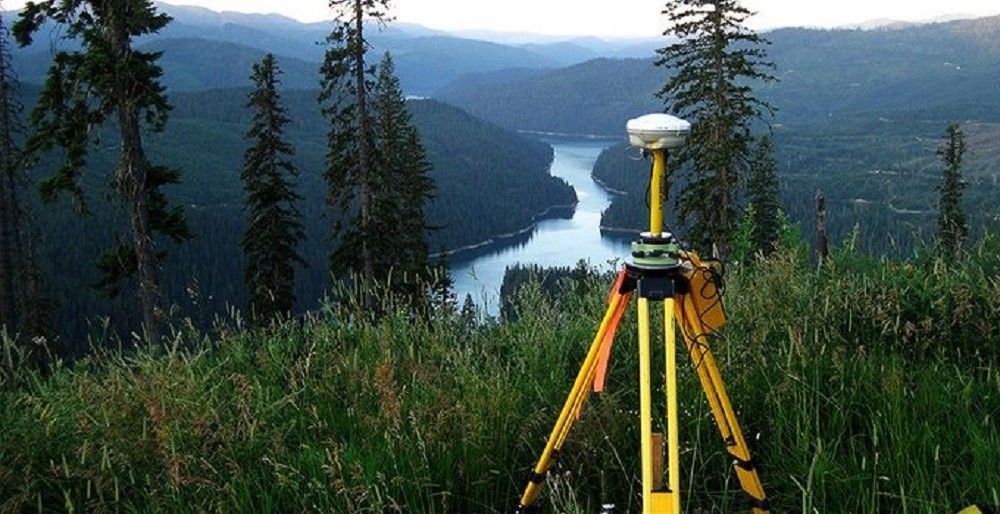
To achieve this target, the NLA is deploying at least 100 private certified land surveyors to support public officers at district level.
Nishimwe explained that most districts currently have only one or two staff handling surveying files while also managing other land-related responsibilities.
“We are working with the Private Sector Federation to provide 100 professionals to help clear the pending files, which slightly exceed 55,000,” she said.
Clearing backlogs and standardizing surveys
Private surveyors involved in the exercise say the backlog is closely linked to changes in land policy. Some say that allowing subdivision of agricultural land regardless of size significantly increased applications.
The change followed the 2019 National Land Policy, which responded to long-standing demands from families seeking to divide inherited land and formalize ownership.
While the reform expanded access to land titles, authorities caution against misuse. They say that people should not subdivide agricultural land with the intention of building on it because such practices are often signaled by the creation of multiple access roads.
To improve accuracy and reduce disputes, the NLA has also introduced a new Cadastral Surveying Procedure Manual that standardizes land demarcation practices.
The manual integrates legal standards and modern technology, requiring surveyors to follow a uniform process from fieldwork to digital submission. Officials say the guide will be key to achieving the government’s goal of resolving boundary correction issues by 2027.

Explaining the adjusted land tax in Kigali
As land administration reforms advance, changes in land taxation have also drawn attention, particularly in Kigali.
The City has clarified that newly adjusted land tax rates, approved by the city council in February 2025, replaced rates that had remained unchanged since 2017–2018 despite significant urban growth.
In a statement, the city said the revised rates were communicated through official channels and community meetings. “These rates replaced those that were last approved by the District Councils in 2017–2018, which had continued to be applied until the end of 2024,” the statement read.
City officials explained that the adjustments were guided by factors including location, zoning, level of development, and harmonization across districts with similar characteristics. In some areas, rapid development prompted sharp increases.
The city council also resolved that forest land be taxed at the same rate as agricultural land, while land used for public facilities, utilities, administration, transport, and tourism would be taxed at commercial rates.
Officials say the aim is fairness and consistency in line with a 2023 ministerial order that sets land tax rates between Rwf0 and Rwf80 per square metre.
Authorities argue that efficient land services and fair taxation are essential to reducing disputes, supporting investment, and managing Rwanda’s rapid transformation in a sustainable and orderly manner.
