
The relationship between Africa and Singapore continues to reach new heights, with growing trade volumes, strategic investments, and high-level diplomatic engagement underscoring the deepening partnership.
This momentum is being showcased in Singapore this week, by leaders from across the continent, including Rwanda’s Minister of Foreign Affairs and International Cooperation, Olivier Nduhungirehe.
They are taking part in the fifth Singapore-Africa Ministerial Exchange Visit (SAMEV) alongside the 8th Africa-Singapore Business Forum (ASBF). The twin events, held from August 26 to 28, bring together policymakers and business executives to chart new paths for cooperation.
SAMEV, hosted by Singapore’s Minister for Foreign Affairs Vivian Balakrishnan, has since its inception in 2014 become a critical platform for bridging experiences between Africa and Singapore in areas such as innovation, urban development, education, and climate resilience.
This year’s gathering features 14 African ministers and deputy ministers from countries including Rwanda, Ghana, South Africa, Kenya, Nigeria, and Uganda.
They are engaging Singapore’s top leadership, including Prime Minister and Minister for Finance Lawrence Wong, as well as senior cabinet officials overseeing trade, sustainability, and foreign affairs.
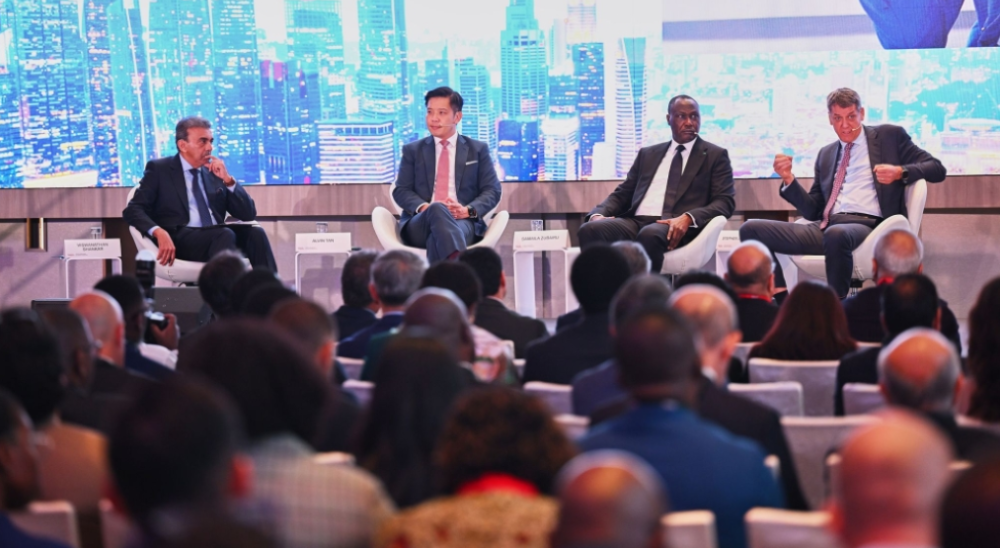
The conversations are designed to place focus on tangible outcomes in sustainable development, infrastructure, and economic transformation. Leaders are holding discussions on strengthening trade ties, building resilient economies, and aligning strategies to address climate change.
For Rwanda, the meetings build on its longstanding partnership with Singapore in fields such as ICT, education, and carbon trading.
Running alongside the ministerial exchange is the Africa-Singapore Business Forum, organized by Enterprise Singapore. The forum has over the years become the region’s largest commercial bridge, drawing more than 700 government and business leaders to explore opportunities.
Since its launch in 2010, ASBF has provided the platform through which trade between Africa and Singapore has significantly expanded.
Bilateral trade has surged by more than 50 per cent in the last five years, climbing from $9.2 billion in 2020 to $13.7 billion in 2024. Singaporean companies have also invested more than $20 billion across Africa in the same period, covering industries from finance and digitalisation to consumer markets and sustainability.
In East Africa alone, trade with Singapore doubled from $294 million in 2020 to $541 million in 2024, highlighting the region’s growing importance as a commercial partner.
The 2024 ASBF has already seen the signing of five new agreements covering climate technology, agroforestry, financial digitisation, and wellness products.
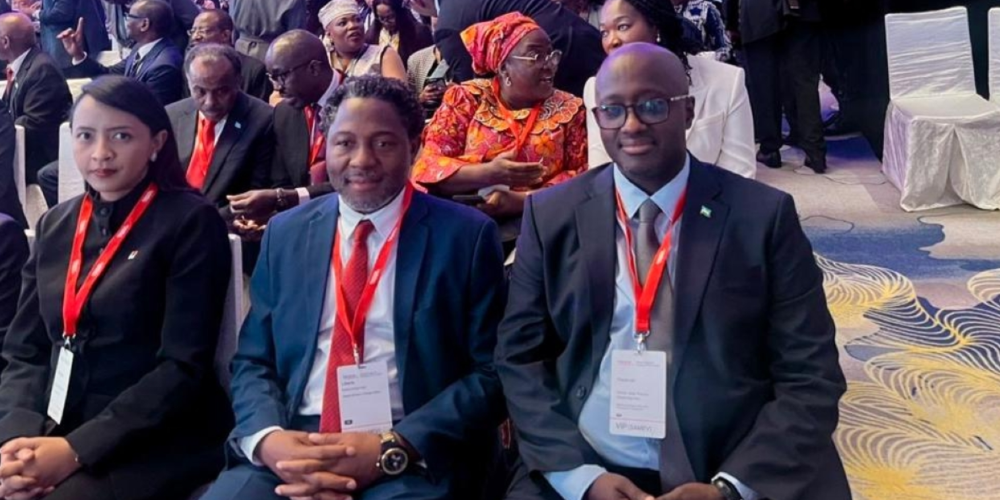
These deals underline the appetite for innovation-driven partnerships that not only boost trade but also support Africa’s wider transformation agenda. Rwanda, for instance, is expected to sign a Memorandum of Understanding with Singapore-based Climate Bridge International.
The agreement will establish a framework for developing carbon investments, enhancing carbon credit systems, and strengthening local institutional capacity to benefit from climate financing.
Such initiatives demonstrate how the Africa-Singapore partnership is aligning economic growth with sustainability. From large-scale agroforestry projects in West Africa to Rwanda’s entry into global carbon markets, the two regions are increasingly integrating environmental objectives into their economic strategies.
Singaporean expertise in technology, sustainability, and global standards is proving invaluable as Africa seeks to unlock the full potential of its natural resources while reducing climate risks.
Africa’s rapidly expanding fintech and insurance technology sectors have attracted Singaporean firms eager to tap into the continent’s youthful, tech-savvy population and growing consumer base.
With over 1.4 billion people and rising demand for modern financial services, Africa offers fertile ground for Singaporean investors to help expand financial inclusion.
What emerges from both SAMEV and ASBF is a narrative of convergence, Africa’s demand for sustainable investment and rapid innovation meeting Singapore’s capacity in technology, standards, and finance.
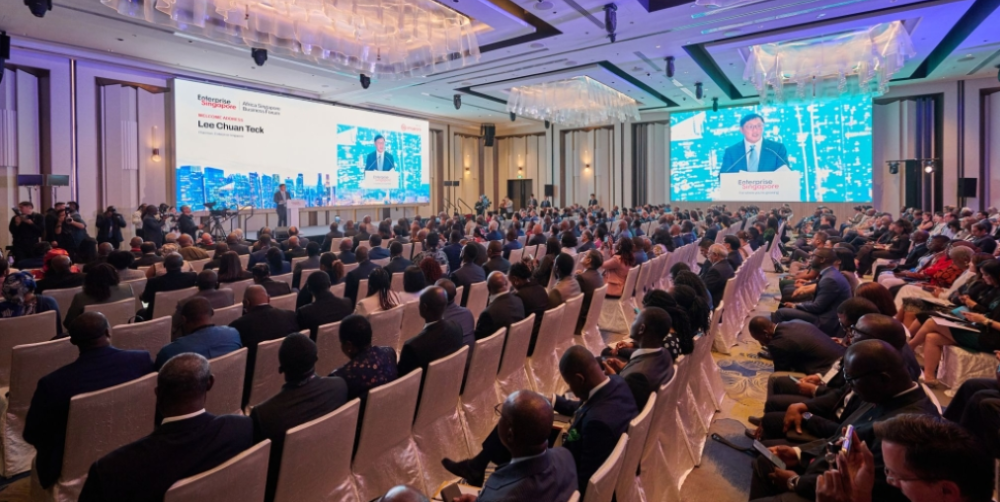
As trade volumes rise and cooperation broadens, the partnership is increasingly positioned as a model of South-South collaboration, rooted in mutual benefit and shared aspirations for prosperity.
For Rwanda, and Africa more broadly, the engagements in Singapore mark not just diplomatic exchanges but a stepping stone toward greater economic integration, enhanced resilience, and inclusive growth.
