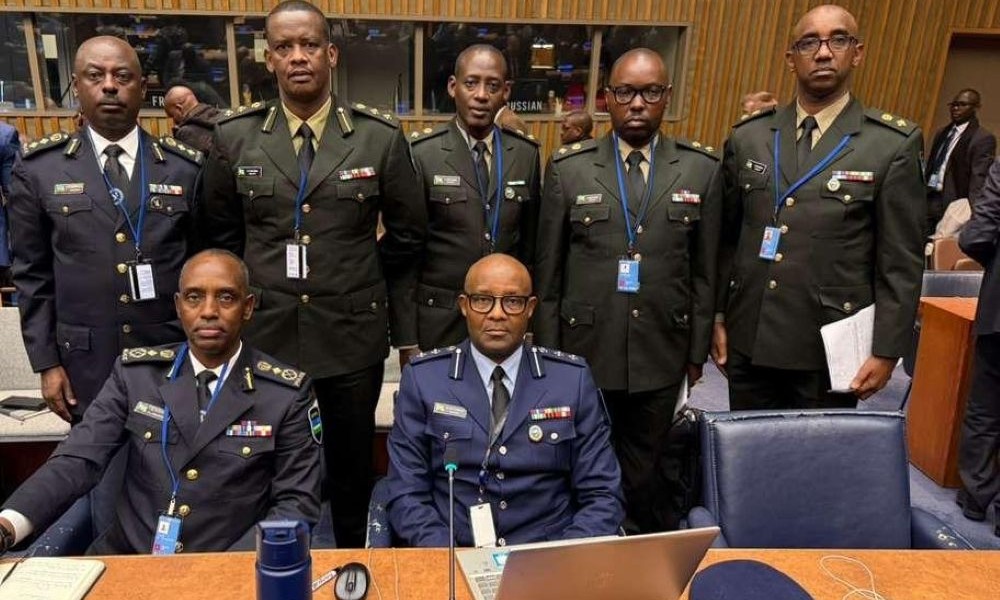
Kigali, Rwanda – A delegation of six officers from the Rwanda Defence Force (RDF) and the Rwanda National Police (RNP) is taking part in the 2026 Contingent-Owned Equipment Working Group (COEWG) at United Nations Headquarters in New York City.
Contributing to key discussions on the future of UN peacekeeping operations, the meeting comes at a time when peacekeeping missions are facing mounting financial and operational strain.
The COEWG is a quadrennial forum that brings together Troop and Police Contributing Countries (TPCCs) and the UN Secretariat to deliberate on equipment and supply matters in UN field missions.
It also serves as a platform for reviewing and updating the Contingent-Owned Equipment (COE) Manual, as well as assessing reimbursement rates for equipment and personnel deployed in peace operations.
Decisions taken at the forum have a direct impact on how contributing countries sustain their deployments and maintain operational readiness.
Speaking during the opening session, Rwanda’s Defence and Military Adviser to the United Nations, Col Deo Mutabazi, told delegates that the 2026 COEWG is being held at a critical moment for peacekeeping.
He noted that operations are “at crossroads due to a serious liquidity crisis leading to personnel and COE cuts and less predictability for the future,” highlighting the growing uncertainty facing both missions and contributing countries.
Mutabazi stressed that meaningful outcomes from the working group would signal a renewed commitment by Member States to make peacekeeping more adaptive and responsive to current and emerging challenges.
He emphasized that peacekeeping operations can only succeed when supported by “predictable, adequate, and sustainable financing,” as outlined in the Pact for the Future, which calls for stronger international cooperation in maintaining global peace and security.
On expectations from the meeting, Mutabazi underscored the need for practical solutions to pressing issues such as the rotation of contingent-owned equipment, ammunition replenishment, and reimbursement rates for deployed capabilities.
He noted that these challenges are being compounded by high operational demand and ongoing disruptions in the global supply chain.

