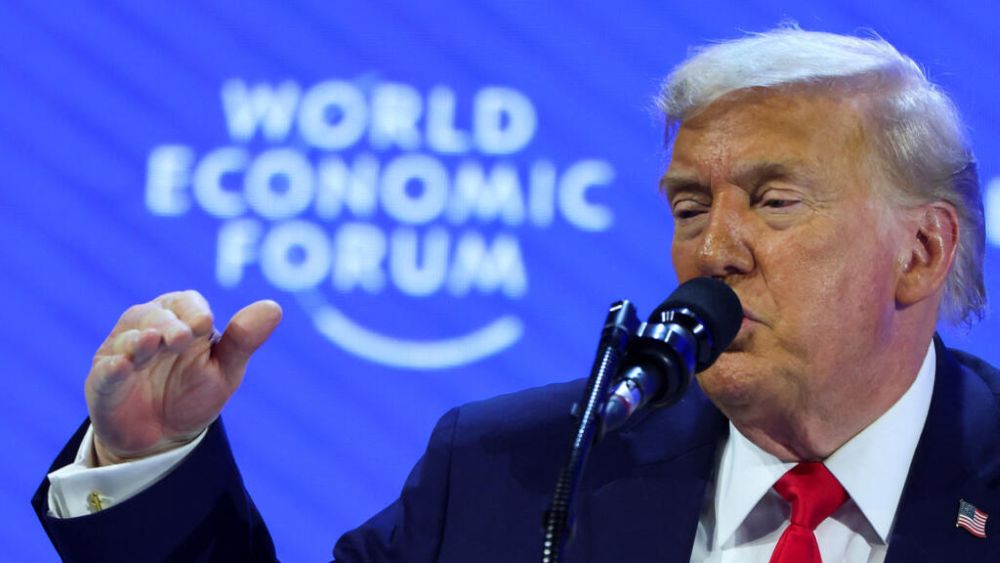
Kigali, Uganda – U.S. President Donald Trump pledged on Wednesday to revive stalled negotiations over the Grand Ethiopian Renaissance Dam (GERD), calling the dispute “very dangerous.”
Speaking at the World Economic Forum in Switzeland, 2026, after a bilateral meeting with Egyptian President Abdel Fattah al-Sisi, Trump expressed confidence that Washington could broker a lasting agreement between Ethiopia and Egypt.
Trump said the United States would push for a return to talks aimed at averting regional conflict over Nile water flows an issue long considered one of Africa’s most combustible geopolitical flashpoints.
“The dam is a big problem,” Trump said, describing it as having blocked water that has “flowed for a million years.”
He framed the standoff as a solvable technical dispute and suggested his administration could deliver a deal “once and for all,” echoing his transactional approach to diplomacy.
A high-stakes mediation bid
Trump’s proposed framework centers on “predictable water releases” during droughts to safeguard downstream countries, while preserving Ethiopia’s right to generate, and potentially export electricity from Africa’s largest hydroelectric project.
The GERD, located on the Blue Nile near Ethiopia’s border with Sudan, is designed to generate over 5,000 megawatts of power and is a cornerstone of Ethiopia’s development strategy.
Egypt, which relies on the Nile for more than 90 percent of its freshwater, has long insisted on a legally binding agreement governing dam operations.
Cairo welcomed what it described as renewed U.S. engagement, with President al-Sisi reiterating Egypt’s position that the river is “the lifeline of the Egyptian people.”
Sudan, the third principal stakeholder, has taken a more cautious line, supporting the dam’s potential benefits for flood control and electricity while pressing for safety guarantees, data sharing, and coordinated management to protect downstream communities.
Financing claims spark pushback
Trump’s remarks also revived a sensitive financial dispute. He suggested the United States had “financed” the dam a claim swiftly rejected by Ethiopian officials.
Addis Ababa maintains that the $4 billion project was funded almost entirely through domestic resources, including government bonds purchased by citizens and the diaspora.
Ethiopian authorities have consistently opposed external pressure they view as infringing on their right to utilize shared water resources for development.
Why the timing matters
The renewed diplomatic push comes months after Ethiopia formally inaugurated the GERD on September 9, 2025, effectively creating a fait accompli.
While the dam is now fully operational, the absence of a comprehensive, binding agreement has kept tensions high, particularly as climate variability heightens fears of prolonged droughts.
Egypt has recently sharpened its rhetoric, with Water Resources Minister Hani Sweilem calling for compensation over what Cairo claims was a loss of up to 38 billion cubic meters of water during earlier filling phases.
Ethiopia disputes those figures, pointing to technical studies indicating minimal long-term harm if the dam is managed cooperatively.
Analysts say Trump’s intervention reflects a narrowing diplomatic window ahead of the 2026 flood season, when operational decisions could again test relations among Nile Basin states.
Some regional observers describe the approach as “bulldozer diplomacy”, a high-pressure effort to codify technical rules after years of indecisive African Union-led talks.
Regional and global implications
The Nile Basin spans 11 countries, but the GERD dispute has crystallized around the competing priorities of upstream development and downstream water security.
Experts warn that a breakdown in talks could destabilize a region already struggling with economic stress and political transitions.
Whether Trump’s personal diplomacy can succeed where previous efforts faltered remains uncertain.
Yet his Davos pledge has thrust the GERD back onto the global stage, signaling that the world’s most powerful capitals may again seek to shape the future of Africa’s most important river.
