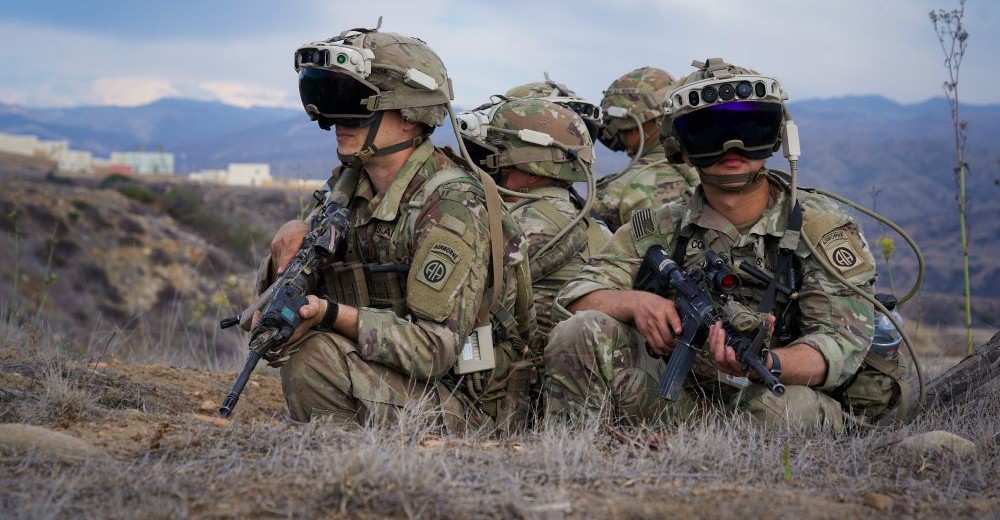
Kigali, Rwanda – The recently reported capture of Venezuela’s President Nicolás Maduro by U.S. forces has been celebrated in some Western capitals as decisive leadership and denounced elsewhere as a naked assault on international law.
The applause is loud, the outrage selective, and the logic dangerously elastic where once again, Washington has discovered an old privilege dressed up as a new doctrine: the right to cross borders, seize leaders, and call it justice, provided the flag is American.
For years, the United States framed Maduro not merely as an authoritarian leader but as a criminal threat, accusing him of narcotics trafficking and offering multimillion-dollar rewards for his arrest. Sanctions tightened, naval deployments expanded in the Caribbean, and covert pressure intensified.
When action finally came, it was presented not as regime change but as law enforcement, a surgical operation targeting one man rather than a state. Sovereignty, it seems, can be suspended if the right prosecutor knocks.
Yet beneath the theatrics lies a deeper contradiction that Victor Gao, President of the Center for China and Globalization, has repeatedly warned about.
Gao argues, that the US is confronting an uncomfortable truth that it no longer has the legitimacy, capacity, or moral authority to police the world.
Decades of military overreach have produced exhaustion, not order; instability, not peace. Great powers, Gao reminds us, decline not because they lack strength, but because they misuse it.

If Washington can unilaterally abduct a sitting president under the banner of global justice, then a question inevitably arises as to what logic Rwanda is denied the same latitude when it comes to pursuing the FDLR in eastern DRC.
The Democratic Forces for the Liberation of Rwanda are a militia formed by remnants of the perpetrators of the 1994 Genocide against the Tutsi, responsible for the murder of more than one million people in one hundred days.
Their leadership has long included individuals wanted for genocide, crimes against humanity, and terrorism. Operating from the DRC territory for nearly three decades. It has continued to carry out killings, recruit fighters, destabilize communities, and openly proclaim genocidal ideology.
Unlike the accusations leveled against Maduro, these crimes are not disputed, speculative, or politically convenient. They are documented by the United Nations, international tribunals, and human rights organizations.
And yet, when Rwanda argues that its national security is directly threatened by the continued existence of this group across an artificial colonial border, the response from the same Western voices is firm and moralistic.

They insist on the respect of sovereignty, avoiding escalation and trust multilateral processes. Apparently, it appears that sovereignty is sacred, until America decides it isn’t.
Renowned African scholar and lawyer Prof. PLO Lumumba captures this hypocrisy with brutal clarity. In his analysis of U.S. actions toward Venezuela, he argues that American democracy operates on a conditional definition.
“If you are a little country, democracy means doing what America wants you to do. Those who comply are rewarded with legitimacy, loans, and photo-ops. Those who resist are criminalized, sanctioned, or removed,”
Democracy, Lumumba suggests, is less a principle than a leash. This double standard becomes impossible to ignore when placed side by side.

Sovereignty for some, exceptions for others
The United Nations Charter prohibits the use of force against another state except in self-defense or with Security Council authorization. This rule is invoked religiously when African states act unilaterally, yet treated as an inconvenience when the United States does the same.
The capture of a sitting Venezuelan president without UN authorization is described as bold. Rwanda’s pursuit of an armed genocidal force across a porous border is labeled destabilizing.
What makes the contradiction sharper is intent. Rwanda’s interest in neutralizing the FDLR is defensive, rooted in survival, memory, and unfinished justice.
The U.S. interest in Venezuela, as Lumumba notes, is entangled with oil, geopolitics, BRICS anxiety, military industry profits, and strategic control of the Caribbean. One is about preventing a return to genocide. The other is about preserving hegemony.

The world America can’t police forever
The belief that one nation can enforce order everywhere, define justice universally, and exempt itself from the rules it imposes on others is not just outdated, it is dangerous. And in such a world, selective justice will not survive scrutiny.
If the United States insists on the right to chase its enemies across borders, it cannot credibly deny that right to others facing existential threats. If Maduro can be seized in Caracas, then Kigali’s demand to dismantle the FDLR in eastern DRC is not radical, it is logical.
The real question, then, is not about legality alone. It is about honesty. Either international law applies to everyone, or it is merely a script read aloud when convenient.
And if the rules change depending on who holds the gun, then the world is not witnessing justice, it is watching power perform. In that performance, the applause may be loud today. But history, as always, keeps its own score.
