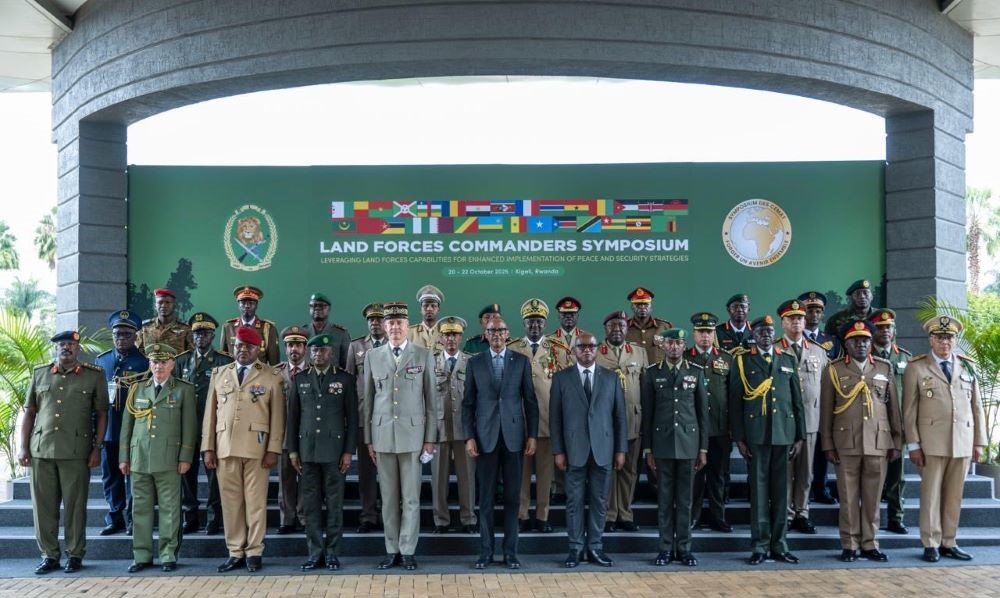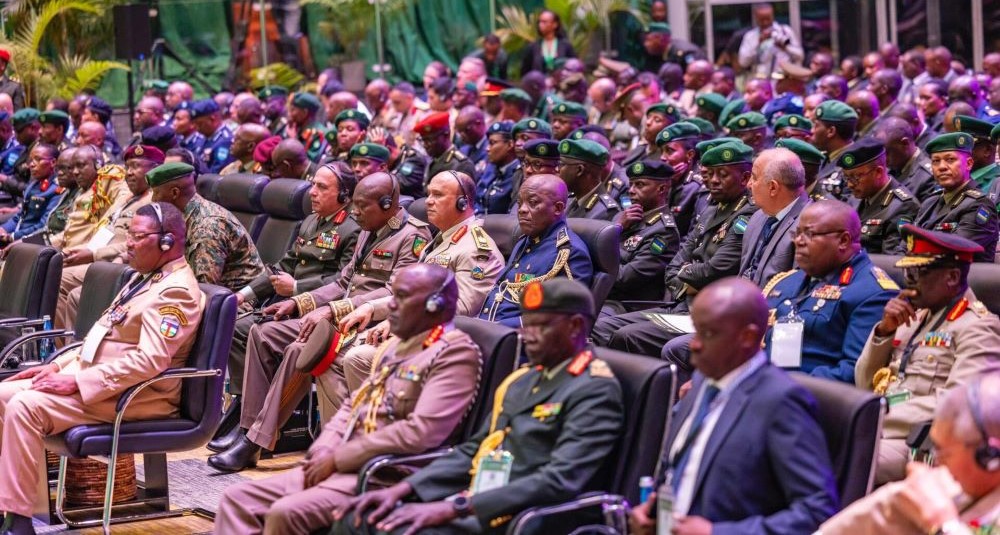
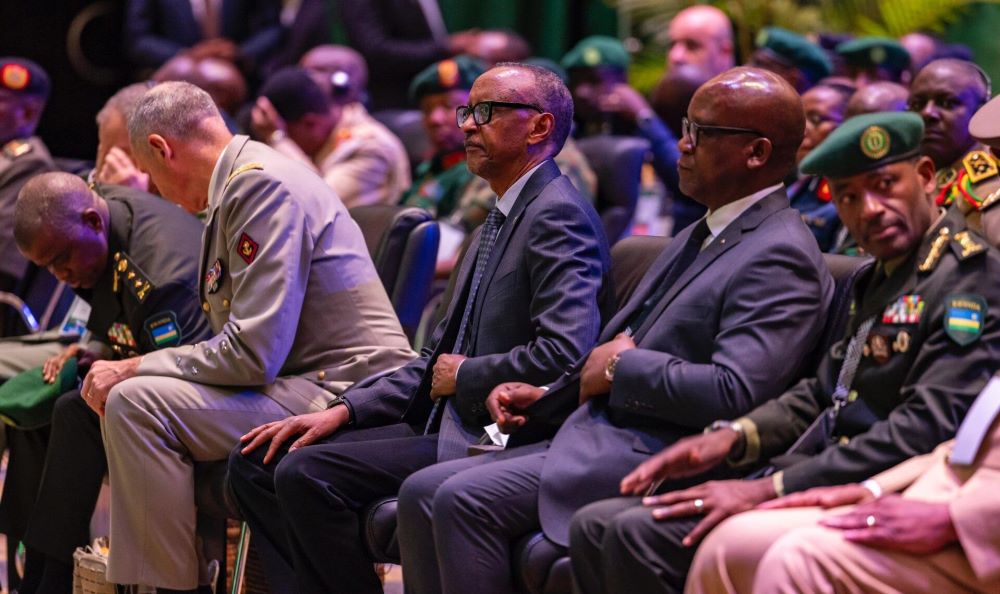
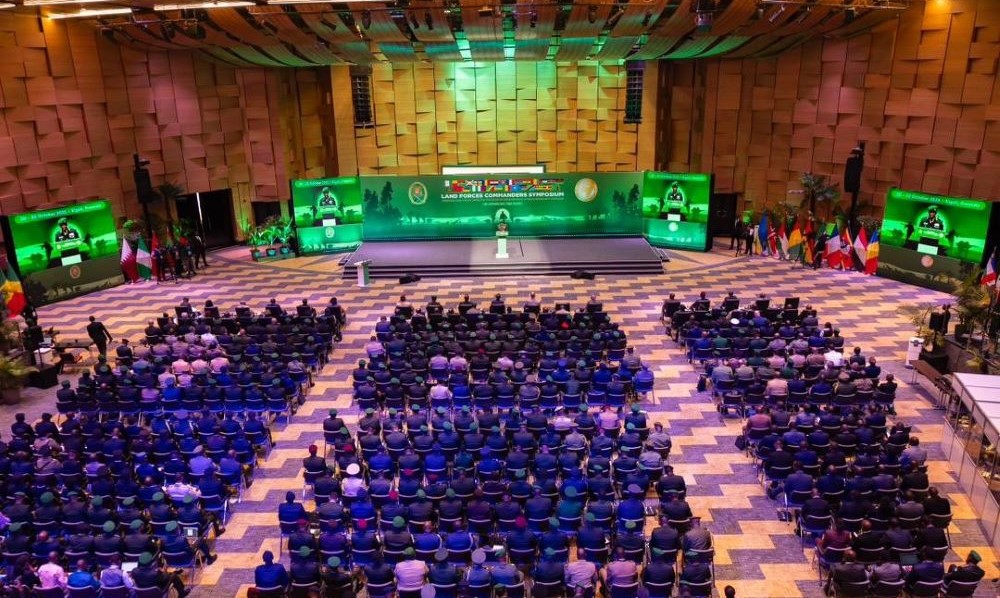
At the opening of the Second Land Forces Commanders Symposium held on October 21, 2025, in Kigali, President Paul Kagame delivered a compelling call for Africa to take charge of its own peace and security.
Addressing senior military leaders from across the continent and partner nations, Kagame warned that disinformation and cyber-attacks have become modern tools of destabilization, equally dangerous as armed conflict, and urged African armies to adapt swiftly to this evolving threat landscape.
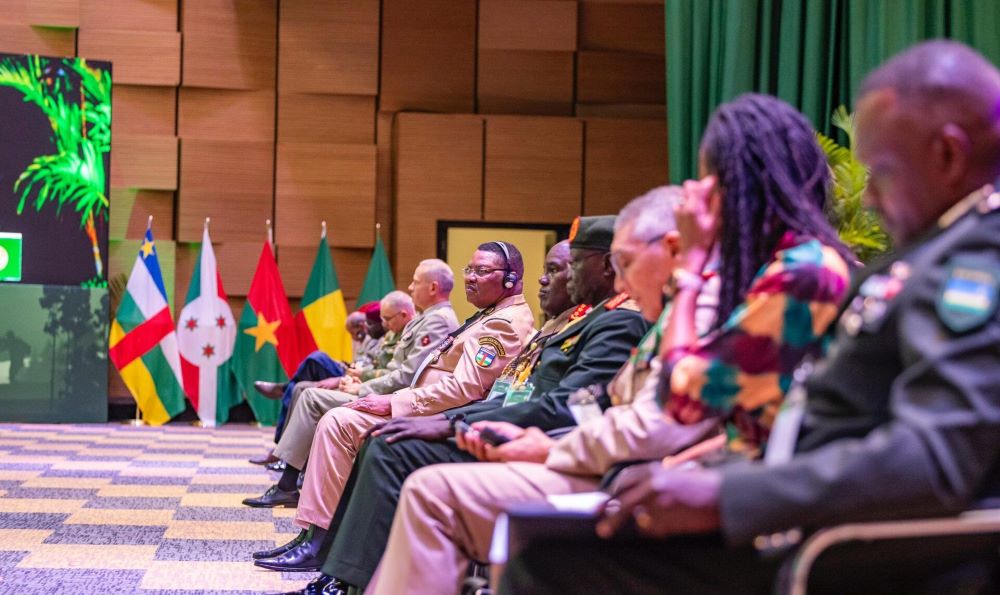
The symposium, themed “Forging the Future Together,” convened military chiefs and senior officers from 19 countries, including Algeria, Kenya, Morocco, Uganda, and host nation Rwanda.
Representatives from partner nations such as France, Jordan, Qatar, and Egypt also attended. The gathering provided a platform for open dialogue on strengthening land forces cooperation and enhancing operational effectiveness across Africa.

“Many of you have traveled great distances to be here. That reflects your determination to confront our shared security challenges together,” Kagame said.
He emphasized that Africa’s conflicts have become increasingly asymmetric, with crises now shaped by political, humanitarian, and environmental dimensions. In this complex reality, land forces play a decisive role as first responders and stabilizers.
“You are the first to deploy and the last to leave. Speed matters because conditions on the ground evolve rapidly. But speed without accuracy is dangerous, and accuracy without speed is pointless. There has to be a balance between the two,” he noted.
He warned, however, that bureaucratic delays and remote interference often weaken Africa’s ability to respond to security threats effectively. To overcome this, Kagame urged commanders to cultivate agility, discipline, and trust, both within their ranks and between the military and the civilians they protect.
“Everything that you do must serve the safety and well-being of citizens. The discipline and professionalism you show are either what builds or breaks the public trust,” he said.
Disinformation and cyber warfare: The new frontline
In one of his most pointed remarks, Kagame highlighted that cyber threats and disinformation have emerged as the new battlegrounds in modern warfare. “Our economies and security systems rely on digital networks that transcend geography. Cyber-attacks and disinformation can destabilize nations as effectively as armed attacks,” he said.
The Head of State cautioned that the spread of false narratives, often fueled by external interests, that have been used to divide societies and weaken African-led peace initiatives.
This, he said, demands that African militaries expand their definition of defense beyond borders and battlefields.
“Sovereignty today is not just about borders, it is also about our ability to choose our partners from a position of strength and align with our interests,” he noted. Kagame’s message underscored a broader reality that the future of warfare is digital, and Africa must be prepared to defend both its physical and information spaces.
He urged the continent’s defense leaders to prioritize resilience against cyber vulnerabilities and to build the capacity to counter digital manipulation campaigns that threaten national cohesion.
Africa’s security must be built by Africans
Turning to the continent’s broader security outlook, Kagame emphasized that Africa remains home to the world’s highest number of active conflicts, yet continues to depend heavily on foreign intervention.
“We cannot expect others to carry the responsibility for Africa’s security. None of the challenges we face are beyond our capacity to manage or resolve,” he said. He called on African armies to leverage existing regional and continental frameworks to reinforce collective action.
“Our armies already work side by side under regional and continental mechanisms. Let us continue to strengthen these bonds, enhance cooperation, and remain steadfast in shaping the secure and stable Africa we all aspire to,” he added.
The President encouraged delegates to use the symposium for frank discussions, experience sharing, and strategic reflection on the continent’s future defense posture. His remarks resonated with the gathering’s overarching purpose, to strengthen cooperation, interoperability, and professionalism among Africa’s land forces.
Earlier, RDF Army Chief of Staff Maj Gen Vincent Nyakarundi described the symposium as an opportunity to address challenges posed by emerging technologies such as drones and artificial intelligence, which are transforming the nature of warfare.
“We will engage in candid discussions on strengthening bilateral and multilateral cooperation, cementing civil-military relations, and enhancing interoperability among our armies,” he said.
From the perspective of partners, French Army Chief of Staff Gen. Pierre Schill, who hosted the inaugural edition in France in 2024, commended Rwanda for hosting the second edition, saying it demonstrates a shared vision of collective defense and mutual respect.
“Rwanda represents this continued desire to share experiences through dialogue. The will to strengthen our collective capacity to better cooperate and ensure shared security is founded on mutual respect,” Schill said.
The French and Rwandan armies, he added, are pursuing renewed defense cooperation, particularly in joint training and operational collaboration to enhance readiness and efficiency.
In an era where cyber warfare and disinformation are redefining global threats, the symposiums goal is an appeal and rallying call for African armies to lead from the front, not just on the battlefield, but also in the digital domain, where the struggle for stability increasingly unfolds.