
A sweeping corruption case in Bangladesh has culminated in a set of high-profile convictions that stretch across political borders and family lines, drawing renewed international attention to the turbulence that followed the ouster of former Prime Minister Sheikh Hasina.
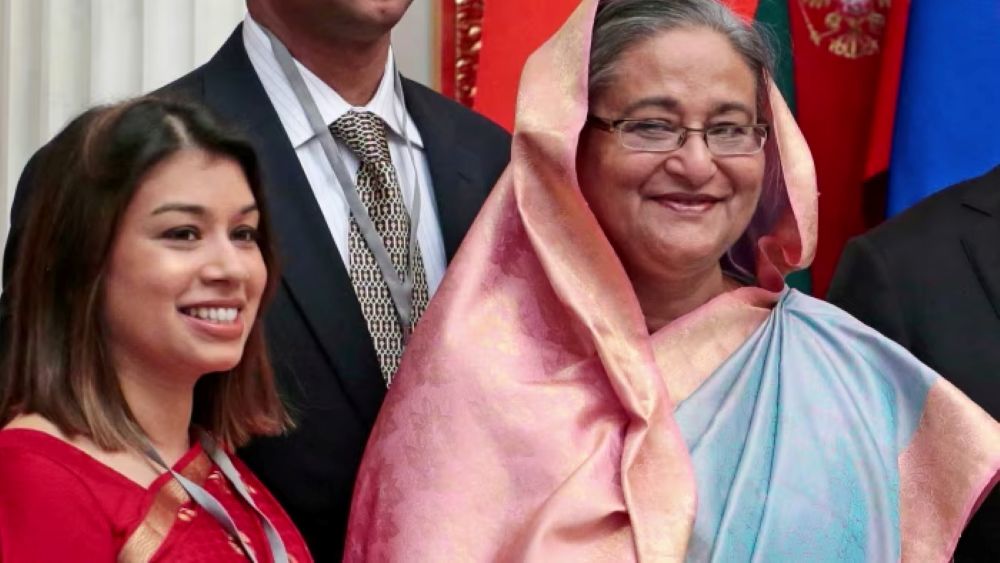
A special court in Dhaka on Monday, December 1, 2025 handed prison sentences to British MP Tulip Siddiq, her mother Sheikh Rehana, and the deposed premier, in a ruling delivered entirely in absentia.
The verdict stems from accusations that the three women manipulated government channels to secure valuable land plots in and around the capital, an allegation each has strongly rejected as politically driven.
The court sentenced Sheikh Rehana, sister to Sheikh Hasina, to seven years in prison after prosecutors argued she played a central role in acquiring multiple government plots.
Tulip Siddiq, who represents Hampstead and Highgate in the UK Parliament, received a two-year sentence after the court found she had influenced her aunt to bypass eligibility rules and approve allocations benefiting her immediate family.
Judge Rabiul Alam, presiding over Dhaka’s Special Judge Court, said the evidence demonstrated full misuse of political power and authority within the former premier’s office.
Sheikh Hasina herself was sentenced to five years in prison for approving the disputed allocations, adding to the death sentence she received last month for crimes against humanity linked to the violent crackdown on the student-led uprising that forced her from office in 2024.
Prosecutors from the Anti-Corruption Commission said they presented documents, correspondence, encrypted messaging exchanges and testimony pointing to Siddiq’s direct involvement.
Khan Mainul Hasan, one of the lead prosecutors, said Siddiq “insisted that her aunt Sheikh Hasina allocated plots for her mother and siblings, as she herself took three, one for her and two for her children.”
He said the British MP had “called him (Ahmed), communicated via some encrypted apps, and even met him while she was in Dhaka,” referring to Salahuddin Ahmed, the former principal secretary to the prime minister.
According to Hasan, these communications established a pattern of personal lobbying that violated allocation rules and placed Siddiq at the center of an orchestrated misuse of public assets.
The judge underscored that Bangladeshi law allows prosecution of any citizen regardless of location, noting, “The court has full authority to try any Bangladeshi, whether the person is in the country or abroad.”
Authorities said formal notification of the verdict would be passed to the UK, though enforcement remains doubtful given the absence of an extradition treaty between the two countries.
Siddiq, who resigned earlier this year as a UK Treasury minister after questions about her ties to Bangladeshi political figures, dismissed the ruling as illegitimate.
In comments released after the verdict, she called the proceedings “persecution and a farce” and reiterated that the case was built on forged documents and political hostility.
She earlier told The Guardian that the allegations were “completely absurd” and described herself as “collateral damage” in the feud between her aunt and interim leader Muhammad Yunus.
In her latest statement, she said, “This whole process has been flawed and farcical from the beginning to the end. The outcome of this kangaroo court is as predictable as it is unjustified.”
Her lawyers echoed those concerns, arguing that the case lacked credible evidence and that none of the accused had adequate representation. The Awami League, now banned from political activity under the interim administration, has dismissed the charges as part of a campaign targeting members of Hasina’s circle.
Sheikh Hasina, speaking through representatives, said investigations under Yunus’s government were “controlled by an unelected government run by the Awami League’s political opponents” and accused the interim administration of using corruption probes “as a smokescreen to distract attention from his own governance failings.”
With all three defendants outside the country and no extradition mechanism available, the legal and political repercussions now shift to the international arena, where the verdict deepens debate over Bangladesh’s ongoing transition, the legitimacy of its interim government, and the lingering fractures left by the uprising that reshaped its leadership.
