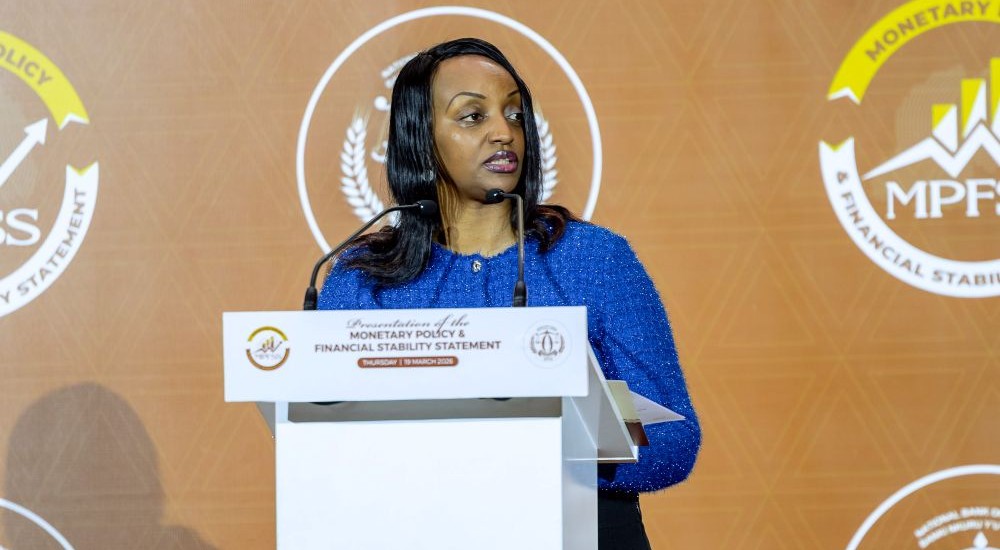
KIGALI – The National Bank of Rwanda (BNR) has tightened monetary policy in response to rising inflationary pressures, even as Rwanda posted a strong 9.4% economic growth in 2025. This, officials say, is aimed at sustaining momentum while preserving macroeconomic stability.
Presenting the March 2026 Monetary Policy and Financial Stability Statement, Governor Soraya Hakuziyaremye warned that global uncertainties, particularly geopolitical tensions and commodity price volatility, are beginning to weigh on Rwanda’s inflation outlook and broader economic trajectory.
“We meet at a time when the global economic environment is marked by elevated uncertainties. These dynamics are already influencing inflation trends and growth prospects both globally and domestically,” she said.

Inflation pressures and policy response
The central bank raised its policy rate to 7.35% after inflation breached the upper bound of its target range, reaching 9.2% in February 2026. While headline inflation averaged 7% in 2025, pressures intensified in the second half of the year. These were driven by rising energy costs, food prices, and higher service tariffs.
Hakuziyaremye framed the policy shift as necessary to anchor inflation expectations and protect long-term growth. “Sustainable growth cannot be achieved in an environment of elevated inflation,” she said.
According to her, the bank’s mandate is to maintain price stability within a range that supports economic expansion, and that requires timely intervention when risks emerge.
Inflation is expected to remain elevated in the near term before gradually easing back within the 2–8% target band by the end of 2026, although this outlook remains sensitive to external shocks, particularly in global energy markets.
She further stressed the importance of policy coordination, noting that “monetary and fiscal policy alignment remains essential to sustaining Rwanda’s growth trajectory while ensuring macroeconomic stability.”
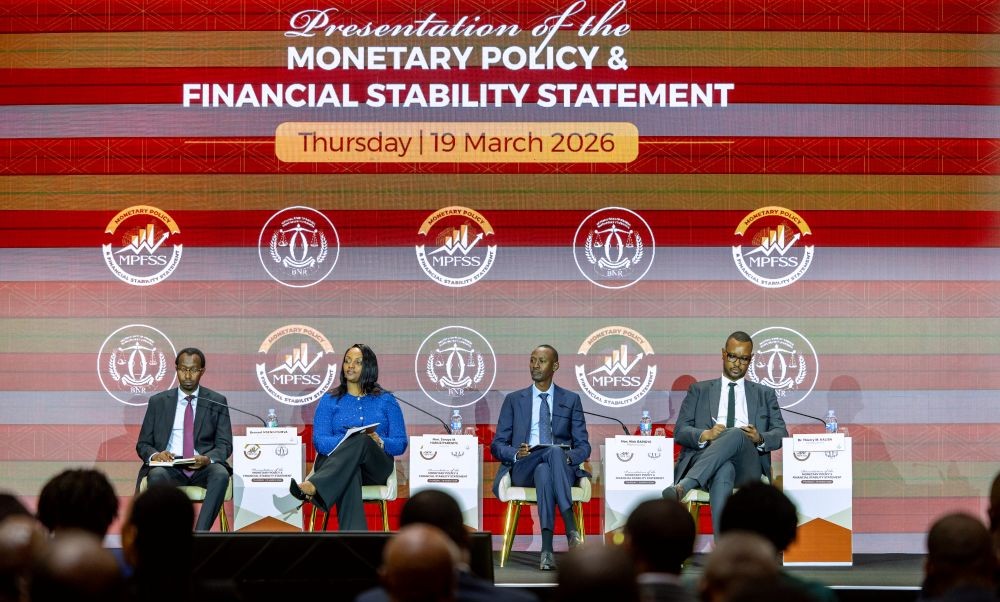
Strong growth and financial sector resilience
Despite a challenging global backdrop, Rwanda’s economic performance in 2025 remained robust and broad-based. Growth was driven by industry (11%), services (8.5%), and agriculture (7.4%), supported by continued infrastructure investment and strong export performance, particularly in minerals and coffee.
The external sector also showed a reasonably good performance, with exports rising by 11.4% and exchange rate pressures easing, supported by tourism receipts, remittance inflows, and foreign exchange market reforms.
At the same time, the financial sector continued to deepen, with total assets increasing by nearly 24% to Rwf 15.9 trillion, equivalent to 68% of GDP. Credit to the private sector expanded by 25%, while asset quality improved, with non-performing loans declining to 2.5%.
Capital and liquidity buffers remained well above regulatory thresholds, underscoring the sector’s ability to absorb potential shocks.
However, policymakers acknowledged structural challenges, including concentration of credit in a few sectors and limited financing for agriculture and other strategic areas.
Deputy Governor, Hon. Nick Barigye said future progress will depend on broadening access to finance. “The next phase should ensure that financial sector growth translates into wider economic participation, particularly for agriculture and small enterprises,” he noted.
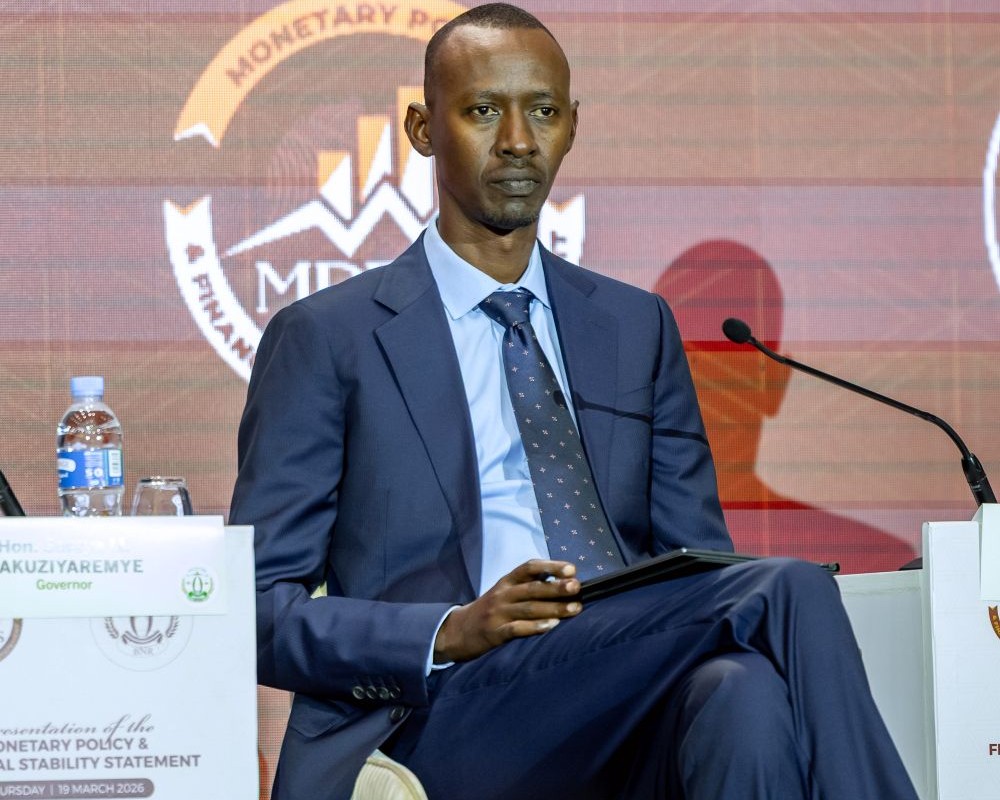
Inclusion gaps and reform agenda
While financial inclusion has improved significantly, with 2.5 million Rwandans now holding savings accounts, access to credit and insurance remains uneven, particularly among women and youth.
Barigye identified limited collateral and financial literacy as key barriers. “Expanding guarantee schemes and strengthening financial education will be critical to unlocking access to finance for underserved groups,” he said.
The central bank is also advancing structural reforms to strengthen the financial ecosystem, including the integration of the Business Development Fund (BDF) into the Development Bank of Rwanda (BRD).
This integration will create a more efficient and impactful institution, streamlining service delivery and enhance support for businesses, according to officials.
The central bank remains cautiously optimistic, emphasizing that Rwanda’s economic fundamentals remain strong but increasingly exposed to global volatility. “The economy is resilient, but heightened uncertainty requires vigilance and readiness to act,” Hakuziyaremye said.
