KIGALI – Rwanda’s economy grew by an impressive 9.4 percent in 2025, marking one of the country’s strongest growth rates in recent years, driven by robust performance in industry, services, and export crops, according to the National Institute of Statistics of Rwanda (NISR).
The country’s Gross Domestic Product (GDP) reached Frw 23,387 billion in 2025, up from Frw 19,918 billion in 2024, reflecting sustained economic recovery and expansion.
Services remained the dominant contributor, accounting for 52 percent of GDP, followed by industry at 22 percent and agriculture at 20 percent. Net taxes contributed the remaining 5 percent.
Economic growth strengthened steadily throughout the year. Quarterly data shows 6.5 percent growth in the first quarter, rising to 7.8 percent in the second quarter, and peaking at 11.8 percent in the third quarter, before finishing the year at 11.2 percent in the fourth quarter.
Government Reforms and Private Investments Pay Off
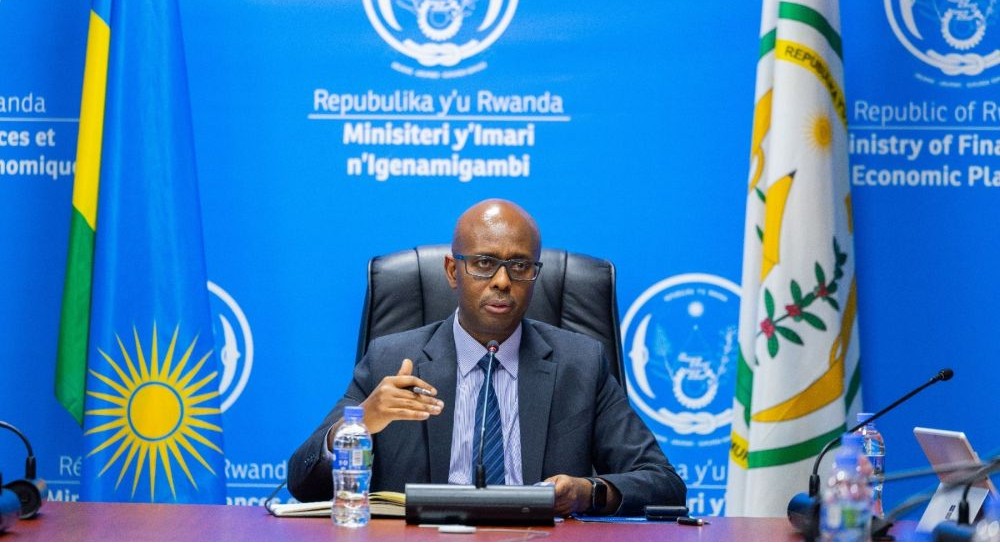
Yusuf Murangwa, Minister of Finance and Economic Planning, said the strong performance reflects the positive impact of government reforms and private sector investments.
“An economy growing around six percent is already good, but growth above seven percent is exceptional. This demonstrates that both government policies and private sector activity are working effectively,” he said.
Murangwa added that maintaining this pace of growth would significantly advance Rwanda’s development goals. “Sustaining close to 9.4 percent growth, in line with our National Strategy for Transformation target of 9.3 percent, will deliver tangible improvements in living standards,” he noted.
Industry and Exports Lead Growth
Industry emerged as the fastest-growing sector, expanding by 11 percent, followed by services at 9 percent and agriculture at 7 percent. Mining and quarrying activity surged by 17 percent, while construction and manufacturing grew by 11 percent and 10 percent, respectively.
Manufacturing gains were largely driven by construction materials. Cement production jumped 35 percent, while metal products, machinery, and equipment increased by 21 percent.
Chemicals, rubber, and plastics production rose 24 percent, including a 21 percent increase in paint output. Food processing also recorded growth of 9 percent, although textile production declined slightly by 1 percent.
Agriculture showed mixed but overall positive results. Production of food crops increased by 3 percent, while export crops surged 32 percent, propelled by a 60 percent increase in coffee production and 8 percent growth in tea. Other cash crops, including pyrethrum and sugarcane, grew around 4 percent.
In the services sector, wholesale and retail trade expanded by 15 percent, alongside a 15 percent rise in information and communication services, reflecting stronger commercial and digital activity. Transport services grew 7 percent, led by 11 percent growth in land transport, while air transport declined 4 percent.
Global Risks Pose Potential Challenges
Authorities cautioned that global developments could create short-term pressures. Murangwa highlighted geopolitical tensions in the Middle East, particularly the conflict involving the United States, Israel, and Iran, which may disrupt supply chains and energy prices.
“Horticultural exports to the Middle East have been affected, and we are exploring alternative markets. The impact on fuel, fertilizers, and transport costs is still being assessed,” he said.
Despite these external pressures, officials noted that Rwanda’s diversified economy and strong domestic growth provide resilience. “Current indications suggest the economy will remain largely unaffected,” Murangwa added.
