Kigali, Rwanda – In 2025, Rwanda’s environment, climate, and natural resources sector recorded a decisive year of progress that reinforced the country’s reputation as a regional and global leader in sustainability.
Through policy reforms, strengthened institutions, international partnerships, and visible on-the-ground action, Rwanda translated long-standing environmental ambition into concrete results.
The year demonstrated a deliberate shift from planning to delivery, ensuring that climate action, biodiversity protection, and natural resource management remained firmly anchored in national development priorities.
Reinforcing climate ambition through policy and planning
A cornerstone of the year was the launch and update of Rwanda’s nationally determined contributions, known as NDCs 3.0. This framework refined the country’s climate commitments under the Paris Agreement, clearly outlining mitigation targets, adaptation priorities, and investment needs.
The updated plan strengthened focus on climate-resilient agriculture, sustainable land use, low-carbon transport, and climate-smart urban development.
By aligning national planning with global climate goals, Rwanda announced its resolve to pursue economic growth without compromising environmental integrity, while sending a strong signal of credibility to international partners and investors.

Mobilizing finance for green and resilient development
Access to climate finance emerged as another major achievement in 2025. The Development Bank of Rwanda was officially accredited by the Green Climate Fund, enabling direct access to international resources for climate mitigation and adaptation projects.
This milestone enhanced national capacity to finance renewable energy, climate-smart agriculture, ecosystem restoration, and resilient infrastructure.
Complementing this progress, the Cabinet approved Rwanda’s Green Taxonomy, a classification system designed to guide financial institutions toward environmentally sustainable investments.
Together, these initiatives strengthened confidence in Rwanda’s green finance ecosystem and reduced barriers to scaling climate action.

Modernizing land governance and environmental regulation
Significant strides were also made in land management and environmental regulation. The National Land Authority launched the Rwanda Land Dashboard, a digital platform that improves transparency, planning, and decision-making by providing accessible and reliable land data.
This innovation supports sustainable land use while addressing challenges related to land administration and resource allocation.
At the same time, Parliament approved a law on the plastic levy, reinforcing Rwanda’s long-standing leadership in tackling plastic pollution.
The law introduced economic measures to discourage harmful plastic use, strengthening environmental protection while encouraging sustainable alternatives.

Driving action on air quality, carbon markets and biodiversity
This year, Rwanda launched a nationwide clean air campaign aimed at raising awareness about air pollution and promoting cleaner transport, energy use, and industrial practices to protect public health.
Internationally, Rwanda signed an implementation agreement with Singapore on carbon cooperation, creating a framework for high-integrity carbon markets aligned with Article 6 of the Paris Agreement.
Biodiversity conservation also took center stage as Rwanda hosted the 11th Regional Dialogue on Biodiversity Finance and launched its National Biodiversity Strategy and Action Plan.
These efforts highlighted the country’s commitment to protecting ecosystems while ensuring sustainable livelihoods.

Global leadership and a platform for the future
Rwanda’s leadership was further underscored by hosting the World Congress on Agroforestry 2025 in Kigali, positioning agroforestry as a practical solution for food security, climate resilience, and landscape restoration.
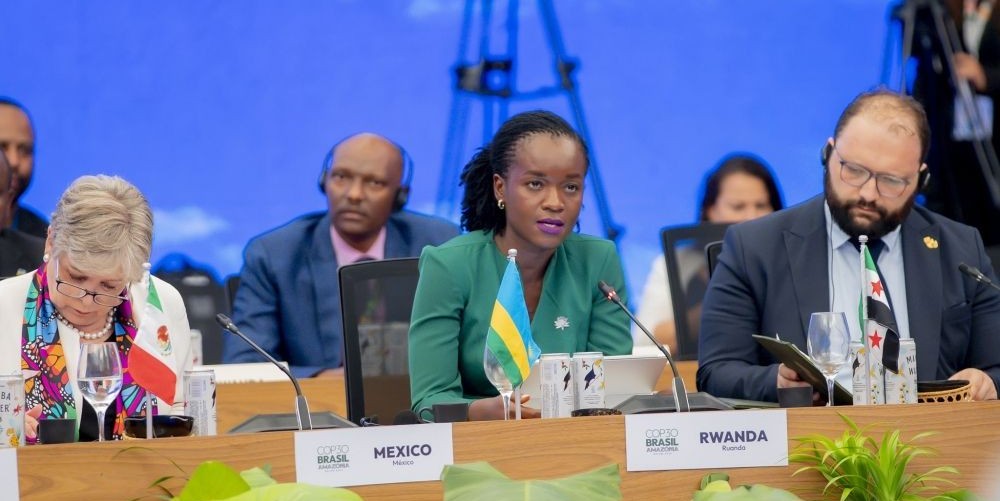
The country also actively participated in the United Nations Climate Change Conference in Belém, Brazil, known as COP30, where it reaffirmed its commitments and engaged in shaping global climate policy.
Collectively, the achievements of 2025 marked a year of consolidation and forward momentum.
By strengthening institutions, expanding partnerships, and grounding climate action in national development, Rwanda laid a strong foundation for accelerated implementation in the years ahead, proving that sustainable development is both achievable and transformative.

