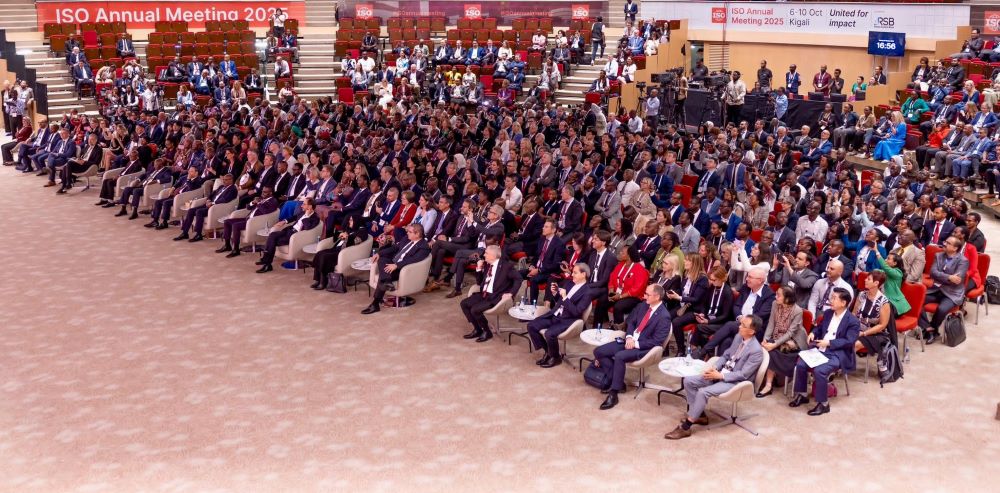
Rwanda’s capital, Kigali, has become the epicentre of global dialogue on quality, innovation, and sustainable growth as the country hosts the 2025 International Organization for Standardization (ISO) Annual Meeting.
a landmark event uniting leaders, policymakers, and experts from over 176 countries under the theme “United for Impact,” runs from October 6–10 and marks only the second time the prestigious ISO gathering has been hosted in Africa, after South Africa in 2019.
Delegates from governments, the United Nations, international organisations, and the private sector have convened to discuss how global standards can drive inclusive development amid rapid technological change and growing climate challenges.
Opening the meeting, Prime Minister Dr. Justin Nsengiyumva called for stronger collaboration in shaping shared solutions to global issues. He reminded participants that Rwanda’s own journey of transformation is proof of what can be achieved through collective effort.
“Much of our progress has come from working together around a shared vision. By uniting our efforts, we have turned challenges into opportunities and built a foundation for growth, resilience, and prosperity,” he said.
“In the same spirit, the global community can achieve far greater impact when we pool our knowledge, resources, and determination to address the pressing challenges we all face.”
The conference, guided by the pillars “Future-Ready Together” and “Solutions with Impact,” has highlighted how standards can act as powerful tools for cooperation, innovation, and resilience.
Trade and Industry Minister Prudence Sebahizi underscored that for developing economies like Rwanda, standards are not just technical guidelines but engines of transformation.
“Rwanda’s participation in this meeting underscores our commitment to using standards as an engine for innovation, competitiveness, and inclusive development,” he said, citing some achievements already visible on the ground.
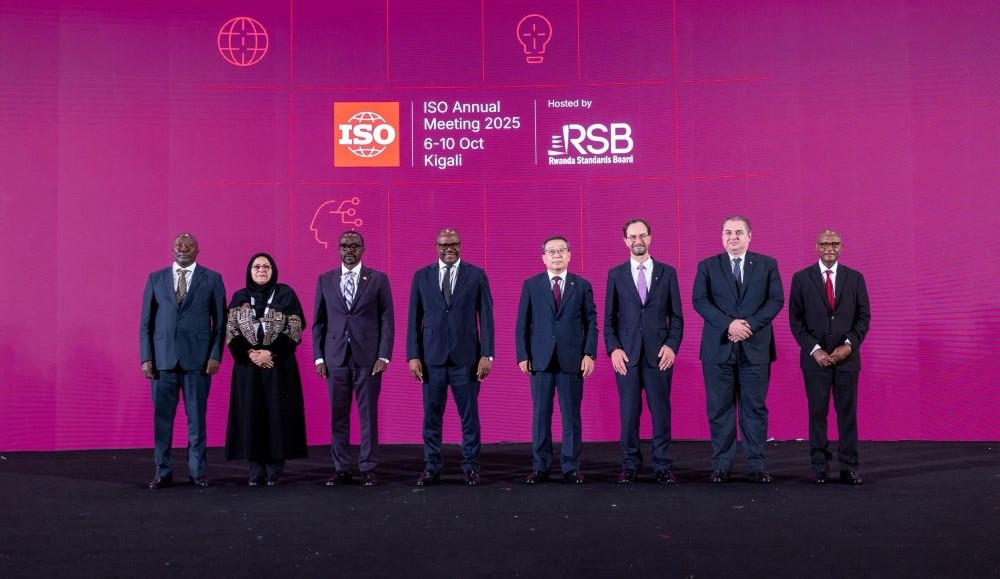
In a move widely praised by business leaders, the government recently cut certification and testing fees by up to 90 per cent, a reform that has lowered barriers for micro, small, and medium enterprises (MSMEs) seeking quality certification.
The changes, which took effect in January 2025, have made standardization services accessible to all businesses, with fees capped at Rwf100,000 for large enterprises and, in many cases, waived entirely for small firms.
Raymond Murenzi, Director General of the Rwanda Standards Board (RSB), said the reduction was a deliberate effort to empower local entrepreneurs and support the country’s Made in Rwanda initiative.
“Since the beginning of 2025, prices have been significantly reduced, allowing SMEs to access standardization services easily and at very low rates,” he said, adding that testing for micro-toxins in maize, which once cost Rwf147,000, now costs only Rwf10,000, a 93 per cent decrease.
For many businesses, the impact has been transformative. Most business owners say that certification reforms have helped their business grow beyond domestic borders with several exporting to other East African Community member states
These reforms build on Rwanda’s long-term Zamukana Ubuziranenge (“Grow with Standards”) programme launched in 2017, which has supported over 1,000 SMEs in achieving certification and adopting international best practices, with 41.6% of beneficiaries led by women and 27.7% by youth.
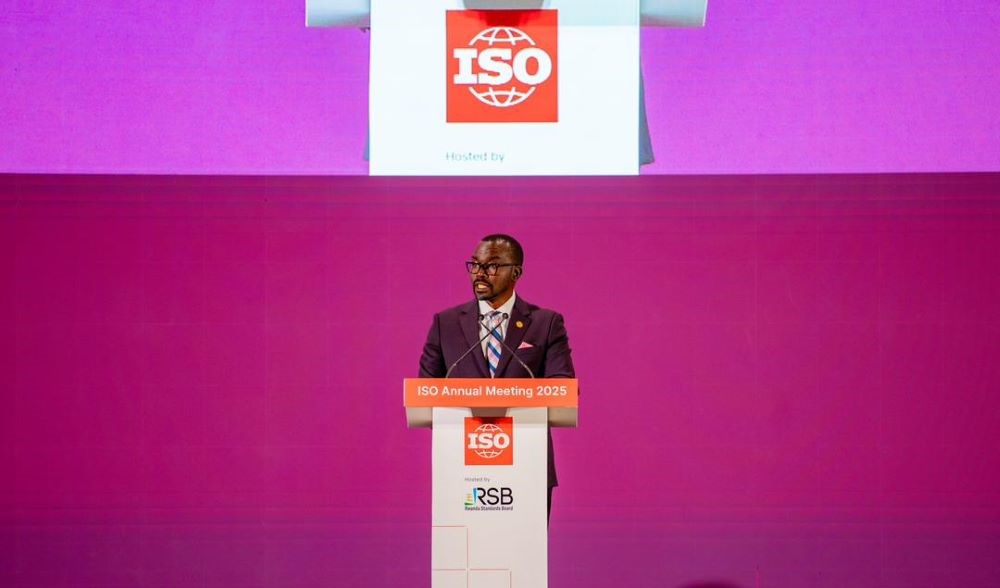
The ISO Secretary-General Sergio Mujica praised Rwanda’s leadership in integrating standards into its national growth strategy, noting that the Kigali meeting is about “sharing experiences, learning from one another, and building partnerships that make standards meaningful tools for progress.”
As delegates continue discussions on sustainability, digital transformation, and global cooperation, Rwanda’s example is standing out as a model for practical innovation in standardization.
Through policy reforms, investment in quality infrastructure, and deliberate inclusivity, the country is demonstrating that quality standards are not just technical measures, they are pathways to equitable growth, competitiveness, and shared prosperity.
