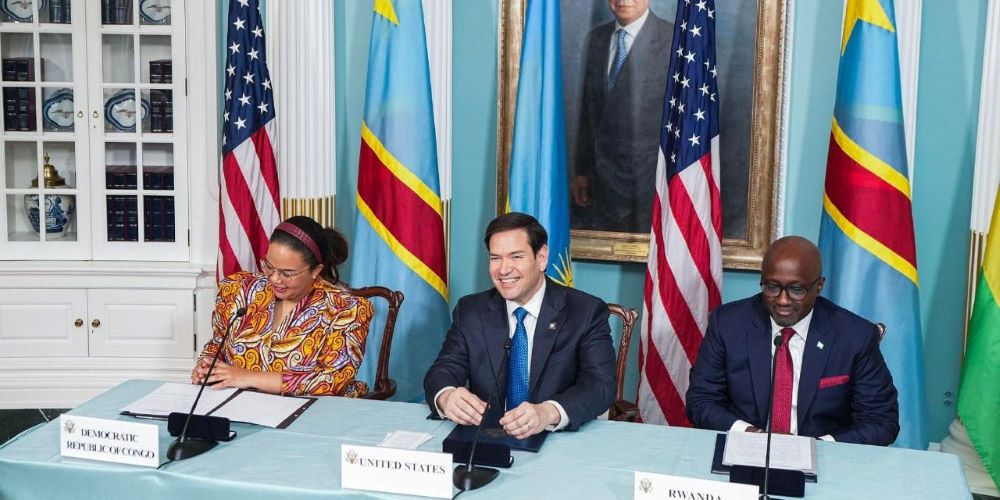
Rwanda has reaffirmed its commitment to regional peace and economic cooperation despite the Democratic Republic of Congo’s last-minute refusal to sign a key U.S.-mediated agreement aimed at strengthening economic integration across the Great Lakes region.
The long-anticipated accord, known as the Regional Economic Integration Framework (REIF), was designed to deepen trade ties, attract investment, and boost cross-border development between Rwanda and the DRC.
It formed a major pillar of the June 27, 2025 U.S.-facilitated peace deal, intended to rebuild trust and stabilize eastern Congo through economic cooperation.
However, optimism quickly faded when Kinshasa abruptly pulled out of the signing ceremony in Washington, D.C., a move that caught mediators and negotiators by surprise.
Both delegations had already finalized the text, and preparations were underway for the official signing. Yet, at the last minute, President Félix Tshisekedi instructed his team not to sign, citing concerns over domestic political backlash.
Rwanda’s Foreign Minister, Olivier Nduhungirehe, expressed disappointment, describing the move as a reflection of Kinshasa’s inconsistency in peace processes.
“The DRC and Rwandan delegations did a good job this week and reached, under the U.S. mediation, an agreement on the REIF. They were ready to initial the document the following morning, but President Tshisekedi instructed, at the last minute, his delegation not to sign, fearing the negative reaction of his internal public opinion,” Nduhungirehe said.
He added that this was not the first time Kinshasa had backtracked on agreed commitments, recalling similar events in Luanda in 2024 when a DRC delegation was withdrawn midway through a crucial security meeting.
“Since the start of the peace processes, we have become accustomed to these regular mood swings by President Tshisekedi on critical matters related to peace and security in our region,” he noted,
Kinshasa later justified its withdrawal by claiming that Rwanda had not yet pulled out 90 percent of its troops from eastern Congo, a demand Kigali dismissed as “a ridiculous pretext for media consumption.”
Nduhungirehe clarified that the REIF is purely economic and unrelated to ongoing security discussions, which are being handled through the Joint Security Coordination Mechanism (JSCM). “Negotiations on the REIF are purely economic and do not consider security matters,” he emphasized.
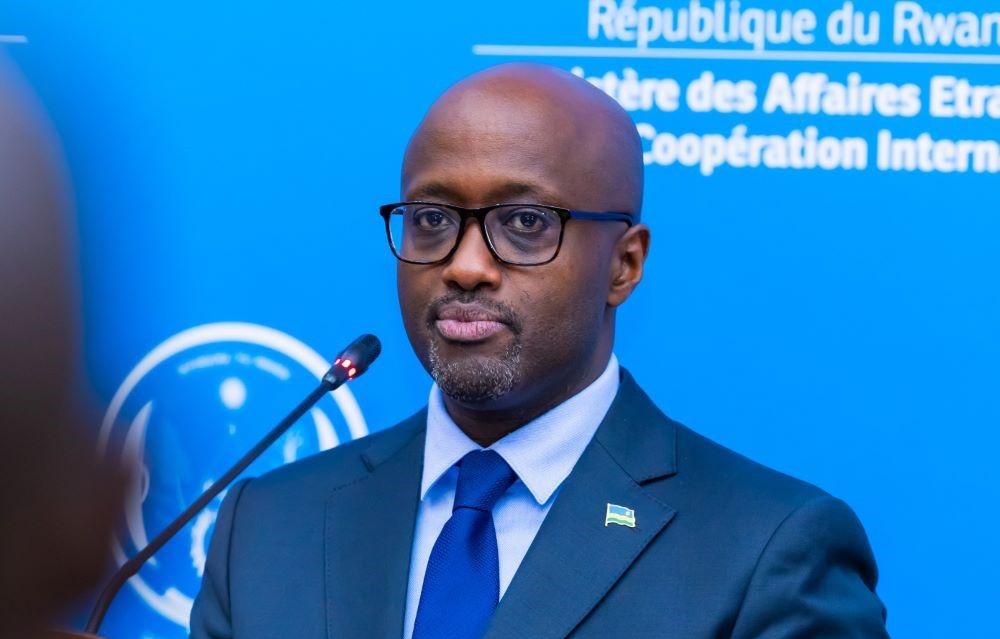
Rwanda’s government spokesperson, Yolande Makolo, echoed the same position, underscoring Kigali’s consistent goodwill and commitment to the peace process, emphasizing that “the REIF would complement ongoing efforts to stabilize the region.
“We are puzzled by the DRC’s last-minute decision not to sign the agreement, given the positive atmosphere of the negotiations and the diligent mediation by the U.S. State Department,” she said.
The economic framework, developed under U.S. facilitation, outlines plans for collaboration in mining, infrastructure, energy, agribusiness, industrial development, and environmental management.
It is seen as a pathway to mutual prosperity by creating jobs, fostering regional trade, and encouraging sustainable investment.
Observers say Rwanda’s steady approach demonstrates its focus on long-term regional stability and cooperation. Kigali has continued to honour its commitments under the broader peace process, including participating in the Joint Oversight Committee and supporting measures to neutralize armed groups threatening both countries’ security.
By contrast, the DRC’s repeated reversals have raised doubts about its political will to pursue meaningful regional integration.
“Unfortunately, Kinshasa’s reluctance to engage constructively risks undermining the very peace and development initiatives that could benefit its own citizens,” noted one regional analyst familiar with the talks.
For now, U.S. and African Union mediators are working to bring both sides back to the table. Rwanda maintains that it remains open to dialogue and cooperation, but only within a framework of seriousness and mutual respect.
