KIGALI – Think of a deal that was never fully signed, yet both sides now argue over what it meant. That is, in many ways, the story behind the asylum arrangement between Rwanda and the United Kingdom.
At its simplest, the idea looked straightforward. The UK wanted to send some asylum seekers who arrive through irregular routes to Rwanda. Their claims would be processed there, and those approved would remain in Rwanda instead of returning to Britain.
London presented the plan as a deterrent to dangerous crossings, especially across the English Channel. Kigali, on the other hand, framed it as a partnership, offering protection while contributing to global migration solutions.
But what appeared clear on paper quickly became contested in practice. The policy has now shifted from a migration solution into a complex legal and diplomatic standoff.
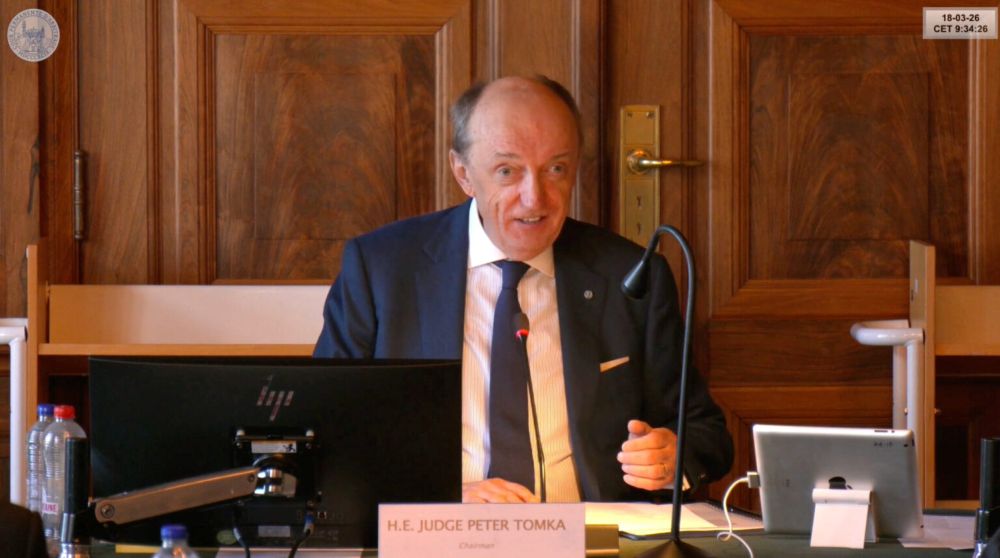
The dispute, now underway at the Permanent Court of Arbitration (PCA), it is about whether there was ever a fully binding agreement in the first place. Rwanda argues that negotiations never reached a final, signed deal.
Instead, there were drafts, technical exchanges, and diplomatic notes that remained incomplete. As one striking analogy presented in arbitration suggests, the process resembled “a salesman asking someone to sign before the terms are fully agreed.”
This framing is intuitive of how the case is understood. Rather than a straightforward policy blocked by courts, it becomes a disagreement over consent, whether both sides truly committed to the same terms.
That question sits alongside earlier legal setbacks in the UK. In a landmark ruling, the Supreme Court of the United Kingdom found that there were credible risks asylum seekers could be sent back to unsafe countries, a principle known as refoulement.
The decision halted deportation plans and forced the UK government to revise its approach. In response, London signed a new treaty and passed legislation declaring Rwanda a “safe country,” attempting to override legal concerns and restart the policy.
For the UK, the arrangement was central to its broader strategy to control migration and demonstrate political authority over borders. For Rwanda, however, the case now extends beyond hosting migrants. It touches on sovereignty, legal interpretation, and financial responsibility.
A deal, or a misunderstanding?
At the centre of the arbitration is a fundamental question: what makes an agreement legally binding? The UK points to diplomatic correspondence as evidence that a deal existed. Rwanda dismisses these as routine exchanges that never matured into a signed, enforceable commitment.
Kigali maintains that even language used later, such as describing arrangements as “rescinded,” does not prove there was a binding obligation to begin with. In diplomatic practice, such terms can apply to political understandings, not just legal agreements.
This distinction matters. If the arrangement was political rather than legal, Rwanda argues, withdrawing or revising it does not amount to breaking international law.
The disagreement also extends to cost. Rwanda has pushed back against what it describes as underestimation by the UK of the financial burden involved in hosting asylum seekers.
Even a relatively small number, around 300 individuals in the first phase, would require significant resources. Kigali’s estimates suggest millions of pounds in costs, a notable share when compared to broader refugee support budgets.
The figures also add context. Rwanda already hosts around 130,000 refugees, meaning the proposed relocation group represents a small fraction of its total caseload. Yet officials argue that the financial and logistical implications remain substantial.
What is really at stake
Beyond legal arguments and financial calculations, the case reflects a deeper tension in global migration policy.
For the UK, success would validate a model of outsourcing asylum processing, shifting responsibility beyond its borders. For Rwanda, the issue is about maintaining control over how and under what terms it enters international agreements.
At the same time, the case highlights the gap between political ambition and legal reality. What governments announce as policy must still withstand scrutiny, whether in courts, arbitration panels, or public opinion.
Ultimately, this is not just a dispute about migrants or money. It is a test of how international agreements are formed, interpreted, and enforced. Was there a deal, or only the expectation of one?
That question now sits at the table of proceedings that could shape not only relations between Kigali and London, but also how similar partnerships are negotiated in the future. What began as a migration solution has become a defining case about trust, consent, and the limits of policy-making across borders.
The court will resume proceedings tomorrow.
