
Uganda says it is ready to defend itself before the East African Court of Justice (EACJ) following a petition filed by Congolese civil society groups and fishermen alleging environmental harm linked to oil and gas developments in the Albertine Graben.
The case, lodged in Arusha, places renewed regional attention on the management of shared freshwater resources, particularly Lake Albert, amid expanding petroleum activities.
The petition names the Governments of Uganda and the Democratic Republic of Congo (DRC), alongside the Secretary General of the East African Community (EAC), accusing them of breaching obligations under the Treaty for the Establishment of the East African Community.
Petitioners argue that Uganda’s Tilenga and Kingfisher oil projects were advanced without sufficient safeguards to protect transboundary ecosystems and communities that depend on the lake for fishing and related livelihoods.
Ugandan authorities have dismissed the claims as speculative, insisting that environmental compliance remains central to the country’s oil and gas development strategy. Officials say the government has already engaged relevant institutions to prepare a detailed legal response.
Joshua Lukaye, an Assistant Commissioner at Uganda’s Ministry of Energy, confirmed that the Ministry had been notified by the Attorney General’s Chambers about the case. He said the issues raised by the petitioners, including those attributed to the DRC, have been examined and formally addressed.
“And it has been picked up by the Ministry of Justice, which has been brought up. The issues have been brought to us. Ministry of Energy, we have responded to the template,” Lukaye said, adding that the government is confident it has “a very good case.”
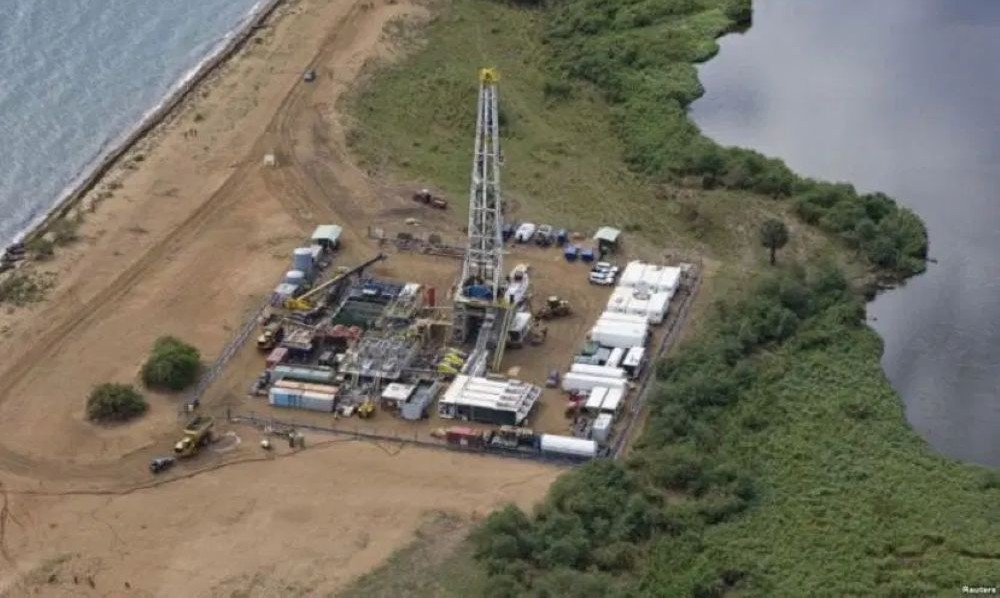
A key focus of the petition is CNOOC’s Kingfisher oil project, located near the Ugandan shores of Lake Albert. Petitioners claim oil-related activities have already contributed to declining fish stocks and ecological degradation affecting communities on both sides of the border.
Ugandan officials strongly contest this assertion, maintaining that no oil production is taking place on the lake.
“The only activity previously conducted on the lake involved seismic data acquisition during the exploration stage, before any drilling took place,” Lukaye said.
“And we believe we will have a very good case to address. We all know that CNOOC is not doing any operations on Lake Albert. If there was anything, it was during the time of exploration when we were doing seismic data acquisition,” he added.
He acknowledged that seismic surveys involve activity on the water and the use of sound waves, which can raise environmental concerns. However, he said the work was completed several years ago and only after a full Environmental Impact Assessment had been conducted in accordance with regulatory requirements.
The case and Uganda’s position were discussed during a multi-stakeholder dialogue held both online and in person under the theme “Sustainable Development of the Oil and Gas Sector and Leveraging the Resource to Support Uganda’s Tenfold Growth Strategy and Energy Transition.”
The dialogue was organized by the Civil Society Coalition on Oil and Gas, the Natural Resources Governance Institute, and the Advocates Coalition on Development and Environment.
Lukaye told participants that environmental oversight in Uganda’s oil sector is extensive and continuous. “It’s not only you monitoring us. Civil society, the international community, and even the oil companies themselves are very keen on environmental issues,” he said.
Petitioners cite ecological decline and treaty breaches
The case was filed by ASEP, a Congolese civil society platform, together with Owechiwele Moïse, president of the Fishermen Federation of Lake Albert, and Kambasu Kasuva Mukura Josué, president of the Fishermen of Lake Edward.
They say they represent thousands of community members who have experienced declining fish catches since oil activities intensified in Ugandan territory.
Their legal team, including Congolese lawyers Narek Mwende and Olivier Ndohol of the Left Congolese School, argues that the petition is grounded in scientific evidence.
They cite an October 2 report by the Environmental Law Alliance Worldwide (ELAW), which warned that oil and gas projects in Uganda could lead to lake-wide eutrophication of Lake Albert and pollution through the disposal of oil-processing waste.
According to the petition, Uganda violated multiple provisions of the EAC Treaty, including those related to environmental protection, sustainable development, good governance, and the management of shared natural resources.
Petitioners also accuse Uganda of failing to conduct a transboundary environmental and social impact assessment before launching major oil projects near shared lakes.
They further allege that neither Uganda nor the DRC consulted Congolese communities living along Lakes Albert and Edward, despite their reliance on these waters. The EAC Secretary General is cited for failing to ensure member states comply with treaty obligations.
The petitioners are seeking an immediate halt to all project activities affecting Lake Albert, active supervision by the EAC Secretary General to strengthen cooperation between Uganda and the DRC, and compensation for affected communities.
