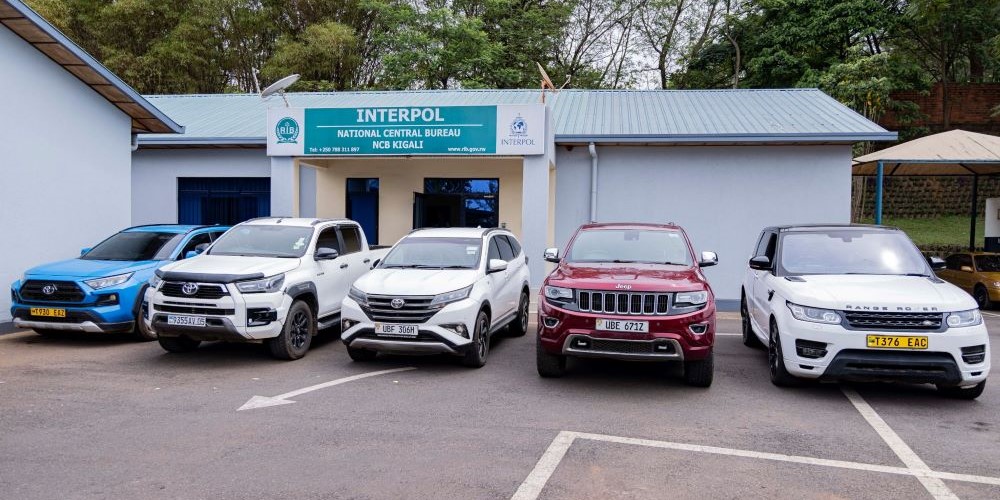
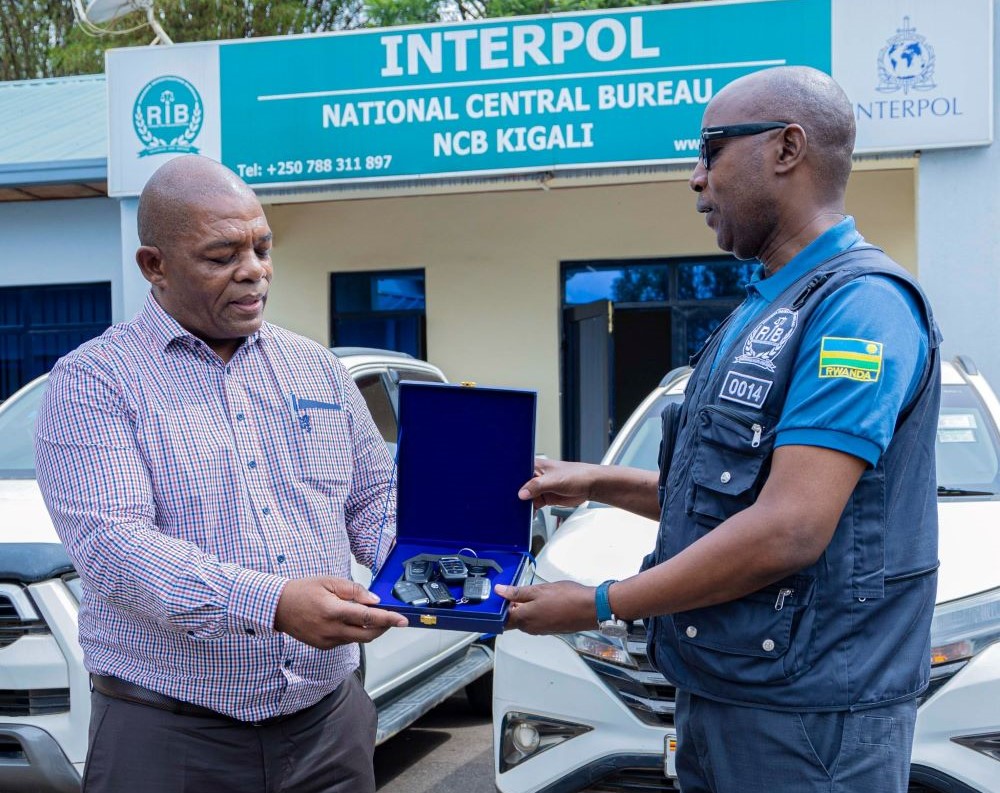
On October 25, 2025, the Rwanda Investigation Bureau (RIB) handed over five recovered stolen vehicles to the South African Police Service in Kigali, marking a significant milestone in the country’s ongoing efforts to dismantle transnational vehicle theft networks across Southern and Eastern Africa.
The vehicles, a Range Rover Sport, Jeep Grand Cherokee, Toyota Rush, Toyota Hilux, and Toyota RAV4, had been reported stolen in South Africa and intercepted by Rwandan authorities using INTERPOL’s i24/7 system.
This handover demonstrates Rwanda’s growing capabilities in tracking stolen property, leveraging technology, and collaborating with international law enforcement partners.
According to Antoine Ngarambe, Head of the INTERPOL National Central Bureau Kigali and International Cooperation Department, the operation underscores the importance of cross-border cooperation in combating organized crime.
RIB spokesperson Thierry Murangira explained that these stolen vehicles entered Rwanda through various border points, often accompanied by forged ownership and customs documents.
“These vehicles were stolen from South Africa and entered Rwanda, where they were intercepted through the i24/7 system used by all INTERPOL member countries,” he said.
The i24/7 platform allows police to immediately verify vehicle registration, chassis numbers, and ownership against a global database. Any match with a reported stolen vehicle triggers an alert, ensuring immediate detention.
The trafficking routes are rarely direct. Previous investigations show stolen vehicles often traverse multiple countries, moving north through Mozambique and Tanzania or west via Zambia and the Democratic Republic of Congo before reaching Rwanda.
At each stage, traffickers employ counterfeit registration papers, tampered Vehicle Identification Numbers (VINs), and fake export documents to disguise a vehicle’s origin.
In some cases, these vehicles are sold to unsuspecting buyers, forming part of a multi-million-dollar criminal network that exploits gaps in border verification systems.
Technology, cooperation and vigilance: Rwanda’s winning strategy
RIB attributes much of its success to the i24/7 system, a secure digital platform that enables real-time information sharing among 190 INTERPOL member countries. Installed at all major Rwandan border posts, including Gatuna, Rusumo, and Bugarama, the system has transformed border management.
The bureau’s efforts are complemented by strong coordination with customs officials and the Rwanda National Police. Data from the Rwanda Revenue Authority is cross-checked against i24/7 entries, allowing authorities to detect inconsistencies in vehicle clearance or ownership.
Continuous training for officers in document verification, risk profiling, and digital investigation ensures that Rwanda stays ahead of traffickers who rely increasingly on sophisticated forgery techniques.
Beyond technology, Rwanda’s approach relies on sustained international and regional collaboration. Murangira highlighted Rwanda’s active role in Interpol operations and its participation in the Eastern Africa Police Chiefs Cooperation Organization (EAPCCO).
These frameworks facilitate intelligence sharing on vehicle theft, cybercrime, and human trafficking. Regional sweeps coordinated under these initiatives have led to the recovery of stolen vehicles, arrests of document forgers, and disruption of smuggling syndicates.
In 2022, a regional operation involving eight countries recovered more than 200 stolen vehicles, demonstrating the effectiveness of collective action.
Rwanda’s own record in vehicle theft prevention is notable. Murangira confirmed that vehicles stolen from Rwanda rarely end up abroad, attributing this to robust digital registration, mandatory number plate tracking, and extensive CCTV coverage under the “Safe City” project.
Centralized vehicle databases link registration, police, and RIB systems, making unauthorized changes in ownership or cross-border transfers almost impossible.
In 2019, RIB intercepted three stolen cars at the Gatuna border from Pretoria, while subsequent operations returned vehicles to Zambia and other countries.

Senior investigators note that traffickers are constantly adapting, but the combination of real-time digital systems, coordinated regional intelligence, and trained personnel has maintained Rwanda’s upper hand.
The i24/7 system also supports broader law enforcement goals, tracking fugitives, stolen passports, firearms, and terrorism-related alerts. With 24/7 access to Interpol databases, RIB has expanded its digital forensic capabilities, tracing document forgery, VIN tampering, and online transactions linked to stolen assets.
Interpol’s 2024 assessment of East Africa ranked Rwanda among the fastest responders to cross-border crime alerts, highlighting the bureau’s efficiency and digital readiness. Despite these successes, authorities remain vigilant.
Vehicle trafficking remains profitable, attracting sophisticated criminal networks. Murangira emphasized that information sharing and consistent cooperation are critical to maintaining control.
“Technology helps us detect stolen assets faster, but cooperation among nations is what makes it truly effective,” he said.
meanwhile, RIB is exploring machine-readable license plate scanners, forensic VIN tracing, and AI systems capable of identifying manipulated documents. Simultaneously, authorities are sensitizing the public and vehicle dealers to verify histories before purchase.
For Rwanda, the October 25 handover to South Africa is proof that digital policing and international cooperation can disrupt organized crime and ensure stolen property is returned to its rightful owners.
