
The National Bank of Rwanda (BNR) has raised its key lending rate to 6.75 percent, a modest but significant adjustment aimed at containing inflationary pressures while maintaining economic stability.
The increase, announced in Kigali during a press briefing on August 20, moves the Central bank rate up by 25 basis points from 6.5 percent, where it had stood since last year.
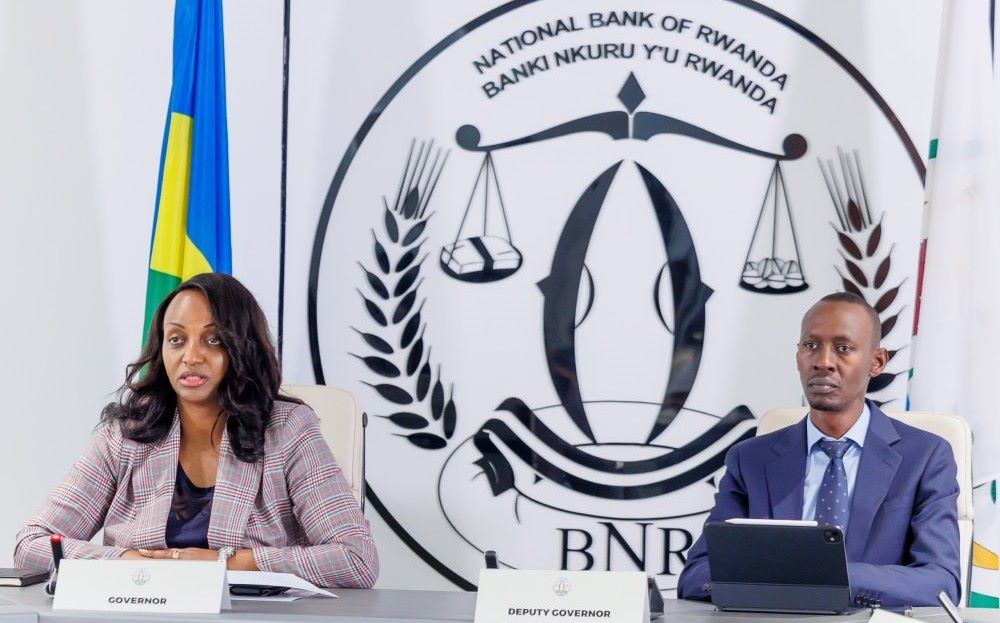
BNR Governor Soraya Hakuziyaremye explained that the new rate is considered adequate to keep inflation within the target range of 2 to 8 percent.
“The small increase in BNR’s lending rate is meant to ensure that we do not reach the level of inflation of 8 percent for this year and next year,” she said, noting that government fiscal measures will complement the Bank’s efforts to stabilize prices.
Inflation in Rwanda has remained within the desired band in recent quarters, but projections have shifted upward. Consumer prices in July climbed to 7.3 percent from 7 percent in June, driven largely by higher fuel costs and seasonal increases in food prices.
BNR now expects inflation to average 7.1 percent in 2025, before easing to 5.6 percent in 2026. These estimates are higher than those made in May, when the Bank forecast a ceiling of 6.5 percent for 2025 and 3.9 percent for 2026.
Officials warn that the revised outlook reflects risks from global commodity price fluctuations, supply chain disruptions, and weather conditions that could affect agricultural production.
Still, BNR is confident that the slight adjustment to the key rate will help maintain inflationary trends within safe limits, even as the economy continues to expand.

Rwanda’s growth momentum has remained strong, with gross domestic product (GDP) rising by 7.8 percent in the first quarter of 2025. Services and industry were the main drivers, supported by steady agricultural output.
Economic indicators suggest a similar trajectory in the second quarter, underscoring resilience despite global trade uncertainties.
The external sector has also shown encouraging performance. Exports increased by 15.5 percent in the second quarter of 2025, buoyed by strong coffee harvests, higher mineral shipments, and rising international prices.
Non-traditional exports, such as processed cooking oil and wheat flour, surged by 31.1 percent, reflecting diversification efforts in Rwanda’s export base. Meanwhile, imports from neighboring countries declined by 13.2 percent due to lower regional demand.
As a result, the trade deficit narrowed by 2.9 percent compared to the same period in 2024, supporting the stability of the Rwandan franc, which depreciated by only 2.96 percent against the U.S. dollar by mid-year, an improvement from 3.73 percent a year earlier.
While monetary tightening remains a key tool for managing inflation, Rwanda’s financial landscape is also being reshaped by rapid advances in digital payments.
The central bank’s eKash system, launched just two years ago to link banks, telecoms, and microfinance institutions, has become one of the fastest-growing financial platforms in the country.
By June 2025, more than 2.1 million people were actively using eKash across 20 financial institutions, moving a total of Rwf 37.7 billion.
Transaction values have surged by 301 percent in the past year alone, demonstrating the appetite for seamless digital payments that bypass the inconvenience of cash transactions.
The system allows users to transfer money instantly between mobile wallets and bank accounts, pay businesses directly, and settle school fees without queuing at banks or agents.
With eKash, a customer can now move money directly from a bank account to an MTN or Airtel wallet in seconds, or from mobile money into a business account, significantly reducing costs and time.
Previously, transferring funds across different mobile money operators required physical cash withdrawals and re-deposits, often incurring double fees.
According to BNR, the platform is more than a convenience tool. It strengthens security, reduces fraud risks, and builds trust in digital transactions. Experts say its success signals the maturity of Rwanda’s financial system and reflects a broader shift toward a cashless economy.
The share of retail electronic payments in GDP has jumped from 265 percent to 316 percent in just one year, underscoring the country’s accelerating embrace of digital finance.
This dual picture, an economy growing robustly while inflationary pressures are managed through careful monetary policy, and a financial sector rapidly digitizing, captures the country’s current trajectory.
The central bank’s challenge is to strike a balance by keeping inflation contained without stifling growth, while also fostering innovations such as eKash that expand financial inclusion and efficiency.
Rwanda’s exports are rising, its trade deficit narrowing, and its citizens are increasingly transacting in digital form. Together, these trends suggest an economy that is not only adapting to global uncertainties but also laying foundations for sustainable growth in a digital era.
