
Kigali, Rwanda – Leaders of the Economic Community of West African States (ECOWAS) have raised fresh alarm over political instability in the region following recent coup attempts in Guinea-Bissau and Benin.
They have placed renewed pressure on the bloc to defend constitutional rule amid an already fragile security and governance landscape.
Presidents and senior officials from across West Africa met Sunday in Abuja, Nigeria, for a heads of state summit whose agenda was overtaken by the two incidents.
A military takeover in Guinea-Bissau in November and a foiled coup attempt in Benin roughly a week ago have unsettled the regional bloc, which is still grappling with the legacy of multiple coups that occurred between 2020 and 2023.
“The events of the last few weeks have shown in concrete terms what regional solidarity means,” ECOWAS Commission President Alieu Touray said at the opening ceremony of the summit, held at the heavily secured Aso Rock presidential complex.
The meeting came against the backdrop of earlier military takeovers in Burkina Faso, Guinea, Mali and Niger, all of which remain under military rule.
Burkina Faso, Mali and Niger have since withdrawn from ECOWAS and formed the Alliance of Sahel States, further complicating regional cooperation on security and economic integration as jihadist violence continues to spread across the Sahel.
During the summit, leaders reviewed the outcome of a recent ECOWAS mission to Guinea-Bissau and assessed “the situation in the Republic of Benin,” according to the meeting program.
Discussions also covered trade liberalization measures, updates on Guinea’s political transition, and deteriorating security conditions in the Sahel.
“No border can insulate us from violence,” Sierra Leone President Julius Bio, the current chair of ECOWAS, told the meeting, underscoring concerns that instability in one country increasingly affects the wider region.
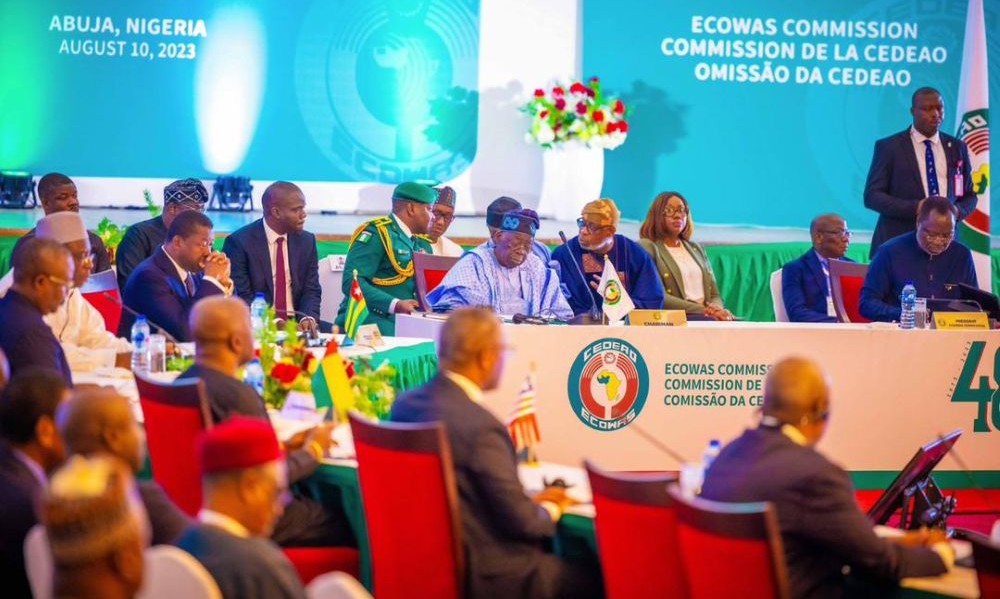
Following the summit, ECOWAS signaled a tougher stance on Guinea-Bissau, where a group of army officers calling themselves the “High military command for the restoration of order” seized power and suspended the electoral process.
The coup occurred one day before the country’s electoral commission was due to announce results of the 2025 presidential election, held about a week earlier.
Speaking to journalists after the 68th Ordinary Session of the ECOWAS Authority of Heads of State and Government, ECOWAS President Omar Touray warned that those undermining a return to constitutional order would face consequences.
On the bloc’s response to the crisis, he said “the authorities shall impose targeted sanctions on individuals or groups of persons that obstruct the transition process.”
The takeover has drawn criticism across West Africa, with governments and regional organizations calling for the restoration of democratic governance.
At the same time, some leaders have accused former president Umaro Embaló of backing the coup to prevent the announcement of election results he was expected to lose. Nigeria’s former president, Goodluck Jonathan, who was among election observers, is one of those who have publicly made the accusation.
In Benin, the attempted coup was thwarted by the army with intervention from Nigeria and ECOWAS. Nigerian authorities said they responded after President Patrice Talon requested immediate military assistance.
The Beninese government has since declared those responsible wanted, including Pascal Tigri, the lieutenant colonel accused of leading the plot.
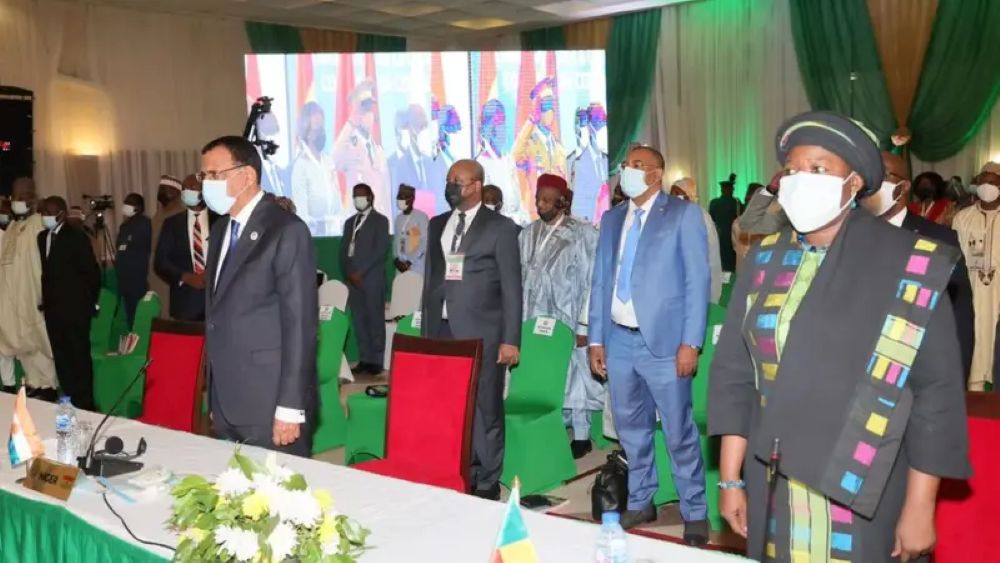
Several leaders were absent from the Abuja meeting. Heads of state from Guinea and Guinea-Bissau, both suspended from ECOWAS after military takeovers, did not attend, while Nigerian President Bola Tinubu was represented by Vice President Kashim Shettima.
Beyond military takeovers, ECOWAS leaders also acknowledged concerns about democratic backsliding in civilian-led states, highlighting the growing challenge of preserving constitutional order across West Africa.
