
Kigali woke up to a unique rhythm on Sunday, August 17, 2025, as the city once again set aside its cars to embrace a live sound of footsteps, bicycle wheels as residents turned up in large numbers to mark Car Free Day.
The initiative, first introduced in 2016, was designed to cut emissions while promoting a healthier lifestyle among Rwandans. Nine years later, it has become a highly anticipated event that reflects the capital’s unique identity as one of Africa’s cleanest and most orderly cities.
Plastic bags remain banned in Rwanda, and Kigali’s lush green hillsides, manicured verges, and spotless roads stand as a testament to that discipline.
With its population of 1.1 million, the city has built a reputation for order and cleanliness rarely seen across the continent. On Car Free Day, that image is reinforced as cars and buses give way to joggers, cyclists, and families walking together across wide open boulevards.
The city authorities complement the initiative with a mix of exercise and wellness activities. Residents participate in aerobics, jogging, cycling, dance, and fitness classes.
They also benefit from free health check-ups and screenings, all in line with the broader goal of creating a healthier and more active population.
For residents, the sense of community is as valuable as the exercise itself. “I can exercise at home every day, but when I join all these people here, I get more motivated to push harder. It makes me happy and I feel healthier,” said Jean Paul Muhire from Kibagabaga.
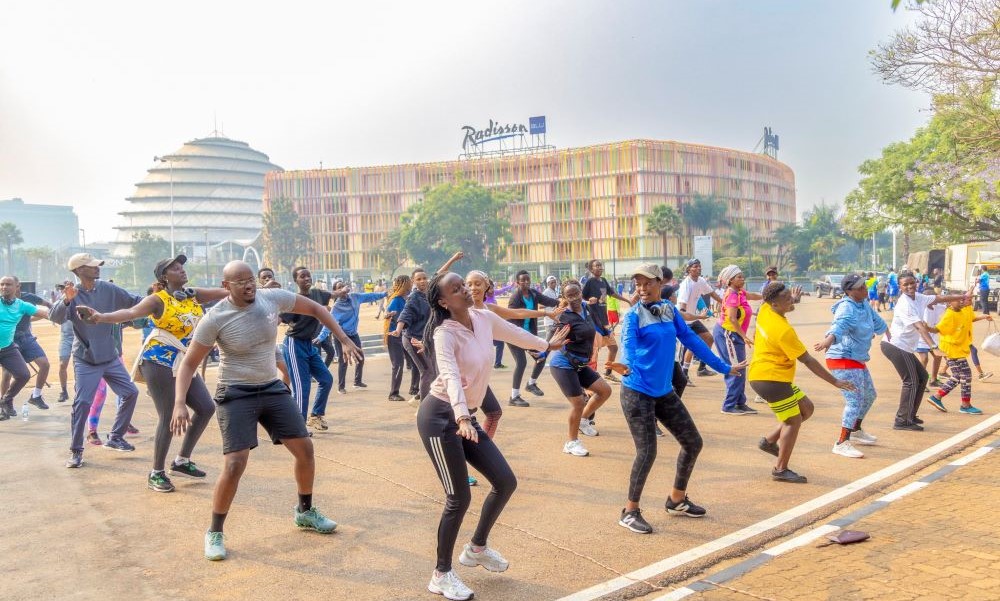
Another participant, Emelyne Uwizeye, described how her health has changed since she started taking part. “Before, I often felt weak and sick. Now, after joining these group activities, I feel fit. I couldn’t run more than 10 kilometers before, but now I manage it without getting tired. We are enjoying this initiative more and more.”
Officials see the event as both a public health campaign and a cultural shift. Various government and local leaders have often underlined the wider impact of the program.
They explain that Car Free Day was not only about Kigali or Rwanda, but also an example of how African countries could adapt similar initiatives in their own way in promoting sport across the continent to adopt cleaner and healthier lifestyles.
“This is a celebration of inclusiveness, bringing together children, youth, the elderly, people with disabilities, and many others. It features diverse activities such as jogging, cycling, traditional dance, aerobics, gym workouts, and free NCD screenings,” a Kigali City said in a statement posted on social media.
As the Car Free Day event increasingly becomes a norm among Rwandans, what began nearly a decade ago as a simple measure to reduce car use has now become a monthly celebration of health, unity, and environmental responsibility.

