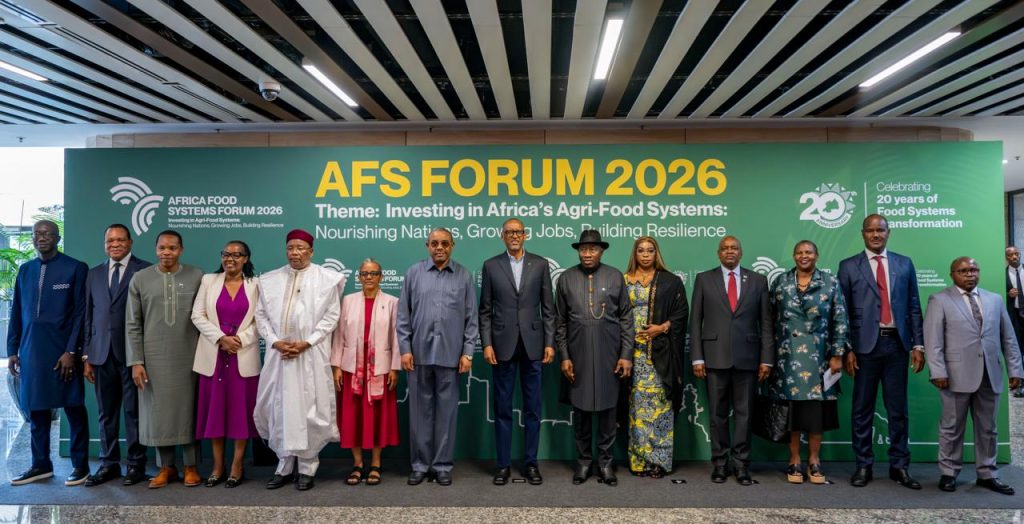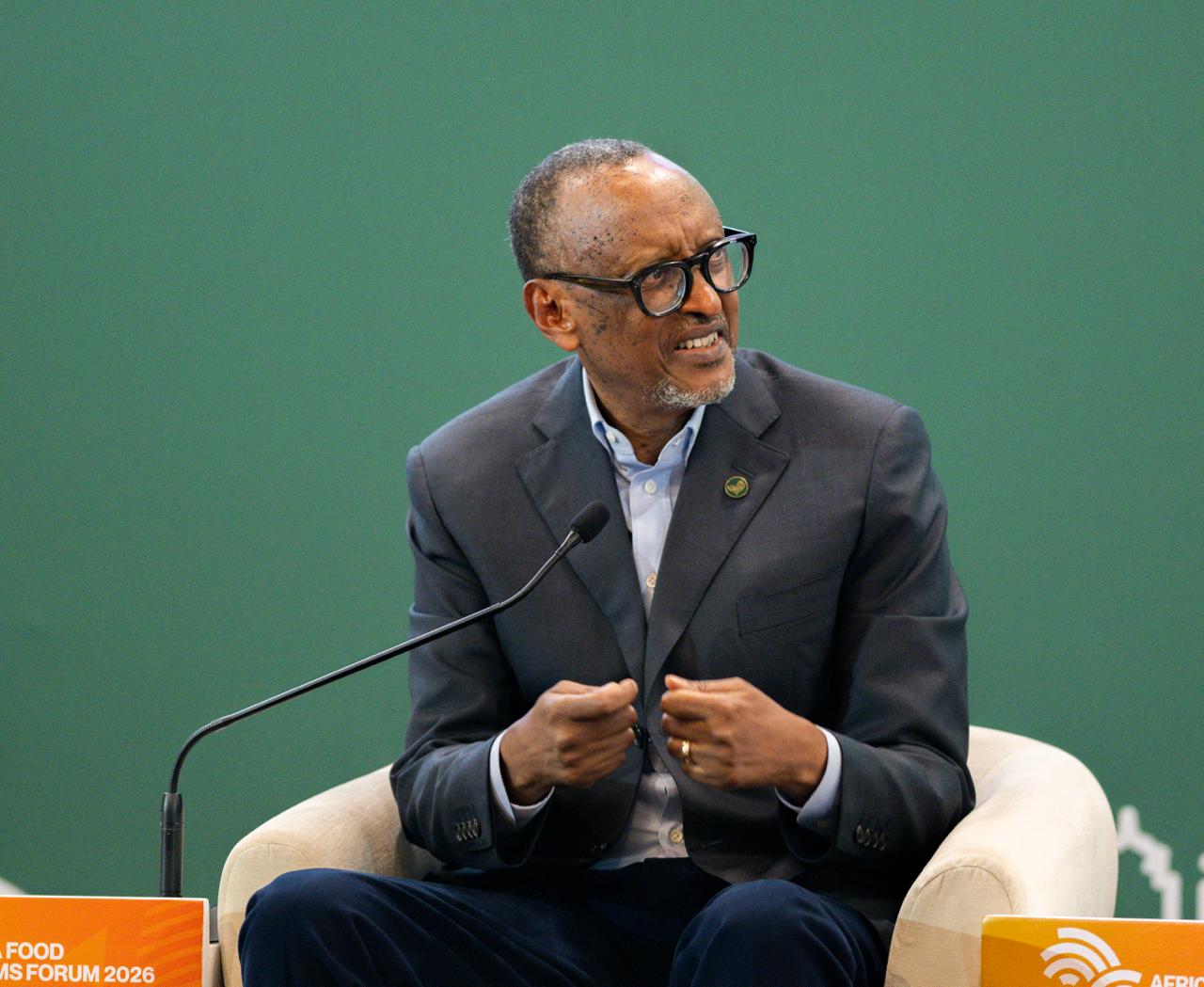
KIGALI – President Paul Kagame says Africa’s food system could offer young entrepreneurs far more than a livelihood in farming because the real opportunity lies in the vast chain of businesses connecting the farm to the final consumer.
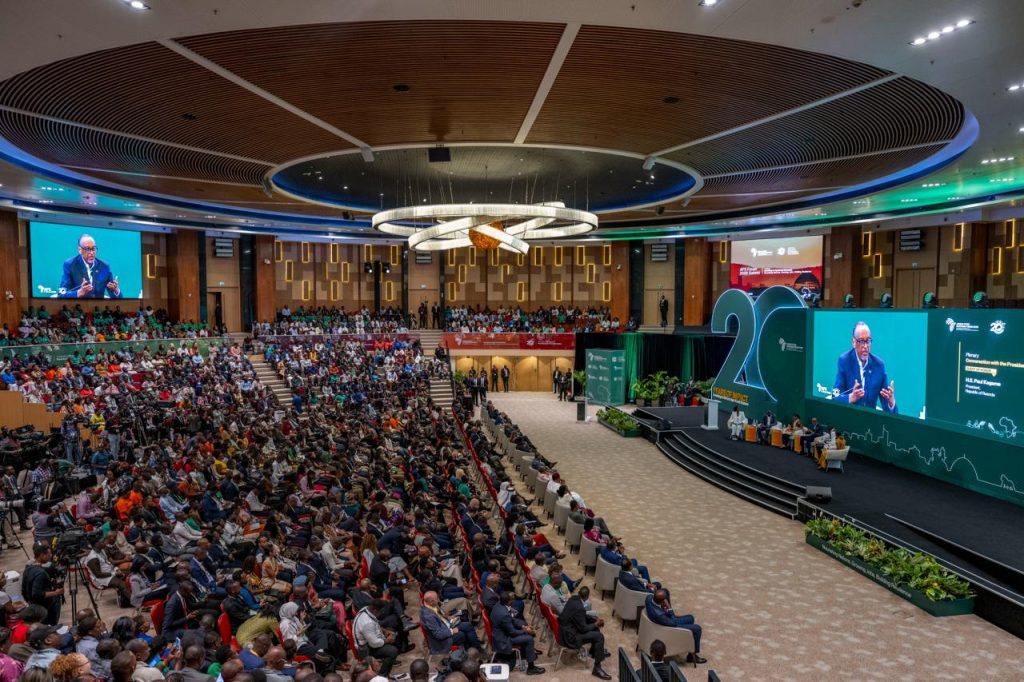
Speaking during a youth dialogue at the Africa Food Systems Forum in Kigali, Kagame urged Africa’s young population to not only viewed agriculture as a potential force for transforming one of the continent’s most important economic sectors.
His message came as African countries confront the twin challenge of feeding a growing population while creating productive opportunities for millions of young people entering the labour market.
“From the farm all the way to the consumer or the market, everything begins with recognizing the scale of the food economy itself. It’s a very wide space, which you can always find your way to certain things,” he said.
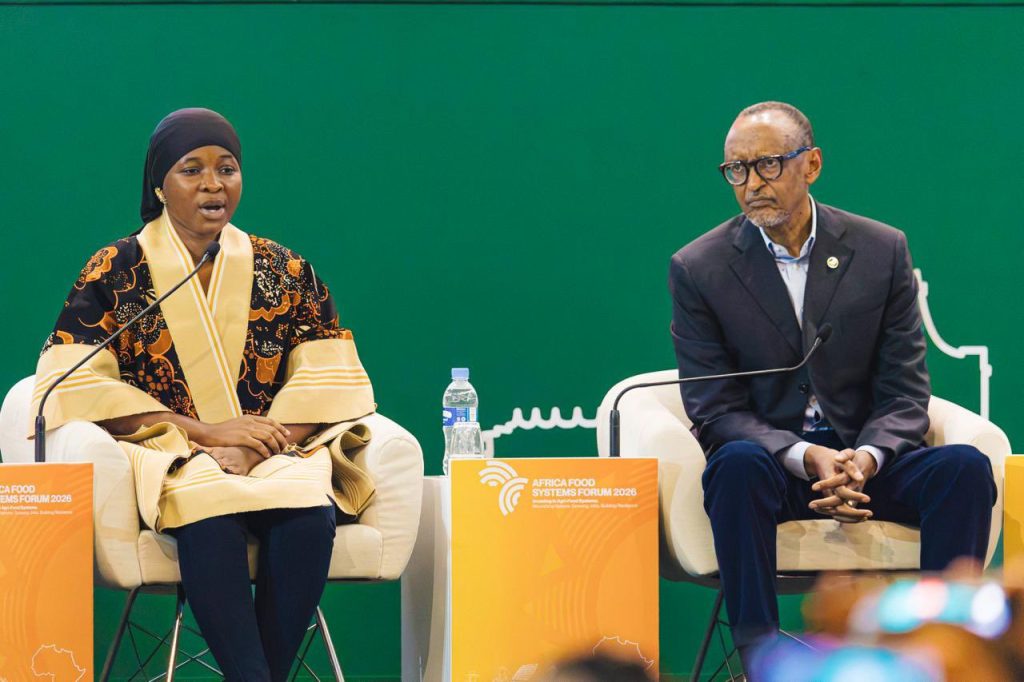
He pointed to gaps in livestock, logistics, technology, irrigation and storage, among other areas, arguing that the food system is sufficiently large to accommodate businesses with very different skills and interests.
That perspective shifts the conversation away from the traditional view of agriculture as simply the business of producing crops but rather solving one of the many problems that prevent food from moving efficiently from producers to consumers
That could mean developing technology for farmers, providing irrigation services, building storage facilities, moving agricultural products to markets or processing raw produce into higher-value goods.
Kagame said the food system extends beyond the farm, community and country into regional and international markets, giving African entrepreneurs the possibility of building businesses that serve both the continent and consumers beyond it.
Finance remains the critical barrier
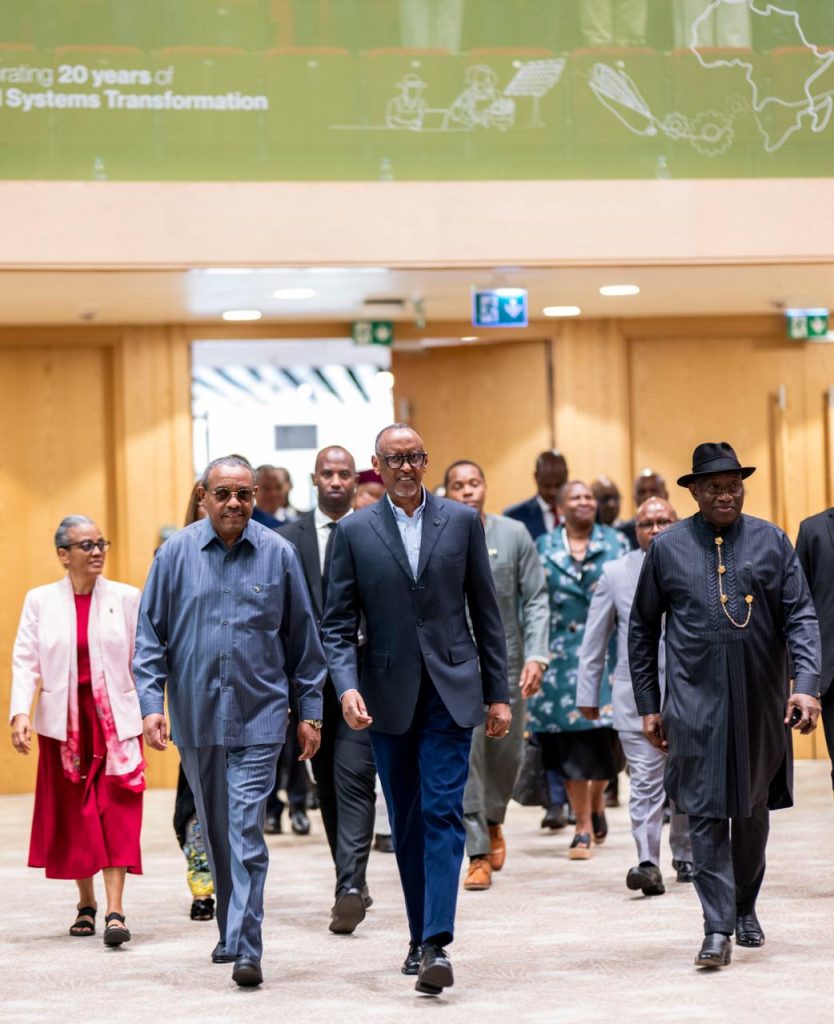
But identifying opportunities is only one side of the equation. Kagame acknowledged that many young entrepreneurs face a more immediate obstacle of finding the capital to turn an idea into a viable business.
He said parts of Africa’s financial systems remain structured in a way that makes capital easier to obtain for those who already possess assets and resources.
“It requires governments to intervene not by replacing private finance, but by helping share some of the risk. The main interest is to make sure that the capital is available to that category which is the majority, especially young people who want to use that kind of capital,” Kagame said.
The Head of State cited Rwanda’s development institutions as an example of a mechanism through which government and partners can make capital available to categories of entrepreneurs that might otherwise struggle to access conventional financing.
The logic, he suggested, is that supporting young businesses can generate returns well beyond the individual entrepreneur. When young people are able to borrow, invest and build productive enterprises, they can generate income, create jobs and expand economic activity.
Youth employment remains one of the continent’s defining economic challenges, that makes the food system more than an agricultural question. It becomes a potential engine of enterprise and employment.
From ideas to action
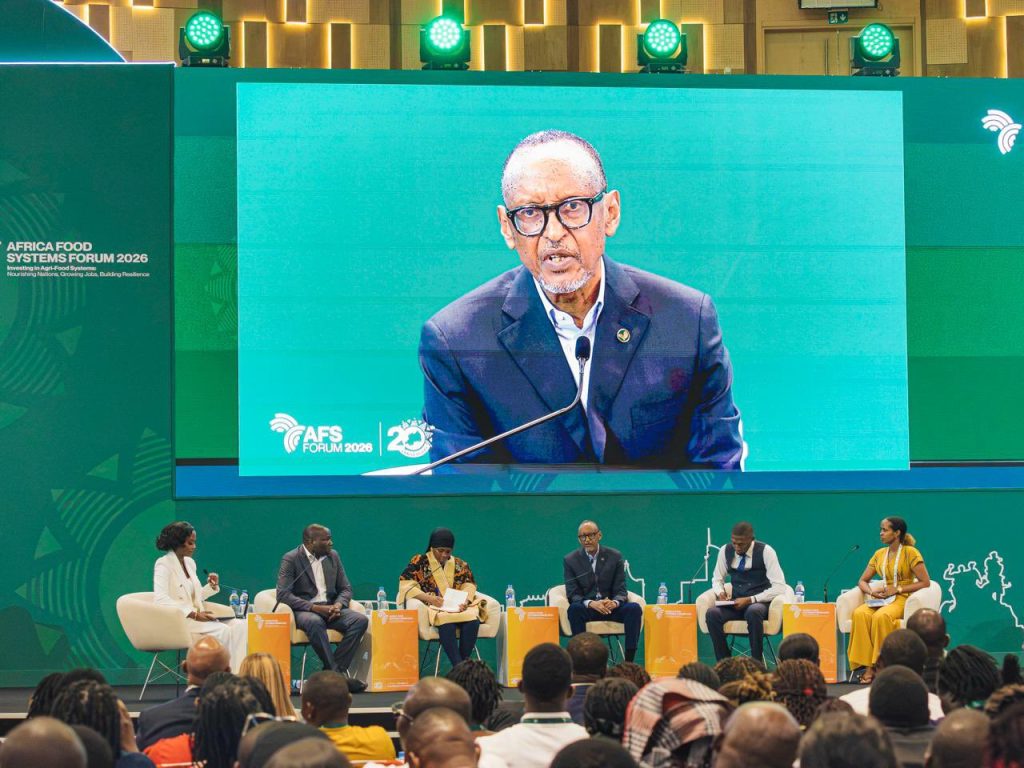
Kagame placed responsibility on governments to create an environment in which young people can act on their abilities with governments playing a significant role in removing obstacles and putting mechanisms in place to support people in capacity and ambition.
Reflecting on his own experience, Kagame said the decisive difference between ambition and transformation is action because opportunity alone is not enough. “It’s one thing to think about things and be inspired but the final test is doing things.”
He urged young people to begin by examining themselves and identifying the obstacles that may be limiting their own progress before attempting to solve problems around them. That, he said, is not selfishness but a process of building the capacity required to lead.
The President’s argument fits into a wider push to position Africa’s food systems as a source of investment, jobs and economic transformation rather than simply a response to hunger.
A video message to the forum from UN Deputy Secretary-General Amina Mohammed reinforced that Africa needs investment across entire value chains, from production, storage, processing and markets
The opportunity, therefore, is not simply to produce more food. It is to capture more of the value generated along the way. The chain is still full of gaps and those gaps can become businesses.
The challenge is ensuring that young Africans have the finance, infrastructure, markets and institutional support needed to turn those gaps into enterprises capable of creating jobs and competing beyond their borders.