Africa is quickly asserting itself as one of the most dynamic regions in the global economy, and Rwanda has emerged at the helm of this transformation. According to new World Bank figures, Rwanda recorded a remarkable 8.9 percent GDP growth in 2024, the fastest rate on the continent.
This positions the country as a model of governance, resilience, and reform-driven development at a time when global economies are battling inflationary pressures, high borrowing costs, and supply chain disruptions.
Rwanda’s success is the outcome of deliberate policy choices and disciplined economic management.
Over the past decade, the government has pursued reforms that encourage private investment, streamline business registration, and enhance property rights, creating one of Africa’s most competitive investment climates.
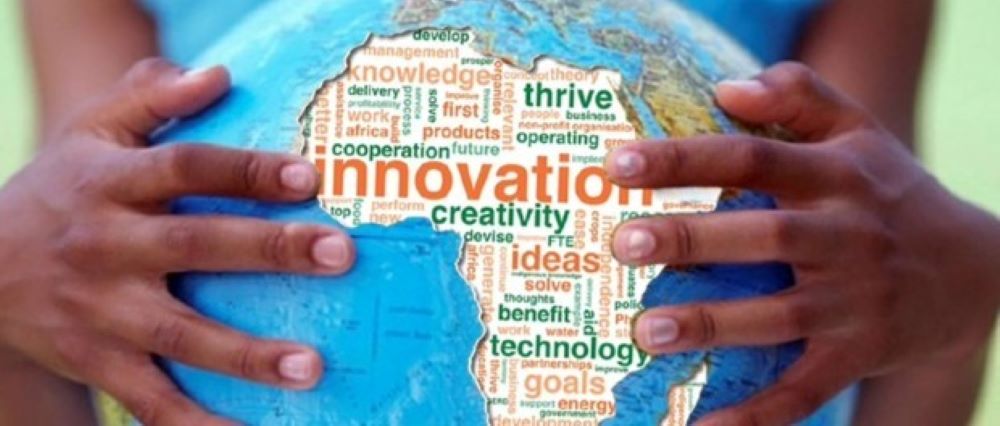
The Kigali Innovation City project, designed to attract tech companies, universities, and research institutions, symbolizes Rwanda’s shift toward knowledge-based industries.
Foreign direct investment has increasingly flowed into ICT, construction, and renewable energy projects, diversifying the economy and raising productivity.
Agriculture, long the bedrock of Rwanda’s economy, continues to provide stability and food security. Mechanization, climate-adaptive practices, and agro-processing initiatives are gradually moving Rwanda into higher-value agricultural exports.
Combined with growth in services and manufacturing, this strategy underlines Rwanda’s commitment to broad-based and inclusive development.
Investing in people and sustainability
Rwanda’s economic progress is not limited to infrastructure and investment. The government has prioritized social spending, particularly in universal healthcare, education, and women’s economic empowerment, ensuring growth is widely shared.
These measures have expanded the workforce’s productivity while also fostering social stability. Equally significant is Rwanda’s alignment with sustainability.
The country has committed to renewable energy expansion and ambitious green initiatives such as forest restoration and the development of green cities. This focus positions Rwanda as a pioneer of climate-conscious development in Africa.
By pairing institutional reforms with investments in people and sustainability, Rwanda demonstrates that high growth and resilience can go hand in hand.
Africa’s Broader Growth Story
While Rwanda leads the continent, other African economies are also posting impressive numbers. Together, they reflect the diversity of growth models shaping Africa’s economic future.
Eritrea – 8.7%
Eritrea followed closely with an estimated 8.7 percent growth, driven largely by mining and extractives. Gold, copper, zinc, and potash projects continue to anchor the economy, while infrastructure upgrades in ports and power lines are creating the basis for diversification into agriculture and manufacturing.
Niger – 8.4%
Niger recorded 8.4 percent growth, bolstered by uranium and oil production alongside agricultural expansion. The Niger-Benin oil pipeline has transformed the country’s export capacity, while solar power and mobile banking initiatives are helping embed growth at the community level.
Benin – 7.5%
With 7.5 percent growth, Benin is emerging as a reform-driven economy. Upgrades to the Port of Cotonou have strengthened its role as a regional trade hub, while digital governance reforms and renewable energy investments are modernizing public services and industry.
Ethiopia – 7.3%
Ethiopia, Africa’s second most populous nation, posted 7.3 percent growth. Its dual engine of agriculture and industrialization, supported by industrial parks and hydropower projects, is shaping it into one of the continent’s largest and most diversified economies.
Cabo Verde – 7.3%
The island nation of Cabo Verde matched Ethiopia with 7.3 percent growth, fueled by tourism, port services, and an ambitious renewable energy transition. Investments in digital infrastructure are positioning it for long-term resilience beyond travel-dependent sectors.
Senegal – 6.9%
Senegal recorded 6.9 percent growth, reflecting progress in infrastructure, financial services, and renewable energy. The country’s offshore oil and gas projects are expected to further transform its economy in the years ahead.
Democratic Republic of Congo – 6.7%
The DRC achieved 6.7 percent growth, thanks to its vast mineral wealth. As the world’s largest cobalt producer, the country is central to the clean energy transition. Reforms and new infrastructure corridors are slowly broadening its economy beyond raw exports.
Uganda – 6.1%
Uganda posted 6.1 percent growth, anchored by strong agricultural output and infrastructure development ahead of oil production from Lake Albert. Modernization of farming and tourism are also helping to diversify its economy.
Djibouti – 6.0%
At the tenth spot, Djibouti grew by 6.0 percent, leveraging its ports and transit services to anchor regional trade. Investments in geothermal and solar power highlight its ambition to achieve 100 percent renewable energy by 2030.
