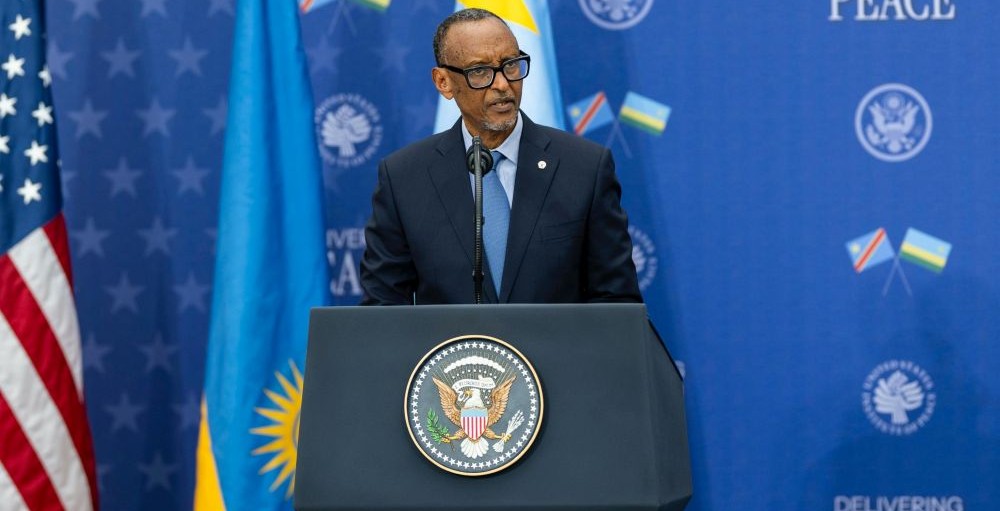
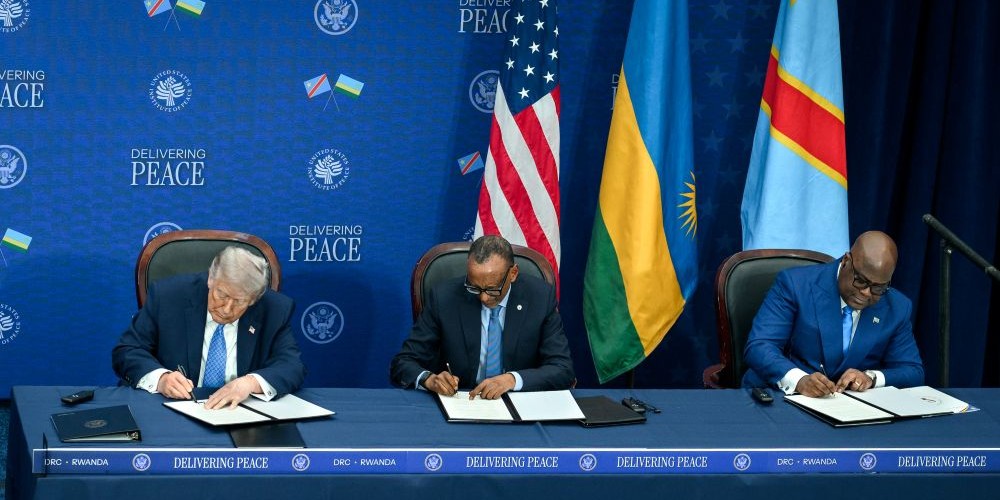
In the aftermath of Rwanda and the Democratic Republic of Congo (DRC) having signed the Washington accord, hailed by some as the most significant breakthrough in decades, President Paul Kagame is framing the moment as both historic and fragile.
For a conflict rooted in the 1994 Genocide against the Tutsi and hardened by years of mistrust and shifting regional politics, Kagame argues that U.S. engagement has created a rare window for progress, but one that must be matched with discipline, truth, and follow-through.
“We have never had anything like this. The amount of visibility, energy, maybe pressure to resolve this problem has never been like this before,” Kagame said, reflecting on the new U.S.-brokered momentum.
He credits the agreement’s strength to its grounding in fundamentals, political realities, security concerns, and economic stakes, rather than abstract theories that often guide international involvement in Africa.
For him, what sets this moment apart is an American administration treating the crisis with transactional clarity including measurable interests, defined responsibilities, and real outcomes.
U.S. engagement, regional dynamics, and the limits of trust
In assessing whether President Donald Trump has finally begun to take Africa seriously, Kagame offers a rare moment of candor. He points to the renewed U.S. interest, marked by Trump’s invitation to regional leaders, as evidence of a shift in Washington’s engagement.
However, external partners, he argues, can only be as helpful as the region’s own willingness to confront its internal challenges.
While outside actors may carry part of the blame for past failures, he stresses that such blame often arises because African governments have left gaps in addressing their own responsibilities.
Kagame also shed light on the diplomacy that has shaped the current peace process, particularly the dual tracks running through Washington and Doha.
He attributes the initiation of these parallel discussions to President Félix Tshisekedi, dismissing claims that Rwanda bypassed African-led mechanisms.
According to him, Kinshasa believed it could politically steer Qatar or the United States to its benefit, an approach he says ultimately backfired. Instead, the separation of the tracks ensured that no critical element of the dialogue was missed.
When it comes to trusting Tshisekedi to uphold the newly signed commitments, Kagame is measured. The agreement itself is significant, he says, but the details will determine its durability.
Rwanda has witnessed repeated violations by the DRC in past arrangements, a pattern that tempers optimism. Still, he insists that history should not be allowed to overshadow the momentum the parties have now created.
Minerals, misconceptions and a region burdened by history
Kagame challenges the widespread assumption that all valuable minerals in the region originate from the DRC.
“Rwanda has its own substantial deposits of tungsten, tin, tantalum, beryllium, lithium, and gold. Long-term investment from companies like the U.S.-based Trinity Metals has helped propel Rwanda into the world’s top producers of tungsten,” he emphasized.
These misconceptions are tied to a deeper regional narrative shaped by decades of conflict, accusations, and the unresolved legacy of the 1994 Genocide against the Tutsi.
He notes that Rwanda is routinely blamed for issues rooted in history and foreign interference, including persistent support for the FDLR, and expresses frustration that these narratives continue to overshadow facts.
What he views as most important, however, is not international accolades but the tangible progress now within reach. After years of unproductive rhetoric and mutual recriminations, he believes the region finally has a real opportunity to move forward.
On a personal level, Kagame says he has come to value Trump’s straightforwardness. He appreciates leaders who pursue results, and he describes Trump as someone who shows intent and is willing to try.
