
Kigali, Rwanda – A French criminal court has sentenced former Congolese rebel leader Roger Lumbala to 30 years in prison, delivering a landmark ruling that justice advocates say marks a decisive blow against decades of impunity linked to atrocities committed during the Second Congo War.
The verdict, issued in Paris after lengthy deliberations, found Lumbala guilty of complicity in crimes against humanity for acts carried out in eastern Democratic Republic of Congo in 2002 and 2003.
Lumbala, 67, once led the Rally for Congolese Democracy–National, a rebel movement involved in a brutal military campaign in northeastern DRC.
Prosecutors demonstrated that forces under his authority were responsible for killings, torture, rape, sexual slavery, forced labour, theft and large-scale pillage targeting civilians.
The operation, known as “Erasing the Board,” focused particularly on communities from the Nande and Bambuti ethnic groups, accused at the time of supporting rival militias.
The Paris court concluded that Lumbala either ordered or aided and abetted these crimes, relying on detailed testimony from survivors and findings from United Nations investigations. Victims described extreme violence, including executions, looting of homes and prolonged forced labour.
Several survivors of sexual violence also testified, shedding light on abuses that have long remained under-prosecuted despite their widespread nature during the conflict.
One of the witnesses, Pisco Paluku Sirikivuya, a 50-year-old nurse from eastern Congo, travelled to Paris to recount how rebels robbed and injured him, killed his uncle and raped his friend’s wife.
“I am moved and very satisfied with this verdict, we have waited so long. We hope that this will serve as a lesson to those who continue to bring grief to the people of Congo, and particularly to Ituri,” he said after the ruling.
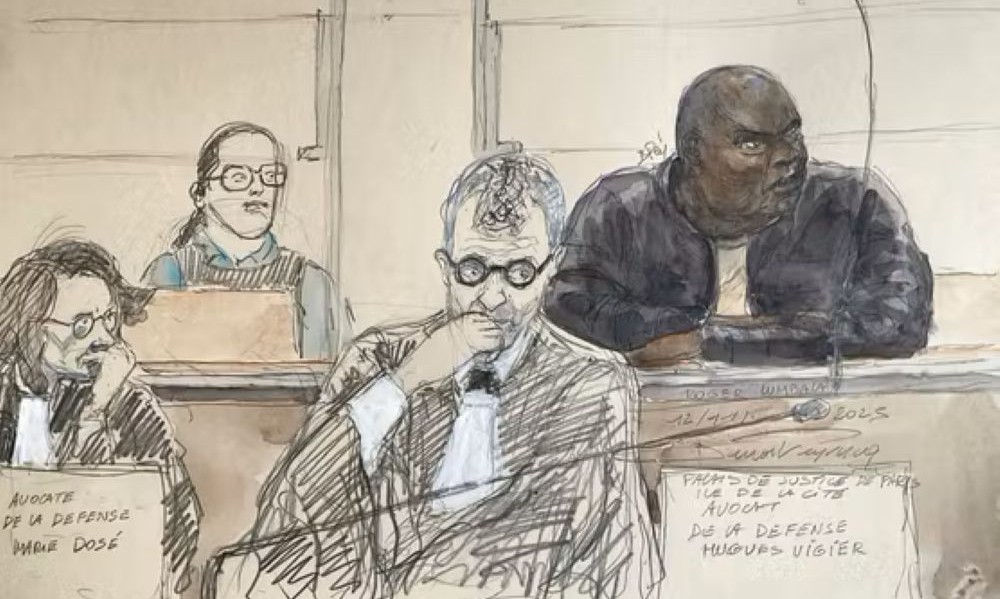
Lumbala rejected the authority of the French court and refused to testify during the trial, which opened in November. He attended the delivery of the verdict but had largely stayed away from the proceedings.
His lawyers described the sentence as excessively harsh, while prosecutors had sought a life term. The case was tried under France’s universal jurisdiction law, which allows national courts to prosecute crimes against humanity regardless of where they were committed.
It is the first time a Congolese political or military leader has been convicted by a foreign national court for atrocities committed in eastern Congo, expanding accountability beyond the limited number of cases heard at the International Criminal Court.
The Second Congo War, which lasted from 1998 to 2003 and involved nine countries, claimed more than five million lives, many through hunger and disease.
Despite the scale of the violence, many commanders later reintegrated into state institutions, fueling recurring cycles of conflict and mistrust.
After the war, Lumbala served as Congo’s minister of foreign trade and later as a member of parliament. In 2011, Congolese authorities issued a warrant over his alleged support for the M23 rebellion, prompting him to flee to France, where he was arrested in 2021.
Justice advocates say the verdict sends a powerful message. As one legal representative involved in the case noted, universal jurisdiction ensures there is “nowhere for perpetrators of these crimes to go.”
The ruling comes as eastern Congo remains volatile, with renewed fighting by armed groups underscoring the enduring relevance of accountability for past crimes.
