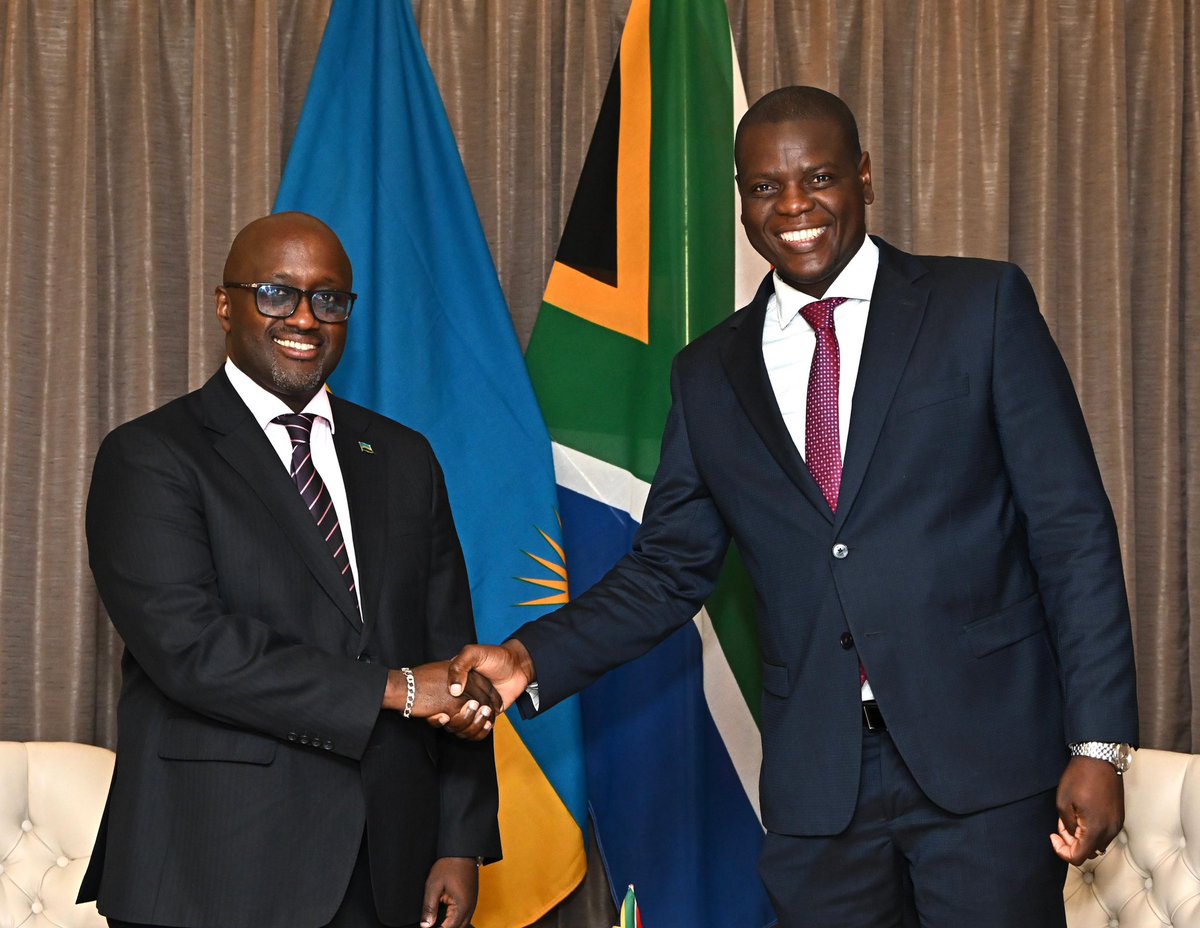
PRETORIA – Rwanda and South Africa have officially opened a new chapter in their bilateral relations, agreeing to restore visa access for ordinary Rwandan passport holders by mid-2027 as part of a broader diplomatic reset aimed at reviving cooperation after more than a decade of strained ties.
The agreement, reached during high-level talks in Pretoria on Wednesday, marked what both governments described as a decisive shift from years of interrupted engagement to renewed partnership grounded in dialogue, mutual respect, and shared continental responsibility.
Rwanda’s Minister of Foreign Affairs and International Cooperation, Olivier J.P. Nduhungirehe, used the occasion to reflect on the historical foundation of the relationship, pointing to South Africa’s role in Rwanda’s recovery after the 1994 Genocide against the Tutsi.
“Following the 1994 Genocide against the Tutsi in Rwanda, South Africa played a significant role in supporting Rwanda’s reconstruction and development efforts,” he said, noting contributions in education, healthcare, and investment that helped rebuild a devastated nation.
He added that while relations had faced setbacks in later years, the underlying bond between the two countries remained intact. “Whatever the challenges that happened between our two countries, the bond between Rwanda and South Africa is unbreakable,” he said.
Rebuilding bridges through structured cooperation
The talks between Nduhungirehe and South Africa’s Minister of International Relations and Cooperation, Ronald Lamola, culminated in the signing of a joint communiqué outlining a structured roadmap for restoring bilateral ties.
The agreement includes the revival of the Joint Commission for Cooperation (JCC), which will serve as the main platform for engagement across trade, education, health, tourism, security, and innovation. Rwanda is expected to host the next JCC session in early 2027.
A key outcome of the discussions was the phased restoration of visa services for Rwandan passport holders traveling to South Africa. The process is expected to be completed within 12 months after implementation begins, effectively setting mid-2027 as the target for full access.
Lamola described the renewed engagement as a “reset moment,” emphasizing that both nations share historical parallels that bind them beyond diplomacy.
“There is much more that unites us than divides us,” he said, referencing South Africa’s apartheid past and Rwanda’s genocide history as shared legacies of resilience and reconstruction.
Both governments also agreed to expand cooperation in investment, trade, tourism, and education, while encouraging stronger private-sector partnerships and participation in continental platforms such as the Africa CEO Forum and Africa’s Travel Indaba.
A shared vision for African self-reliance
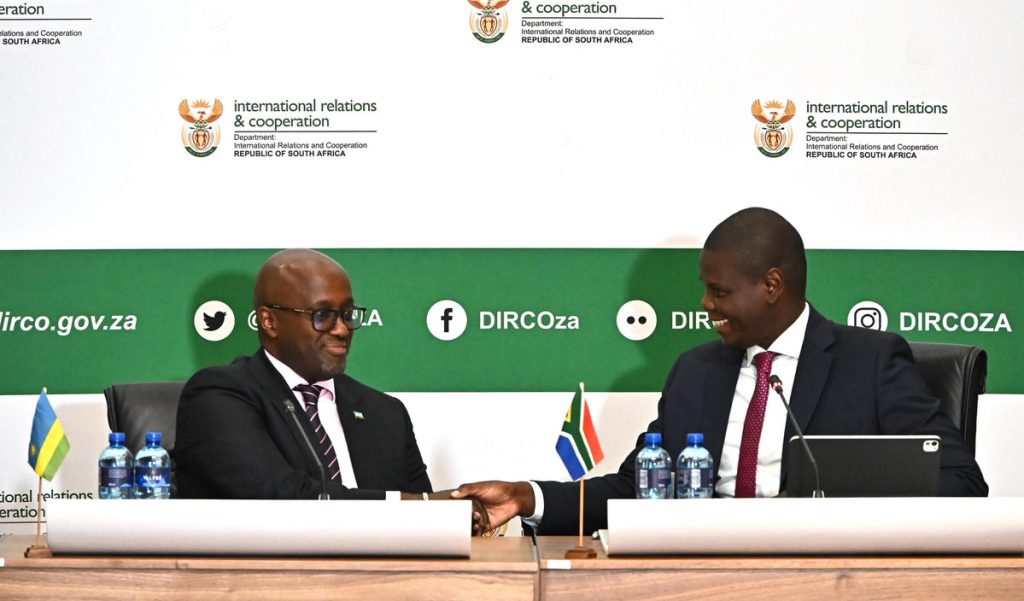
Beyond bilateral agreements, Rwanda used the platform to advance a broader continental message focused on economic independence and integration under the African Continental Free Trade Area (AfCFTA).
Nduhungirehe urged African countries to reduce dependency on external aid and strengthen intra-African trade and production networks. He illustrated the point with a symbolic appeal to regional economic integration.
“We have been independent for more than 60 years, but we are still under development aid. For us, it’s not sustainable,” he said. “In our hotels and restaurants, we should have South African wine rather than wine coming from outside the continent.”
The ministers also exchanged views on regional and global security challenges, including conflicts in eastern Democratic Republic of Congo, Sudan, South Sudan, Somalia, and the wider Sahel region.
Both sides called for African-led solutions and stronger continental peace mechanisms, including the operationalization of the African Standby Force.
They further emphasized the need for reform of global governance systems, including the United Nations, arguing for more inclusive representation of African interests.
A roadmap toward normalization
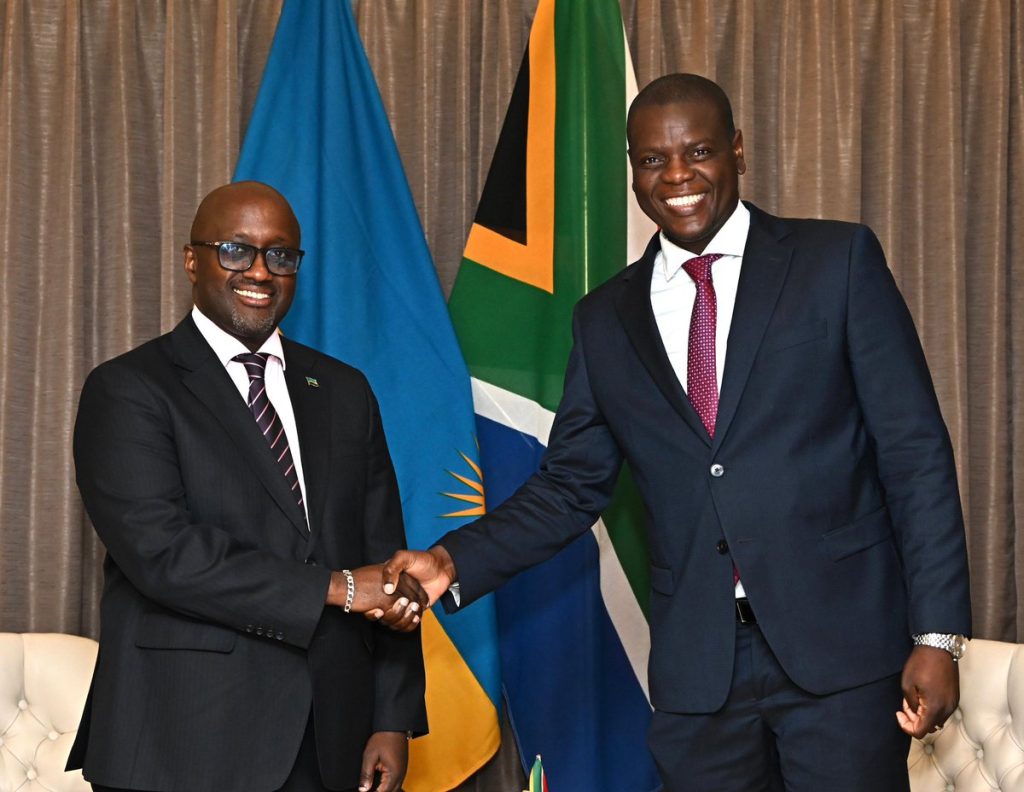
The Pretoria meeting is widely viewed as a turning point in Rwanda–South Africa relations, which deteriorated in 2014 amid political tensions that severely restricted travel and diplomatic engagement.
Under the new framework, both governments committed to sustained dialogue, regular consultations, and continued engagement at the highest political level, including a future meeting between Presidents Paul Kagame and Cyril Ramaphosa.
While technical processes still lie ahead, both sides expressed confidence that the momentum generated in Pretoria signals a durable path toward full normalization.
As Nduhungirehe noted, the renewed engagement goes beyond repairing past fractures. It represents, he said, “a shared belief that dialogue and cooperation are the only sustainable foundation for building stronger nations and a more unified Africa.”
