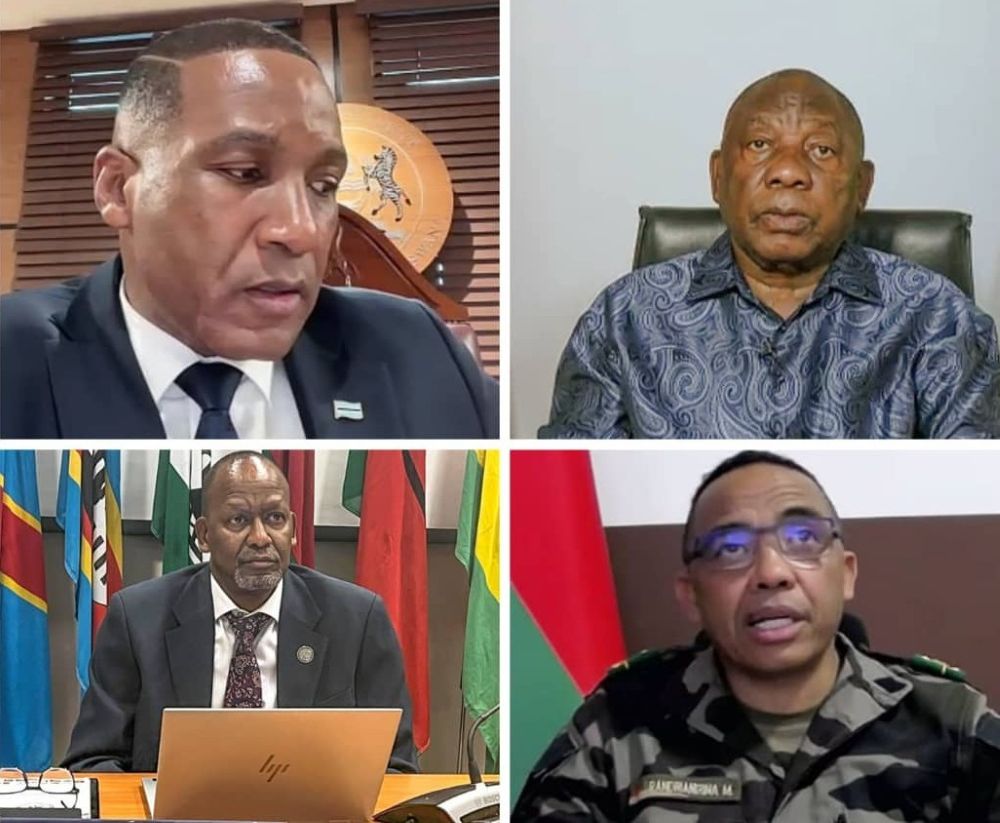
Pretoria, South Africa – The Extraordinary Summit of Heads of State and Government of the Southern African Development Community (SADC), held virtually on December 17, 2025, concluded with a strong focus on political stabilization in Madagascar.
However, its deafening silence on the deepening crisis in the Democratic Republic of Congo (DRC), a long-standing member of the regional bloc has drawn quiet criticism.
According to the official communiqué, the summit brought together SADC leaders and senior representatives to review the political and security situation in Madagascar following months of instability.
The meeting received and discussed the report of a SADC technical fact-finding mission conducted in October, which assessed conditions on the ground through consultations with national stakeholders.
Leaders welcomed what they described as a restoration of calm and ongoing national consultations launched by Madagascar’s Transitional Government earlier this month.
SADC urged Malagasy authorities to pursue an inclusive, Malagasy-led national dialogue, implement timely reforms, and create conditions for peaceful elections.
The regional leaders reaffirmed their commitment to democracy, the rule of law and stability in Madagascar until an elected government is in place.
The summit further approved the deployment of the SADC Panel of Elders, led by former Malawian president Joyce Banda, supported by a mediation reference group, to accompany the transition process and help restore constitutional order.
However, the communiqué made no reference to the escalating security and humanitarian crisis in eastern DRC, despite the country’s central role in regional stability and its membership in SADC since 1997.
This omission stood out, particularly given the bloc’s past engagement in the DRC, including diplomatic initiatives and the deployment of regional forces in response to armed violence.
Tite Gatabazi, a senior regional geopolitical analyst, said the silence was notably deafening.
“The DRC is one of SADC’s largest and most strategically important members. When a summit addresses peace and security but avoids Congo altogether, it inevitably raises questions about regional coherence and priorities,” the analyst said.
The DRC has for years faced persistent insecurity driven by armed groups in its eastern provinces, with spillover effects felt across the Great Lakes region.
In recent years, SADC has acknowledged that instability in the DRC poses a threat not only to national sovereignty but also to regional trade, population movements and collective security.
Against this background, expectations had been high that the extraordinary summit would at least signal renewed diplomatic engagement.
Instead, the summit concentrated on internal leadership matters, confirming South African President Cyril Ramaphosa as SADC Chairperson and appointing Zambian President Hakainde Hichilema as the incoming interim deputy chair.
Leaders also called on the SADC Secretariat to work with the African Union and international partners to mobilize resources in support of reform processes and avoid fragmented interventions.
While praising the leadership of outgoing officials and reaffirming unity among member states, the communiqué left unresolved concerns about whether SADC is prepared to apply the same level of attention and urgency to the DRC as it has to other crises.
For many observers, the summit underscored a widening gap between SADC’s stated commitment to regional peace and the realities on the ground in one of its most troubled member states.
