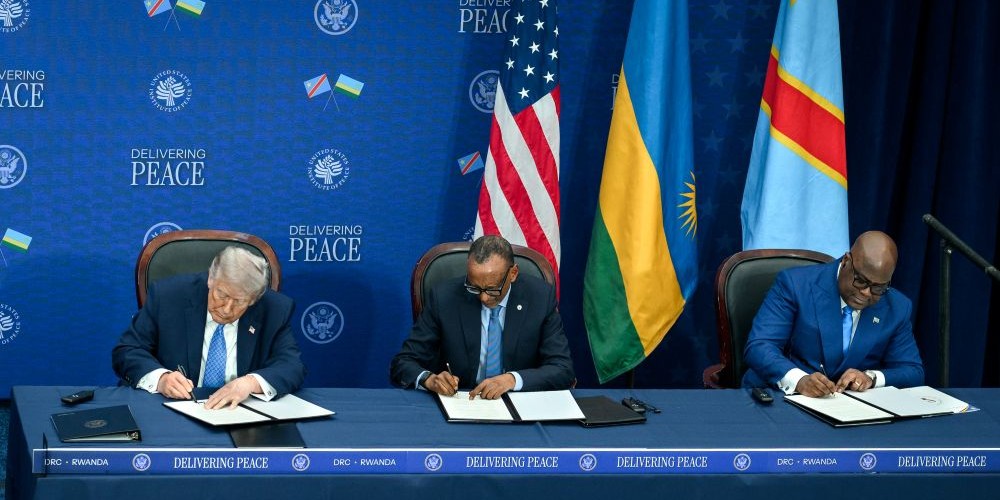
On Thursday, December 4, 2025, Presidents Paul Kagame of Rwanda and Félix Tshisekedi of the Democratic Republic of Congo (DRC) formally inked the Washington Accords for Peace and Prosperity, a pact brokered under the stewardship of U.S. President Donald Trump.
The accord aims to end decades of bloodshed, displace violence with diplomacy, and replace conflict with cooperation and economic integration. For two nations long locked in suspicion, this moment marks both a handshake and a cautious beginning of hope.
The violence in eastern Congo traces back to the aftermath of the 1994 Genocide against the Tutsi when ethnic Hutu militias fled into eastern DRC.
Subsequent interventions by Rwandan forces in 1996–1997 and again in 1998 helped ignite what came to be known as the First and Second Congo Wars, conflicts that caused millions of deaths across several countries.
Over the following decades, the region remained mired in instability. Armed groups proliferated, among them the rebel group M23, accused of benefiting from external support and fighting to control territory rich in minerals such as cobalt, lithium, copper and gold.
In the first months of 2025 alone, M23 made dramatic territorial advances, capturing strategic cities like Goma and Bukavu.
Against that backdrop, even previous peace agreements had repeatedly faltered. But this time, a different sponsor, a fresh diplomatic push, and a new geopolitical calculus have converged, raising hopes that this might be the breakthrough that sticks.
Trump’s bold vision for peace, minerals, and a new economic order
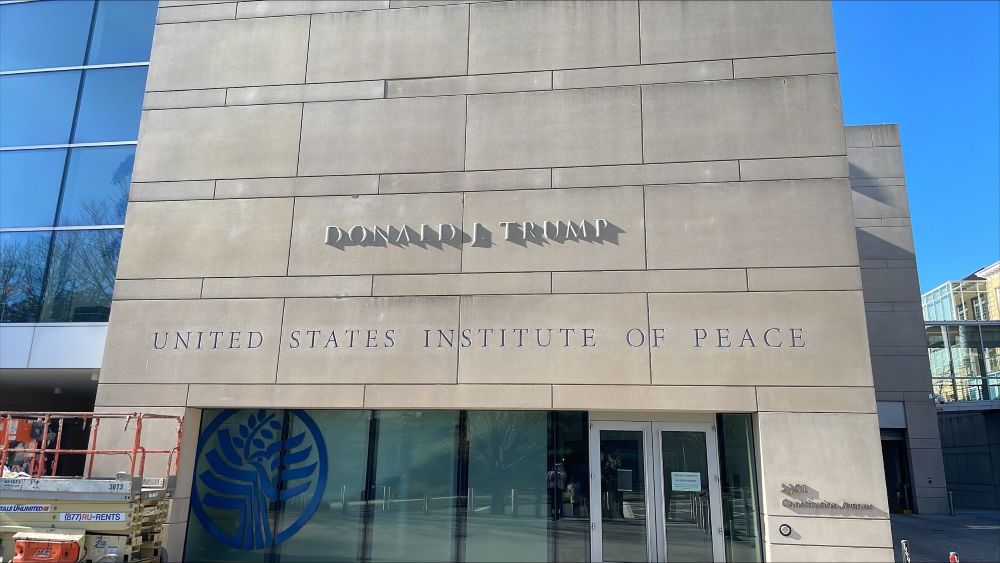
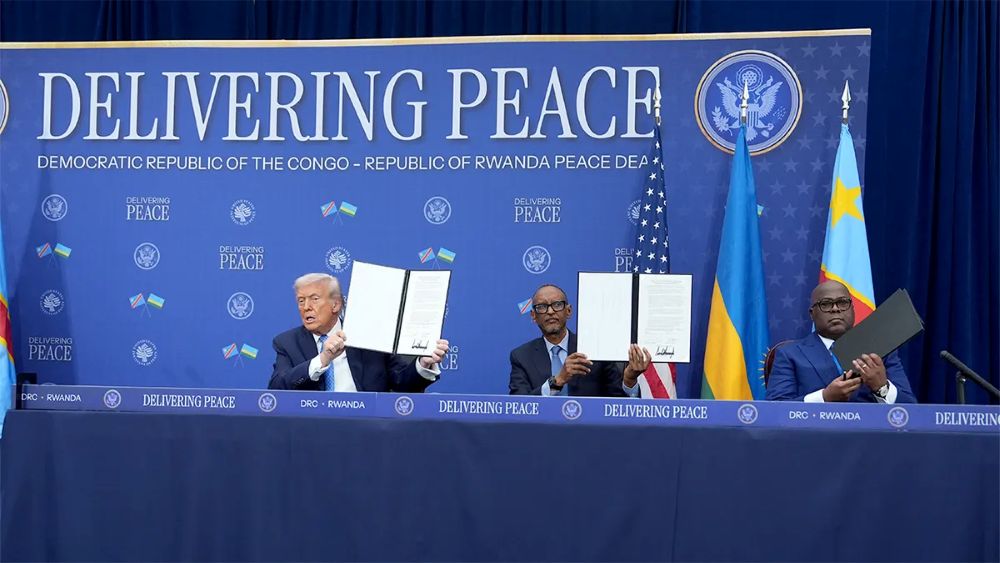
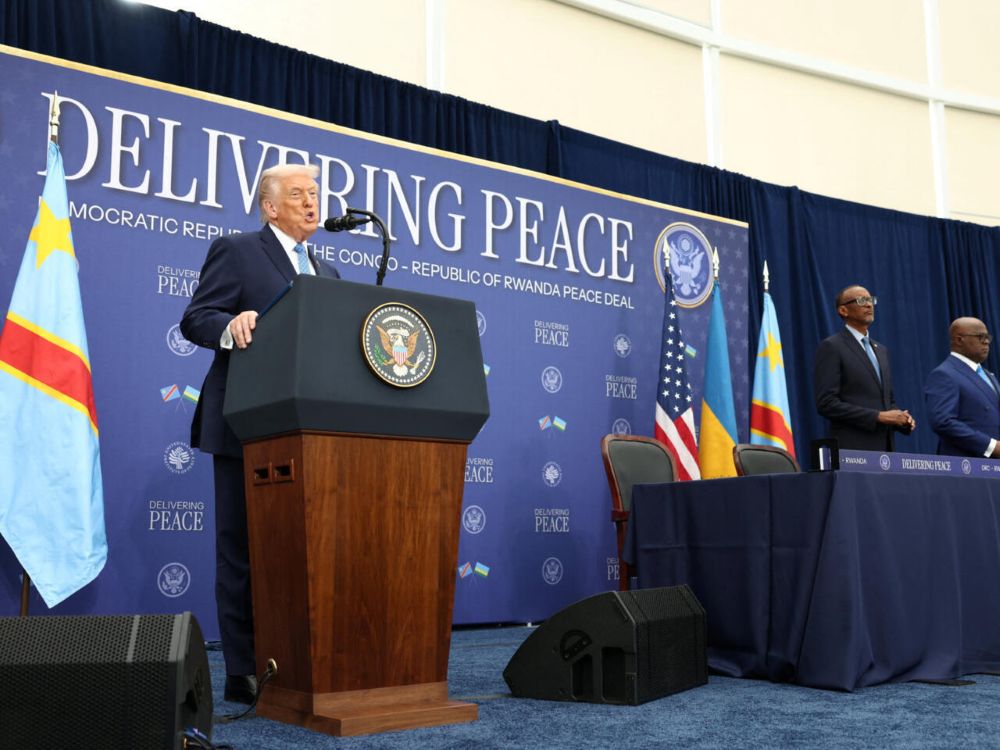
Trump described the signing as “a very important day.” He called the building, newly dedicated for peace, “a spectacular” venue, and heralded the accord as a turning point for a region scarred by “far more than 10 million lives” lost over decades.
“This is a nice building. This is our first occasion … using it for peace. And it’s all about peace,” he said. He praised the two African leaders for their courage, saying they had shared “stories both sad and beautiful, now made beautiful by today.”
In Trump’s view, the accord is more than a ceasefire. It is a comprehensive blueprint of permanent cessation of hostilities, disarmament of all non-state armed groups, repatriation of refugees, justice for atrocities and a new economic framework aimed at transforming conflict zones into zones of commerce and investment.
He underscored U.S. interest in the region’s mineral wealth, saying that American companies would soon invest in resource extraction, a strategy that combines peacebuilding with economic opportunity.
“Everybody’s going to make a lot of money,” he said, arguing that prosperity could be the best guarantee of lasting peace.
From old wounds to new commitments – Kagame’s stand
President Paul Kagame acknowledged that many had tried and failed to end the conflict. But he argued that the new U.S.-led initiative had injected “a new and effective dynamism.”
No one had asked the United States to step in, he said but when America offered its hand, Rwanda accepted. “Our region is far from the headlines,” he told the hall, but when opportunity for peace appeared, “he immediately took it.”
Kagame praised the impartial nature of the U.S. mediation, a process focused on the future rather than the past. “His approach has been even-handed, oriented toward the future. The dividend of peace is prosperity and investment,” he said.
He also singled out U.S. Secretary of State Marco Rubio and the U.S. Senior Adviser for Africa Mossad Boulos for their indispensable work behind the scenes.
But Kagame was candid about the stakes. If this accord fails, he said, the blame will rest not on the United States but on the African partners themselves.
“Rwanda will not be found wanting. Our aim has always been for our country to be safe and secure after so much tragedy,” he affirmed.
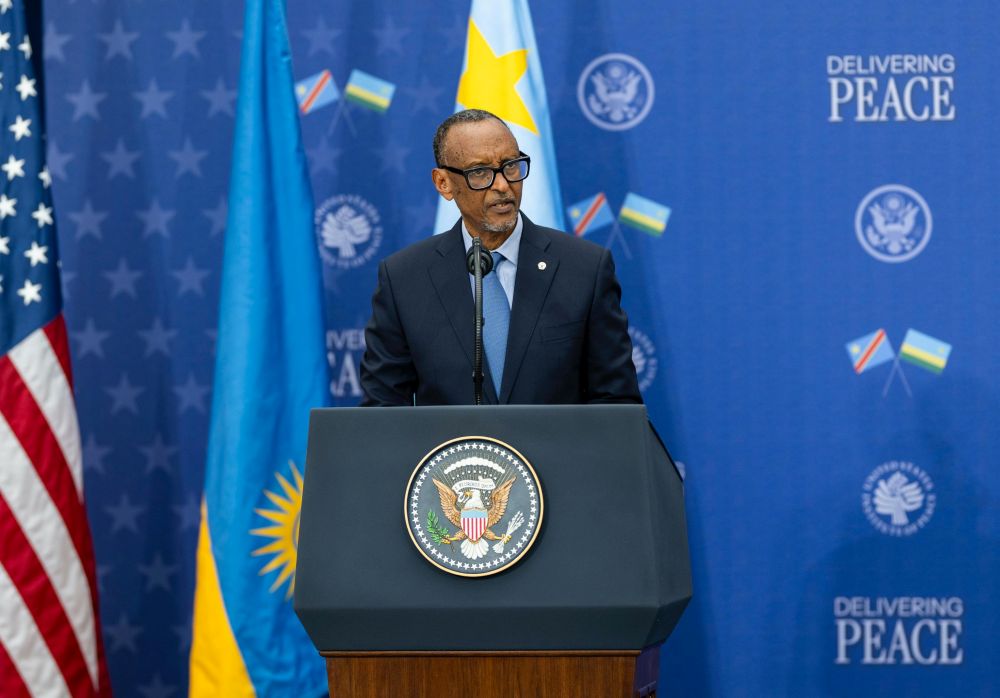
Tshisekedi: A turning point, not a promise
For DR Congo, President Félix Tshisekedi described the Washington Accords as “not just another document,” but a turning point. He called the agreement a source of deep gratitude and renewed hope for millions of Congolese who have lived through decades of displacement, war, and insecurity.
Tshisekedi thanked regional and international partners, including Qatar, Angola, and Kenya, for their part in supporting the process, and urged the world not to see the accords as a transient peace deal, but as the beginning of a new chapter based on cooperation, justice, stability, and prosperity.
He pledged that the DRC would implement its commitments with seriousness and rigor, promising respect for territorial integrity and security for civilians. But he cautioned that the road ahead would not be easy.
Still, he said, the country would remain “vigilant but not pessimistic,” clear-eyed but “resolutely optimistic.”

From conflict to cooperation: Can it work?
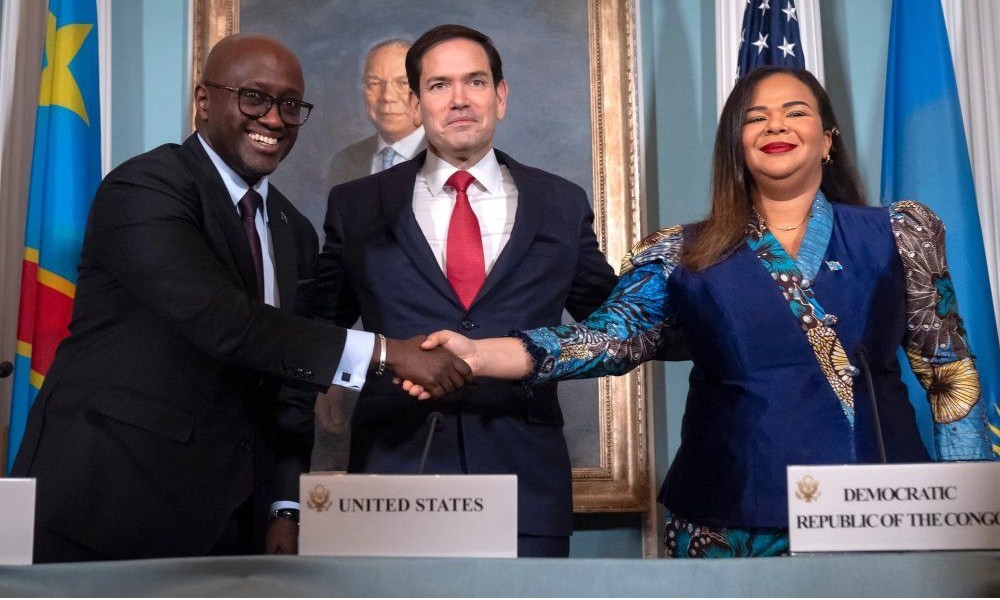
The new agreement builds on a prior deal signed in June 2025 by foreign ministers, but until Thursday, leaders themselves had not formalized the pact. Its comprehensive framework addresses not only military disengagement but also long-term economic integration.
Under the accord, Rwanda and the DRC commit to respect each other’s sovereignty and territorial integrity, disarm non-state armed groups, welcome the return of refugees and internally displaced persons, and offer humanitarian and economic support to affected populations.
It also envisions a regional economic re-launch comprising shared infrastructure, cross-border investment, and a joint effort to harness the region’s vast mineral wealth for mutual benefit rather than conflict.
A fragile peace, but hope is alive
Yet even as the ink dries on the agreement, the challenges remain daunting. Since January 2025, fighting between M23 rebels and Congolese government forces has displaced nearly a million people in the eastern DRC and deepened humanitarian needs across the region.
Analysts warn that distrust, logistical hurdles, enforcement of disarmament, and equitable distribution of mining revenues could derail the accord.
For many, only time, measurable declines in violence, real troop withdrawals, and tangible economic improvements will prove whether this pact is a turning point or just another chapter in a long saga of failed promises.