KIGALI – When a business owner opens an account for a particular project, then moves on or a graduate finishes university and no longer uses the account that once received a scholarship, the account remains there, often with a balance that is too small to worry about.
Similarly, its normal for an employee to change jobs and start receiving a salary through another bank or gradually shift to mobile money until they stop visiting the bank altogether or simply forget the account in the rush of everyday life.
For years, many people have assumed there is no urgency. The money will still be there whenever they decide to return. But a bank account does not remain in limbo forever.
New consumer protection regulations gazetted recently stipulate that if an account remains unused for five years, the money left in it may be treated as unclaimed property and transferred to the National Bank of Rwanda (BNR).
What to know
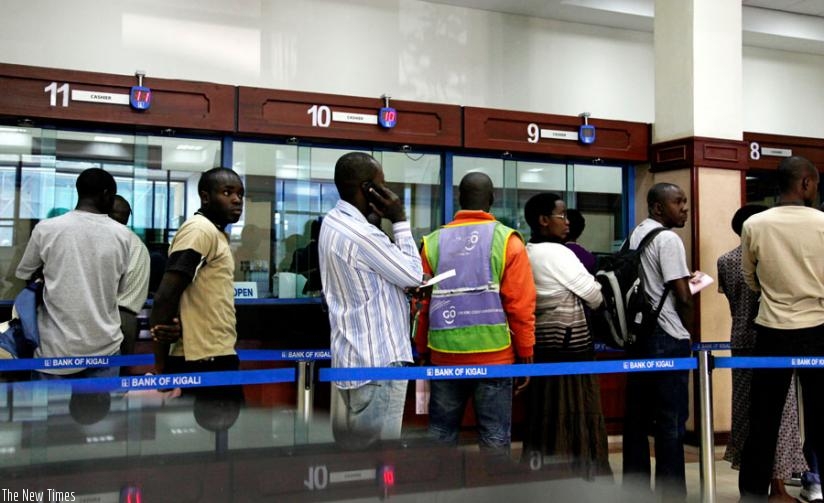
The regulations explain that when an account has not been used for six months, it may be classified as dormant or inactive. However, that does not mean ownership disappears. Customers can still inquire about and recover the funds through their financial institution.
However, the account must first be reactivated before normal transactions can resume, and the regulations make it clear that this reactivation is free of charge.
The National Bank of Rwanda (BNR) requires that financial institutions should tell customers exactly what happens when an account goes unused for months or even years, information that many account holders have never been given when opening an account.
Why accounts are forgotten
Dormant accounts appear when people relocate, employers change, students graduate, businesses open new accounts, families inherit responsibilities they may not fully understand but this is not a sign that someone deliberately walked away from their money.
Given the rapid growth of digital payments, banking habits have changed with some customers relying almost entirely on mobile money while traditional bank accounts receive little attention. More often, this reflects ordinary changes in life.
Even in many cases, the “forgotten” balance is only discovered years later, when someone needs a bank statement, applies for a loan or tries to trace an account they had not thought about for years.
The new regulations recognize that these situations are common enough for customers to deserve clear information before opening an account, rather than learning about dormant-account rules after the fact.

Key facts
Much of the public discussion around the new regulations has focused on greater transparency over bank charges and account fees but the dormant-account provisions reveal that opening a bank account also comes with ongoing responsibilities.
Thus, customers should know what happens throughout the life of the account, including what happens if they stop using it, how long it can remain inactive and where to seek help if they have concerns.
For many, the regulations are less about introducing new rules than making existing ones impossible to miss. The next time someone opens a bank account, they should know that leaving it unused is not simply a matter of forgetting about it.
Eventually, the account begins a legal journey of its own, and understanding that journey may one day help you recover money you did not even remember you still had.
